I stood at the post office counter staring at thirty-six yellow receipt cards, my hands shaking so badly that Kapoor gently took the stack back.
“Audrey, what were you sending Ethan Whitlock every month?” he asked again.

I couldn’t answer immediately because my throat had closed.
Finally, I whispered, “Copies of his grandmother’s medical records, bank statements, and photos of her house.”p>
Kapoor’s eyebrows lifted.
“Why?”
I sat down on the wooden bench near the P.O. boxes, my legs suddenly weak.
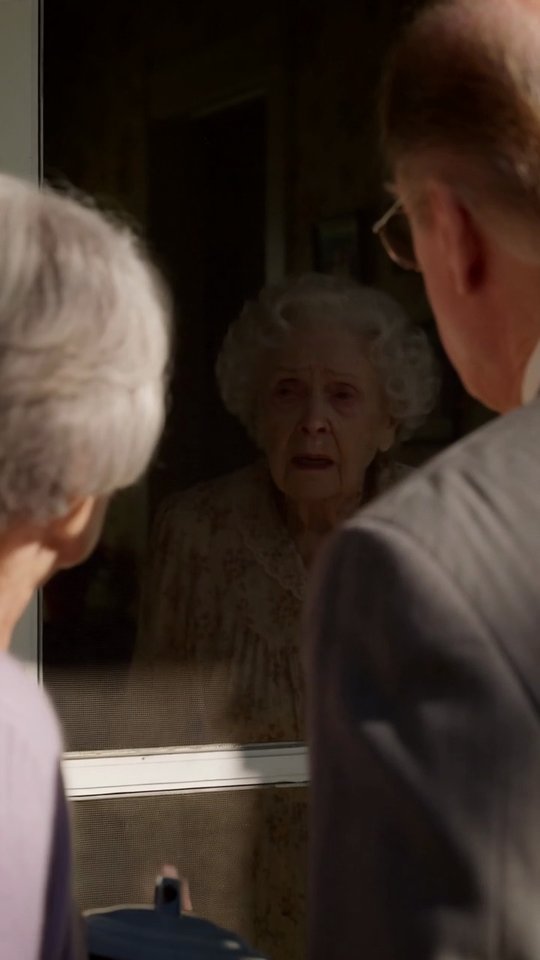
“Three years ago, I noticed Iris was struggling. She missed her water bill. She left the stove on overnight. She started wearing the same dress four days in a row.”
Kapoor nodded slowly.
“I called Ethan in Portland. He’s her only living relative. I thought he should know.”
“What did he say?”
“He thanked me. He said he’d been worried but didn’t want to intrude. He asked if I could keep him updated.”
I wiped my eyes with the back of my hand.
“So every month, I photographed her mail, her checkbook register, anything that showed how she was managing. I wrote little notes: *Your grandmother forgot to pick up her prescriptions this week* or *She asked me the same question six times today.*”
Kapoor sat down beside me.
“You were documenting her decline.”
“I wanted him to understand she needed help. I kept hoping he’d come visit, maybe move her closer to him, something.”
“Did he ever come?”
“No. He sent cards at Christmas. He called twice. But he never came.”
Kapoor tapped the stack of receipts.
“These prove you were trying to protect her, not steal from her.”
“But Iris thinks I took her money. She has a notebook full of lies.”
“Someone wrote those lies,” Kapoor said quietly.
I looked up sharply.
“What do you mean?”
“Audrey, when people with dementia create false memories, they usually believe them completely. But detailed financial records? Forged receipts? That takes planning.”
My stomach turned cold.
“You think someone is manipulating her?”
“I think you should talk to Ethan Whitlock. Today.”
I borrowed Kapoor’s phone and dialed the number I’d written on every envelope for three years.
A man answered on the second ring.
“This is Ethan.”
“Ethan, this is Audrey Pennell. Your grandmother’s neighbor in Beaufort.”
Silence.
Then: “Audrey. Oh my God. I’ve been trying to reach you.”
My heart hammered.
“What’s going on?”
“Two months ago, a man named Jeffrey Holcombe contacted me. He said he was representing my grandmother in a financial matter. He said you’d been stealing from her and that she wanted to press charges.”
“That’s not true.”
“I know. I told him I didn’t believe it. I know how much you’ve done for her.”
“Then why is he still here?”
Ethan’s voice dropped.
“Because three weeks ago, my grandmother signed a power of attorney giving Holcombe full control of her finances and medical decisions.”
I felt the room tilt.
“She what?”
“He convinced her that I was too far away to help and that you were dangerous. He told her he’d protect her assets and manage her care.”
“Ethan, I never touched her money.”
“I believe you. But Holcombe has legal authority now. I can’t override it without proof of undue influence or fraud.”
“What kind of proof?”
“Something that shows he coerced her or lied about you.”
I thought about the notebook, the highlighted bank statements, the fabricated grocery receipts.
“He created a paper trail,” I said slowly. “He made it look like I was asking her for money.”
“Can you prove it’s fake?”
I looked at Kapoor, who was listening intently.
“I have thirty-six certified letters proving I was trying to protect her, not exploit her.”
Ethan exhaled.
“Send me copies. Everything. I’m getting on a plane tonight.”
By the time Ethan arrived in Beaufort the next evening, I had assembled a three-inch binder.
Every receipt card from the post office, every photograph I’d mailed him, every handwritten note describing Iris’s confusion and vulnerability.
We sat in my kitchen under the yellow overhead light.
Ethan was forty-three, tall and thin, with his grandmother’s blue eyes.
“I should have come sooner,” he said quietly. “I thought the distance was temporary. I thought she’d be okay.”
“She needed family. I couldn’t be that.”
“You were more family than I was.”
He opened the binder and started reading.
After twenty minutes, he looked up.
“This is a clear pattern. You weren’t hiding anything. You were begging me to intervene.”
“I didn’t know what else to do.”
Ethan pulled out his phone.
“I’m calling an elder-abuse hotline. Holcombe is isolating her, controlling her narrative, and positioning himself to drain her accounts legally.”
“Will they investigate?”
“With this documentation? Absolutely.”
Two days later, a social worker and a county investigator arrived at Iris’s house unannounced.
Holcombe tried to turn them away, but they had a court order.
They interviewed Iris privately for ninety minutes.
Then they seized her financial records, her notebook, and Holcombe’s contract.
That afternoon, Ethan called me.
“They found discrepancies. Holcombe deposited eighteen thousand dollars into his own account last month, claiming it was a ‘legal retainer.’ But there’s no signed agreement.”
“So he was stealing from her.”
“And framing you to cover it.”
The investigator froze Iris’s accounts pending a full audit.
Holcombe’s power of attorney was revoked.
Ethan was appointed temporary guardian.
Three weeks later, Iris sat in my kitchen drinking chamomile tea.
Her hands trembled around the cup.
“I don’t remember writing those things about you, Audrey.”
“I know.”
“He told me you were trying to take my house. He said Ethan had abandoned me.”
“He lied.”
She started crying.
“I’m so sorry.”
I reached across the table and held her hand.
“You were scared and confused. He took advantage of that.”
Ethan moved Iris to an assisted-living facility near Portland two months later.
Before she left, she gave me a small cardboard box.
Inside was my grandmother’s blue enamel soup pot and a handwritten note on lavender stationery.
*Audrey—Thank you for twenty-two years of Sundays. You saved me twice. Once with soup, once with evidence. I will never forget your kindness.—Iris*
Holcombe was charged with financial exploitation of a vulnerable adult.
He pleaded guilty and was sentenced to four years.
Ethan recovered most of the stolen money.
Last Sunday, I made chicken soup and delivered it to the new family who moved into Iris’s house.
A young couple with a baby.
They invited me in.
I stayed for an hour.
When I left, the woman called after me: “See you next Sunday?”
I turned and smiled.
“I’ll bring cobbler.”