I drove south on Highway 49 with the microfiche printout in a manila folder on the passenger seat. The road curved through pine forests and past old mining claims, the kind of country that still felt like 1967 if you didn’t look at the cell towers.
Lydia’s voice kept playing in my head: “Ernest told me keep it safe.”
Ernest Holloway had died in 1998. I remembered filing his death certificate. He’d been a widower, no children, and his estate had gone to a nephew in Oregon who’d sold off parcels of land for years afterward.
But the life-estate rider meant Lydia’s house had never truly been part of that estate. It was hers, protected, untouchable—except nobody knew.
Because Holloway had asked the clerk not to record it.
I reached Sacramento just after noon and parked in the Wells Fargo tower garage. The loss mitigation office was on the ninth floor. I rode the elevator up with a man in a suit who didn’t look at me.
The receptionist was young, polite, and asked me to wait.
I sat in a chair by the window and watched the traffic on Capitol Mall.
Fifteen minutes later a man in his forties came out. He wore a blue tie and carried a tablet.
“Ms. Strickland? I’m Trevor Nguyen, senior analyst. You said you have a life-estate document?”
I stood and handed him the folder.
He opened it and scanned the printout.
His expression didn’t change.
“This is a microfiche image,” he said.
“Correct. Stamped and initialed by a county clerk on November 14, 1991. It was never formally recorded, but it was processed and acknowledged by the courthouse.”
He looked at me.
“Why wasn’t it recorded?”
“The seller asked the clerk to hold it. I don’t know why. But the document is valid. It establishes a life estate that exempts Ms. Carmichael from tax liability as a fee-simple owner.”
Trevor tapped his tablet screen.
“Our records show Ms. Carmichael as the sole titleholder since 1991. No encumbrances, no life estate. The county reassessed the property in 2019 based on that title.”
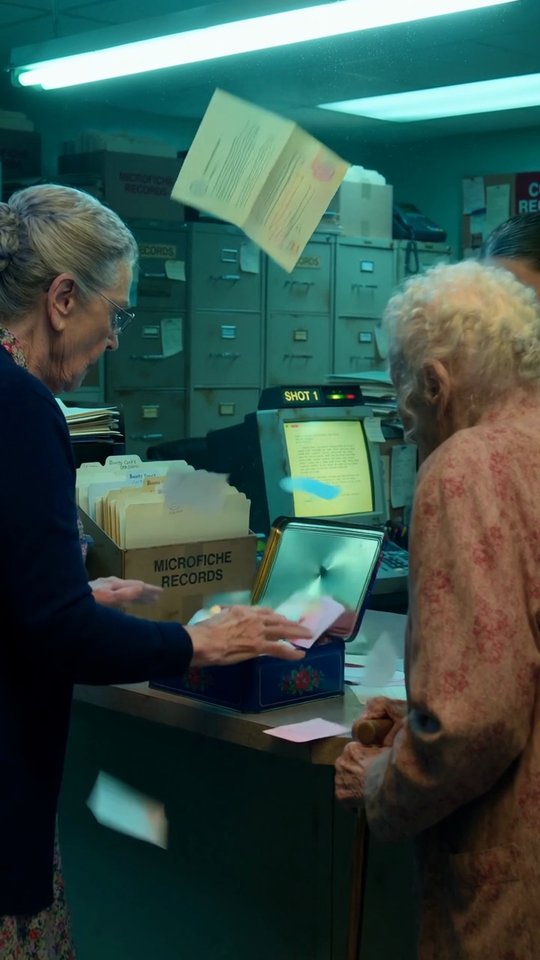
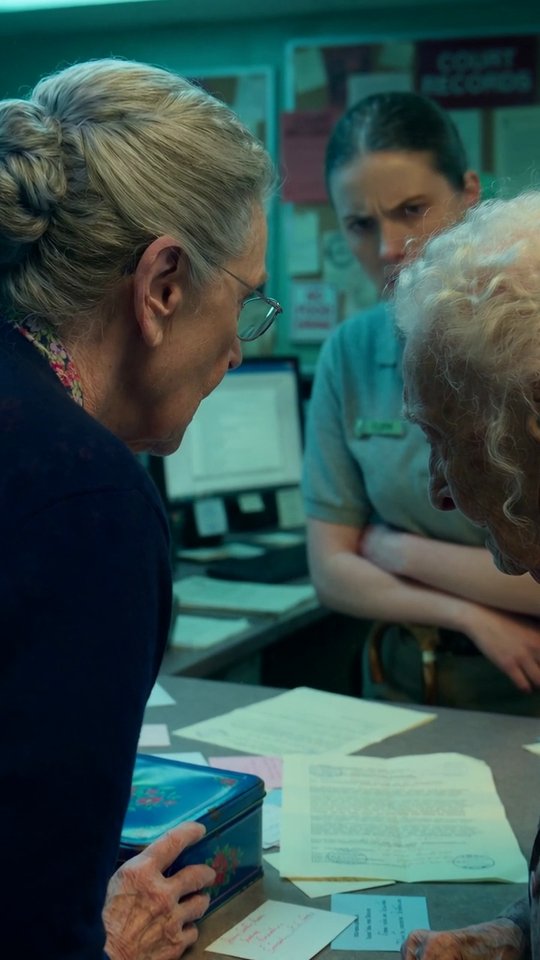
“The county didn’t have the rider,” I said. “It was kept in a recipe tin in Ms. Carmichael’s kitchen. But the courthouse stamp proves it existed at the time of sale.”
He frowned.
“I’ll need to run this past our legal team. It could take a week.”
“The foreclosure is scheduled in ten days,” I said.
He nodded slowly.
“I understand. I’ll flag it as urgent. Can you leave the original document?”
“This is the original microfiche print. The signed rider is still with Ms. Carmichael. I can bring it tomorrow if you need it notarized again.”
“That would help.”
I left the building and called Lydia from the parking garage.
She answered on the second ring.
“Beverly?”
“They’re reviewing it,” I said. “I need you to bring the rider to a notary tonight. I’ll meet you at the UPS store on Broad Street at six.”
“Okay.” Her voice was small.
“Lydia, this is going to work.”
She didn’t answer right away.
Then she said, “Why are you doing this?”
I sat in my car with the phone against my ear and didn’t know what to say.
Finally I said, “Because you kept my mother’s soup recipe when she died. You wrote it on an index card and put it in that tin. You didn’t have to do that.”
Silence.
“I didn’t think you remembered,” she whispered.
“I remember.”
I hung up and drove home.
That night I met Lydia at the UPS store. She brought the rider in a plastic sleeve. The notary, a woman named Kim, read it carefully and asked Lydia to sign a fresh affidavit confirming she’d received the document from Ernest Holloway in 1991 and kept it unaltered.
Lydia’s hand shook as she signed.
Kim stamped it and handed me the packet.
“Good luck,” she said quietly.
The next morning I drove back to Sacramento and delivered the notarized rider to Trevor Nguyen. He scanned it into his system and said he’d have an answer by Friday.
Friday came.
I didn’t hear anything.
Saturday morning my phone rang.
It was Trevor.
“Ms. Strickland, our legal team reviewed the life-estate rider. They agree it’s a valid instrument. However, because it was never recorded, it doesn’t bind the county’s tax lien under California law.”
My stomach dropped.
“But the stamp—”
“The stamp proves the clerk saw it. It doesn’t prove it was filed. Without filing, third parties—like the county tax assessor—aren’t on notice. That’s the issue.”
I closed my eyes.
“So the foreclosure stands.”
“Not necessarily,” Trevor said. “If you can get the county to acknowledge the rider retroactively, we’ll honor it. But that’s between you and them.”
I thanked him and hung up.
Then I called the Nevada County Assessor’s office.
A man named Paul answered.
I explained the situation.
He listened.
Then he said, “I’d have to see the original microfiche and the notarized rider. If the clerk’s stamp is there, we can consider it a filing defect rather than a non-filing. That might give us grounds to amend the assessment.”
“How long would that take?”
“Two weeks, maybe three.”
“The foreclosure is in four days.”
Paul was quiet.
“Bring me everything Monday morning. I’ll walk it to the county counsel myself.”
Monday I met Paul in his office. He was older than I expected, maybe sixty, with reading glasses on a chain. He studied the microfiche print and the rider for ten minutes.
Then he picked up his phone and called someone.
“Janet, it’s Paul. I need you to look at a 1991 deed rider. Clerk stamp, no recording. Can you give me an opinion today?”
He listened.
“Thanks.”
He hung up and looked at me.
“Janet’s our senior counsel. If she says it’s valid, I can halt the sale.”
I waited in the hallway for two hours.
Finally Paul came out.
“Janet says the stamp creates a rebuttable presumption of filing. The county will accept the rider as a recorded instrument effective November 14, 1991. That removes the tax liability from Ms. Carmichael. The lien is void.”
I felt my knees go weak.
“The foreclosure?”
“Canceled. I’ll notify the bank this afternoon.”
I drove to Lydia’s house and knocked on the screen door.
She opened it slowly.
I handed her a envelope with a single sheet inside: a letter from the county assessor, stamped and signed, declaring the lien void and the foreclosure canceled.
She read it twice.
Then she looked at me and started to cry.
I stepped inside and put my arms around her.
She smelled like lavender and old cotton.
“You saved my home,” she whispered.
“Ernest saved it,” I said. “He just didn’t finish the paperwork.”
She pulled back and wiped her eyes.
“Come in. I’ll make tea.”
We sat at her kitchen table and drank Earl Grey from chipped stoneware cups. The recipe tin sat between us, dented and blue, the lid slightly open.
Lydia reached inside and pulled out an index card.
“This is your mother’s soup recipe,” she said. “I copied it the day after her funeral. I thought you might want it back.”
I took the card.
The handwriting was my mother’s—slanted, hurried, full of abbreviations I recognized.
I folded it carefully and put it in my purse.
“Thank you,” I said.
Lydia smiled.
Outside the window a scrub jay landed on the porch railing and cocked its head.
The light was soft and golden.
And for the first time in two weeks I felt like I could breathe.