I didn’t sleep that night.
I kept seeing Ruth’s face, the way her hands trembled when she talked about Jolene handling “everything.”
The next morning I got a call from Linda Marsh, an investigator with Kansas Adult Protective Services.
Her voice was steady, professional.
“We’ve opened a case based on your report. Can you meet me at Ruth Pemberton’s residence this afternoon?”
I said yes.
At 2:00 p.m. I pulled up to the yellow duplex on Mulberry Street.
Linda was already there, a woman in her fifties with short gray hair and a county ID badge clipped to her blazer.
We walked to the door together.
Jolene answered, face tight.
“What is this?”
Linda showed her badge.
“We’re here to conduct a welfare check on Ruth Pemberton. May we come in?”
Jolene’s eyes darted to me.
“She’s the one who called you, isn’t she?”
Linda’s tone didn’t change.
“We’re required to investigate reports of potential financial exploitation. We need to speak with Ruth.”
Jolene stepped aside, arms crossed.
Ruth sat in her usual chair, the butterscotch dish still on the coffee table.
Linda sat down beside her, voice gentle.
“Ruth, I’m here to make sure you’re safe. Can you tell me who manages your finances?”
Ruth looked at Jolene, then back at Linda.
“My niece does. She moved in to help me.”
“And do you know how much money you have in your bank account?”
Ruth’s voice wavered.
“I used to have about $30,000 from Vernon’s life insurance. But Jolene said the medical bills have been high.”
Linda pulled out a notepad.
“Do you have access to your bank statements?”
Ruth shook her head.
“Jolene keeps them in her room.”
Linda turned to Jolene.
“I’m going to need to see Ruth’s financial records. Bank statements, medication receipts, and any documentation of expenses.”
Jolene’s face flushed.
“This is harassment. I’ve been taking care of her for a year.”
Linda stood up.
“If you refuse to cooperate, I can obtain a court order. It’s your choice.”
Jolene disappeared into her bedroom.
Ten minutes later she returned with a cardboard file box, slammed it onto the kitchen table.
Linda began pulling out documents.
Bank statements from First National Bank of Abilene.
Ruth’s account balance last October: $28,600.
Current balance: $4,100.
Over $24,000 withdrawn in eleven months.
Linda went through the statements line by line.
Cash withdrawals every week, $400 to $600 at a time.
Checks written to “Jolene Pemberton” for “caregiver services,” amounts ranging from $800 to $1,200.
No receipts for medical expenses.
No receipts for medications.
Linda looked up.
“Ruth, did you authorize these withdrawals?”
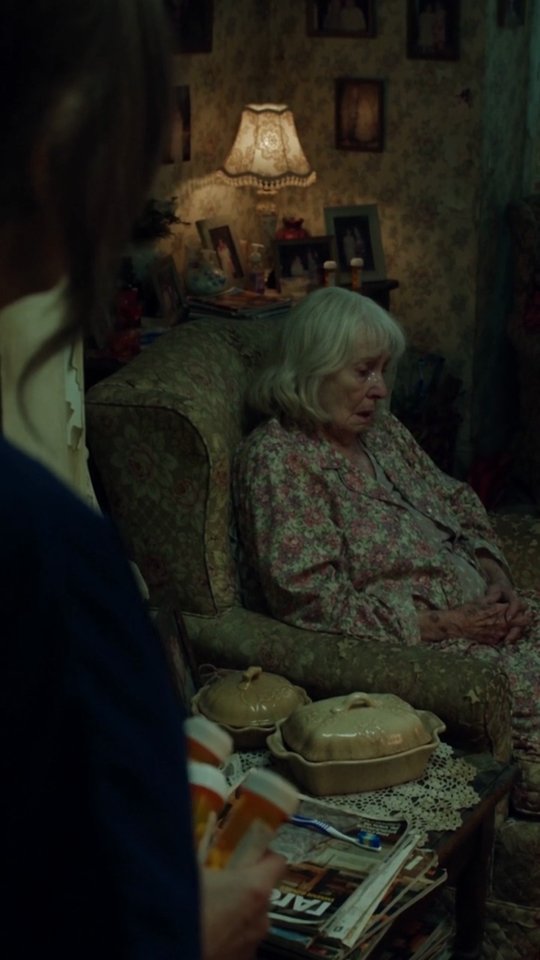
Ruth’s voice was barely audible.
“Jolene said she needed the money for my care.”
Linda turned to me.
“You said there were fraudulent prescriptions?”
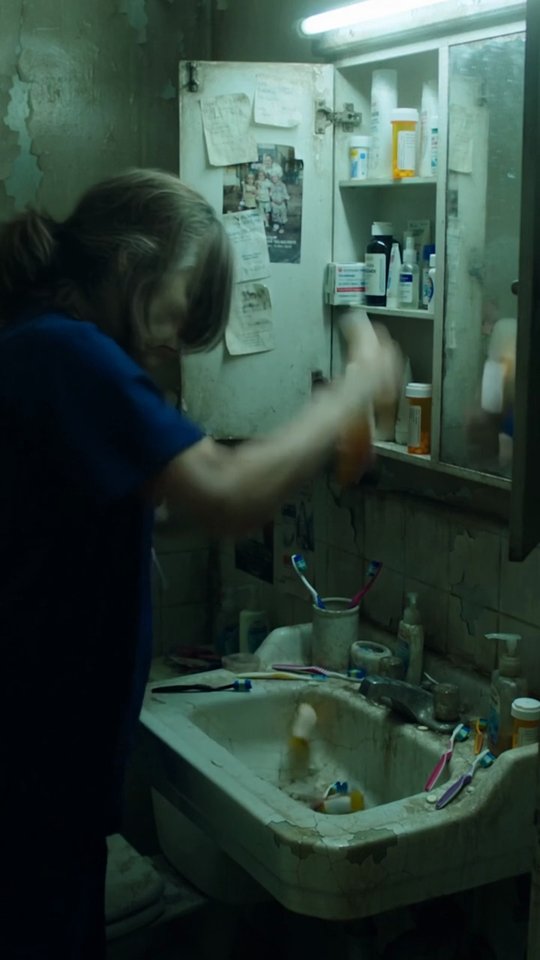
I handed her the two pill bottles.
Linda opened them, examined the pills.
“These are multivitamins. The labels say cardiac medication.”
She pulled out her phone, called Abilene Pharmacy.
The pharmacist confirmed that Ruth’s actual prescriptions had been filled correctly and picked up—but by someone presenting Ruth’s insurance card and forging her signature.
The real medications had been collected, then replaced in the bottles with cheap vitamins.
Jolene had been pocketing the difference, claiming Ruth’s out-of-pocket costs were $14,200 annually when Medicare covered nearly everything.
Linda ended the call.
Her expression was grim.
“Jolene Pemberton, I’m referring this case to the Dickinson County Sheriff’s Office for investigation of financial exploitation of an elderly person and prescription fraud.”
Jolene’s face went white.
“I didn’t do anything wrong. I gave up everything to take care of her.”
Linda’s voice was steel.
“You withdrew over $24,000 from a vulnerable adult’s account without proper authorization, falsified medication records, and endangered her health by replacing prescribed cardiac drugs with vitamins.”
Jolene looked at Ruth, voice breaking.
“Auntie, tell them I was helping you.”
Ruth stared at her lap.
Then, in a voice stronger than I’d heard in months, she said, “You told me Vernon’s insurance money was gone. You told me I couldn’t afford to live here anymore. You said I’d have to sell the house.”
Tears ran down Ruth’s cheeks.
“I trusted you.”
Jolene grabbed her purse and ran out the front door.
Linda made another call.
Within twenty minutes a sheriff’s deputy arrived.
They found Jolene sitting in her car three blocks away, staring at the steering wheel.
She was arrested that evening.
The investigation uncovered that Jolene had been using Ruth’s debit card to pay for her own rent before moving in, online shopping sprees, and cash advances at the casino in Salina.
She’d convinced Ruth that her medical costs were astronomical, that the insurance had changed, that she was barely staying afloat.
Ruth, trusting and confused, had signed over financial power of attorney without understanding what it meant.
Jolene pleaded guilty to financial exploitation of an elderly person and fraud.
She was sentenced to four years in prison and ordered to repay the stolen funds.
Ruth’s remaining money—just over $4,000—was placed in a protected trust managed by the county.
A court-appointed guardian helped her apply for additional assistance programs.
I resumed my visits the following week.
Ruth was quieter than before, but she started talking about Vernon’s tomatoes again.
One afternoon she reached into the glass dish and handed me a butterscotch candy.
“Thank you for noticing,” she said softly.
“I thought I was losing my mind.”
I unwrapped the candy, the sweet smell filling the small living room.
“You’re not losing anything, Ruth. You just needed someone to listen.”
She smiled, the first real smile I’d seen in months.
The cement birdbath out front still doesn’t hold water.
But last week I saw Ruth standing beside it with a watering can, filling it slowly, watching the water catch the afternoon light.
She was humming a song I didn’t recognize.
Something Vernon used to sing while working in the garden.