Constance moved slowly into the lamplight. Her wool shawl hung loose around her thin shoulders. She lowered herself into a wingback chair near the fireplace. The fabric groaned under her weight.
I stayed standing. The photograph felt heavy in my hand. Margaret’s young face stared up at me from forty years ago. Her smile was the same one I’d fallen in love with in 1979.
“Sit down, Owen,” Constance said. Her voice was softer than in my shop. “This will take some time.”
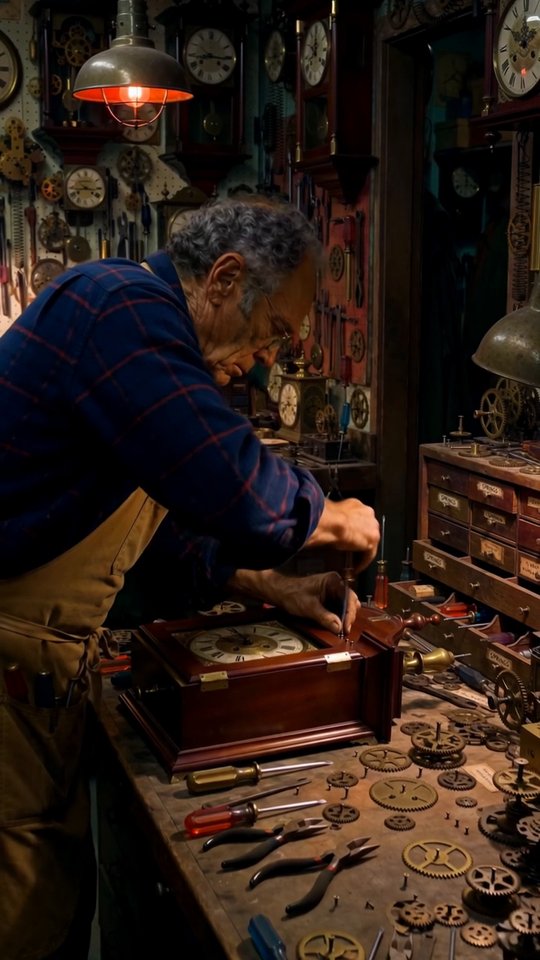
I sat on the edge of the sofa. The springs creaked. The mantel clock ticked steadily above us. The same lion-paw feet. The same Victorian scrollwork. I counted the seconds between ticks.
“Margaret and I met in 1982,” Constance began. “We both worked at the county records office. She was filing property deeds. I was indexing birth certificates. We shared a desk by the window.”
She paused. Her pale blue eyes focused on something distant. “We became friends quickly. She told me about you. How you’d proposed with a watch you’d repaired yourself. How you’d engraved the inside of the case with her initials.”
I remembered that watch. A 1940s Bulova with a cracked crystal. I’d spent three months finding the parts. Margaret wore it until the day she died.
“In the spring of 1983, Margaret found something,” Constance continued. “A discrepancy in the land records. Two deeds for the same property on River Bluff Road. This house. One deed was dated 1891. The other was dated 1923.”
She shifted in the chair. The lamplight caught the wrinkles around her eyes. “Margaret was meticulous. She traced both deeds backward. The 1891 deed belonged to a watchmaker named Samuel Duvall. My grandfather. The 1923 deed belonged to a banker named Howard Wick.”
I leaned forward. “But if your grandfather owned it first—”
“Exactly,” Constance said. “The foreclosure was fraudulent. Wick had forged my grandfather’s signature on a loan document. Margaret found the original papers in a misfiled box. She brought them to me in a manila envelope.”
The clock chimed seven times. The melody was the same lullaby Margaret used to hum. I felt my throat tighten.
“I wanted to take the documents to a lawyer immediately,” Constance said. “But Margaret stopped me. She said the Wick family would fight me for years. They had money and connections. I would lose everything trying to prove I was right.”
She folded her hands in her lap. The skin was thin as paper. “So Margaret made me a deal. She would hide the original documents somewhere safe. Somewhere no one would think to look. And we would wait.”
I looked at the photograph again. Margaret’s eyes held a determination I recognized. She never did anything without a plan.
“We bought two identical mantel clocks from an estate sale,” Constance said. “Victorian pieces. Mahogany. My grandfather had made clocks like them before he died. Margaret said they would be perfect.”
She pointed to the clock on the mantel above us. “She took one clock and sealed the deed documents inside a magnetic compartment under the base. Then she engraved a tiny symbol on the underside of the base plate. A star.”
My heart hammered against my ribs. “And the other clock?”
“She kept it,” Constance said. “She told me if anything ever happened to her, I should take that clock to you. Tell you to repair the chime. She said you would find the melody. The melody would lead you to me.”
I stood up. My legs felt weak. I walked to the mantel and lifted the clock. I turned it over. Four brass screws held the base plate. I pulled my pocket tool from my jacket and unscrewed them one by one.
The base plate came free. Inside the hollow base was a folded bundle of yellowed papers. I pulled them out carefully. The top page was a property deed dated April 18, 1891. Samuel Duvall’s signature was clear and bold at the bottom.
Beneath it was a loan document dated 1929. Howard Wick’s signature. But next to Samuel Duvall’s name was a shaky, obviously forged scrawl. The ink was a different shade. The pen pressure was wrong.
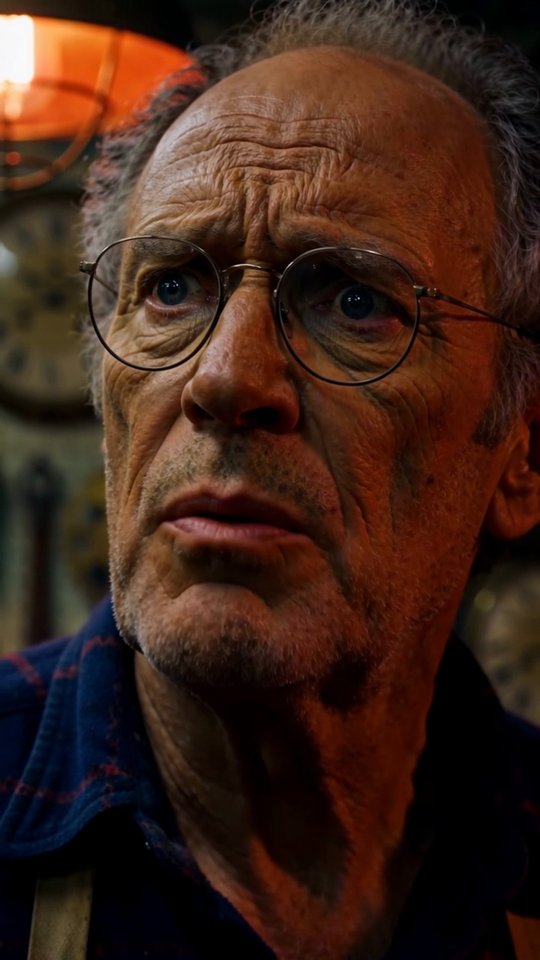
“Margaret was right,” I whispered. “This proves everything.”
Constance nodded slowly. “Two months ago, the Wick family tried to evict me. They claimed I’d been living here illegally since 1985. They said the property taxes I’d been paying were invalid because I never held the deed. They gave me ninety days to vacate.”
She reached into the pocket of her dress and pulled out a folded notice. The header read “Final Eviction Notice – Enforce by December 1.”
“I knew it was time,” she said. “So I brought the clock to you. Margaret told me you’d understand when you heard the chime. She said you’d always been able to hear what others couldn’t.”
I sat back down. The papers felt fragile in my hands. Forty years of waiting. Margaret had known Constance would need this house someday. She’d hidden the proof in plain sight.
“Why didn’t she tell me?” I asked. My voice cracked.
Constance smiled. It was the first time I’d seen her smile. “She said you would have insisted on going to the authorities immediately. You would have wanted to fix everything right away. But she knew the Wick family would bury the case in legal motions.”
I pressed my palms against my eyes. Margaret had protected Constance for four decades without ever telling me. She’d built a mechanism that would only trigger when the time was right.
“The $6,890,” I said suddenly. “Why that exact amount?”
Constance’s smile widened. “It’s the total property tax I’ve paid on this house since 1985. Margaret told me if the Wick family ever questioned my right to be here, I should show them forty years of tax receipts. Then show them the deed.”
I started laughing. I couldn’t help it. Margaret had always been three steps ahead of everyone. Even in death, she was still orchestrating justice from beyond the grave.
The clock on the mantel chimed eight times. The melody filled the room. I finally understood why Margaret had hummed it while folding laundry. It wasn’t just a lullaby. It was a reminder. A promise she’d made to a friend.
I stood and handed the documents back to Constance. “Take these to Judge Portman at the county courthouse. He’s fair. He’ll see what Margaret saw.”
Constance took the papers with shaking hands. “What about your money? The $6,890?”
I shook my head. “Keep it. Use it to fight the Wicks if you need to. Margaret would want that.”
She stood slowly. She reached out and squeezed my hand. Her grip was stronger than I expected. “She loved you very much, Owen. She talked about you every single day.”
I walked back to my truck in the November cold. The stars were bright above Hannibal. The Mississippi River glinted in the distance. I thought about Margaret humming that melody. I thought about the watch I’d engraved for her.
When I got home, I opened my desk drawer and pulled out the photograph I kept of Margaret. She was standing in our kitchen, holding a cup of coffee, smiling at something I’d just said. I ran my thumb across the glass.
“I heard it, Margaret,” I whispered. “I finally heard it.”
Three weeks later, Constance called me. Judge Portman had ruled in her favor. The Wick family’s eviction notice was voided. The 1891 deed was legally restored. The house on River Bluff Road was officially hers.
She invited me to dinner to celebrate. I brought the mantel clock from my shop. We placed both clocks side by side on her mantel. They ticked in perfect unison. The melody chimed together at nine o’clock. Clear as church bells. A promise kept across decades.