The museum expert arrived on Tuesday morning carrying a leather portfolio and a jeweler’s loupe on a silver chain.
His name was Dr. Marcus Pemberton, a ceramics historian from the Smithsonian who specialized in Colonial American pottery and glaze composition.
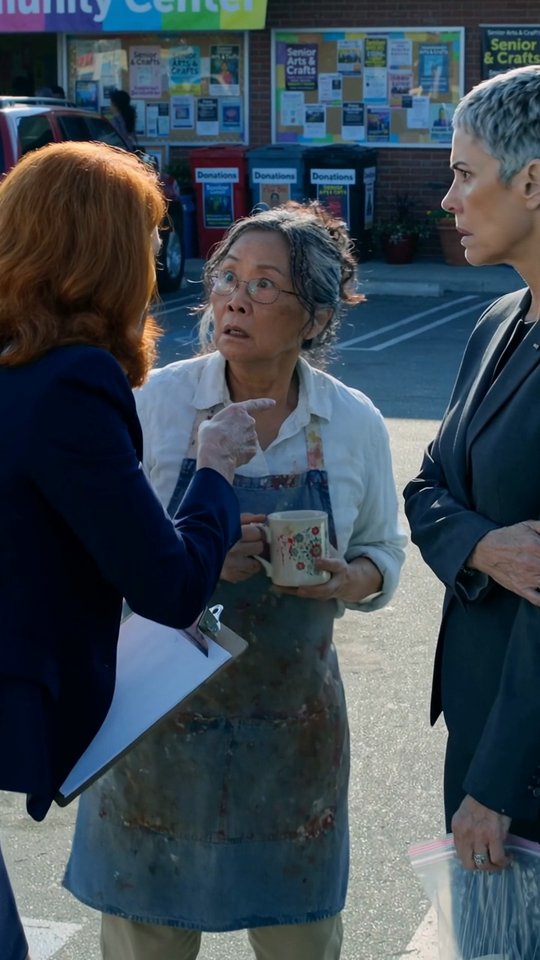
He wore a gray cardigan over a pressed white shirt and moved with the careful precision of someone who spent his life handling fragile objects.
Patrice had cleared the main conference room for the examination, setting up a folding table under the overhead lights and covering it with white linen cloth.
I sat in a plastic chair against the wall, my hands folded in my lap, watching Dr. Pemberton unpack his equipment.
The police had released the mug into his custody for authentication.
It sat on the white cloth, looking small and ordinary under the fluorescent glare.
Dr. Pemberton pulled on white cotton gloves and lifted the mug carefully, turning it slowly in the light.
He examined the exterior glaze, the handle attachment, the foot ring at the base.
Then he flipped it over and studied the blue stamp with the jeweler’s loupe, his face inches from the ceramic surface.
The room was silent except for the hum of the overhead lights and the distant sound of traffic outside.
After five minutes, he set the mug down and pulled a slim folder from his portfolio.
Inside were photographs of similar pieces, catalog entries with detailed measurements, and a handwritten inventory list dated November 18th.
Patrice stood beside the table, her arms crossed, her expression tight with vindication.
“Well?” she said.
Dr. Pemberton removed his gloves and sat down, spreading the documents across the table.
“The stamp is authentic,” he said quietly. “It matches the glaze signature of a potter named Josiah Wedgwood Greene who worked in Savannah between 1784 and 1791.”
My stomach clenched.
Patrice leaned forward. “So it’s the stolen piece?”
Dr. Pemberton held up one hand, his expression thoughtful.
“Not exactly,” he said. “The piece that went missing from our exhibition was a milk jug with a blue floral motif. This is a mug. Different form entirely.”
Patrice frowned. “But the stamp matches.”
“Yes,” Dr. Pemberton said. “Because Greene produced dozens of pieces during his career. The stamp identifies the maker, not the individual object.”
He pulled out another photograph, this one showing a cream-colored milk jug with delicate painted flowers around the rim.
“This is what we’re looking for,” he said, tapping the photo. “The mug Ms. Chu was using is a different piece entirely. It was never part of our collection.”
The air seemed to leave the room.
I felt my chest loosen, my breath coming easier for the first time in two days.
Patrice’s face went pale, then flushed deep red.
“But the insurance claim,” she said, her voice rising. “The appraisal—”
“Was for the milk jug,” Dr. Pemberton said calmly. “Not this mug. They’re both valuable as historical artifacts, but they’re not the same object.”
He turned to me, his expression kind.
“Where did you say you found this, Ms. Chu?”
I cleared my throat, my voice still shaky.
“Donation box,” I said. “February. Outside the building. There were chipped plates and saucers wrapped in a floral tablecloth.”
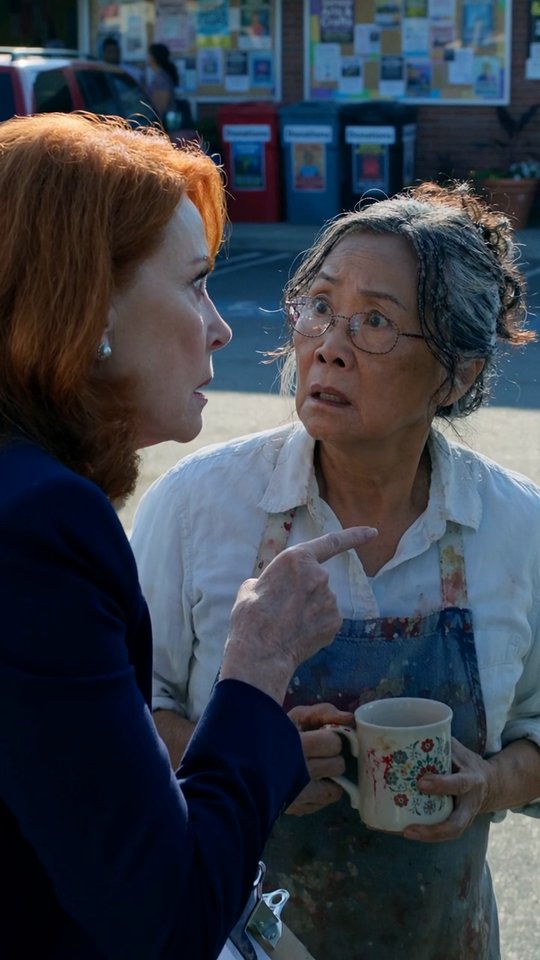
Dr. Pemberton nodded slowly.
“Someone likely inherited it without knowing its value,” he said. “It happens more often than you’d think. Colonial ceramics turn up in estate sales, thrift stores, donation bins. People mistake them for reproduction pieces.”
He picked up the mug again, holding it gently.
“This would appraise for around two thousand dollars,” he said. “Not eight thousand. And since you found it in a donation box intended for public use, you had no reason to suspect it was anything other than ordinary dishware.”
Patrice opened her mouth, then closed it again.
Her hands trembled slightly as she gathered the appraisal documents.
“I’ll need to contact the insurance company,” she said quietly. “And the police.”
Dr. Pemberton stood and began packing his equipment.
“I’ll file my authentication report by end of day,” he said. “The museum will continue searching for the missing milk jug, but Ms. Chu is clearly not involved in its disappearance.”
Patrice left the room without looking at me, her heels clicking rapidly down the hallway.
I sat in the plastic chair, staring at the mug on the white cloth.
Dr. Pemberton paused at the door.
“You’re a pottery instructor?” he asked.
I nodded.
“Then you understand the value of what you were holding,” he said with a small smile. “Not in dollars, but in history. In the hands that shaped it, the kiln that fired it, the lives it touched across two centuries.”
He handed me a business card.
“If you’re ever interested in learning more about Colonial ceramics,” he said, “the museum offers workshops for educators. I think you’d find them valuable.”
After he left, I walked back to my studio and stood at the shelf where the mug had sat for three months.
The spot was still empty, a clean rectangle in the dust.
I thought about Patrice’s accusation, the certainty in her eyes, the way she’d filed the insurance claim without asking me a single question first.
I thought about eleven years of trust evaporating in a Sunday afternoon.
The following week, Patrice submitted a formal apology in writing, delivered to my studio mailbox in a sealed envelope.
It was typed on community center letterhead, three paragraphs long, carefully worded to avoid admitting legal liability.
I read it once and filed it in my desk drawer.
The police closed their investigation the same day Dr. Pemberton’s report was filed.
The insurance company withdrew the claim.
Dr. Pemberton called two weeks later to tell me the museum had located the missing milk jug in a private collection in Charleston, recovered through a routine auction house verification.
The mug was returned to me in the same clear evidence bag, accompanied by a letter from the museum offering to purchase it for their permanent collection.
I thought about it for three days.
Then I donated it to the museum myself, with one condition: that it be displayed with a placard explaining how it was found, how easily history hides in plain sight, waiting to be recognized.
On my studio shelf, I placed a simple handmade mug I’d thrown myself, glazed in cream with a faint blue stamp on the bottom—my own maker’s mark, pressed into the clay while it was still soft.
Every Tuesday and Thursday morning, I fill it with Earl Grey tea and remember that the most valuable things we touch are often the ones we never meant to find.