I didn’t sleep Monday night. I sat at the kitchen table with Finnegan’s head in my lap, staring at the forged bank statement until the ink blurred. At 4:30 a.m., I made coffee and started digging through four years of receipts, looking for any clue about Eugene Malloy.
The name meant nothing to me. I’d lived in Ely my entire adult life. I knew every regular from my bakery years, every volunteer at the sanctuary, every vet tech at Dr. Patel’s clinic. Eugene Malloy wasn’t among them.
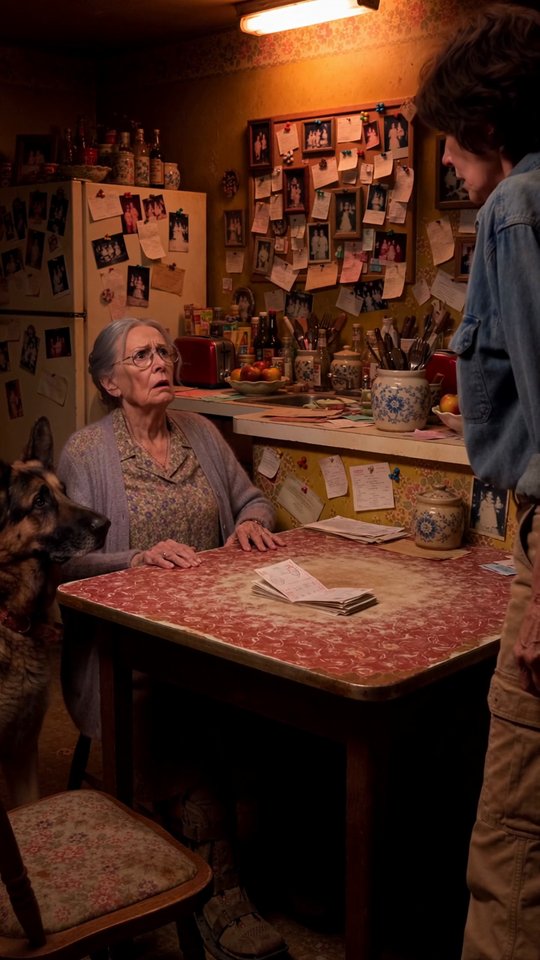
At 6:15 a.m., I called my nephew in Reno. He worked in banking. I woke him up, apologizing, then read him the account numbers from the fraudulent statement. He promised to make calls, see what he could find out.
At 7:00 a.m., I walked out to the kennels. Rita’s cottage curtains were drawn. The delivery van sat where she’d parked it Monday night. I filled water bowls, distributed kibble, let the dogs out into the fenced yard. Finnegan stayed pressed against my leg the entire time.
At 8:30 a.m., Dr. Patel returned my voicemail. I explained the situation—the forged account, the missing money, Rita’s call. He listened quietly, then said, “Maureen, I’ve known you twenty years. This is identity theft. Have you checked your credit report?”
I hadn’t thought of that. He walked me through pulling my report online. When it loaded, my hands went cold. Three credit cards I’d never opened. A car loan I’d never signed. All opened within the last nine months, all showing my name and social security number.
Someone had been systematically stealing my identity.
At 9:45 a.m., my nephew called back. “Aunt Maureen, that account was opened at a credit union branch in Elko. The co-signer listed is Eugene Malloy, but the home address on file is yours. Someone showed ID with your name and signed the paperwork in person.”
“But I’ve never been to that branch,” I said.
“I know. Which means someone forged a very convincing ID. The account’s been active for eight months. Small deposits, then larger withdrawals. Classic money laundering, using your name and nonprofit status as cover.”
My stomach turned. “Who’s Eugene Malloy?”
“Still digging. But Maureen, this is serious. You need a lawyer before noon.”
I had two hours and no lawyer. I called the only attorney I knew, a woman who’d handled my husband’s estate. She was in court all morning. Her paralegal took a message, but I could hear the doubt in his voice.
At 10:30 a.m., I walked back outside. The morning sun was already brutal, heat shimmering off the gravel. I needed to find something, anything, that would prove I wasn’t Eugene Malloy, that I hadn’t opened that account.
That’s when I saw the delivery van.
Rita had taken it to town Monday afternoon. She’d left at 2:00 p.m., returned at 7:15 p.m. Five hours for a supply run that usually took ninety minutes. I’d assumed she’d stopped for a meal. But now, standing in the heat with the forged statement burning in my pocket, I wondered.
I walked to the van and opened the driver’s door. The interior smelled like kibble and bleach. I checked the glove box—registration, insurance card, a folded map. Nothing unusual. Then I noticed the small logbook wedged between the seats.
I’d started that log years ago for bakery deliveries. Recording mileage for tax purposes. I’d told Rita to keep it updated. I pulled it out and flipped to Monday’s entry.
Starting odometer: 87,340 miles. Ending: 87,414 miles.
My hands started shaking. Town was eighteen miles round trip. The van had traveled seventy-four miles Monday afternoon.
Where had Rita gone?
I heard gravel crunching. A sheriff’s cruiser was turning into my driveway. It was only 11:20 a.m., forty minutes early. Behind it came a second vehicle, a silver sedan with county plates.
Sheriff Crowley stepped out, his face grave. A woman in a gray pantsuit emerged from the sedan. And then Rita appeared from her cottage, walking toward them with her arms wrapped around herself.
I met them in the driveway, the logbook clutched in my hand.
“Maureen,” Sheriff Crowley said quietly. “This is just preliminary. We’re here to ask questions, review documents.”
“I didn’t steal anything,” I said. “Someone forged my identity. I have proof—credit cards I never opened, loans I never signed. And I need to ask Rita something first.”
Rita flinched. The investigator pulled out a tablet.
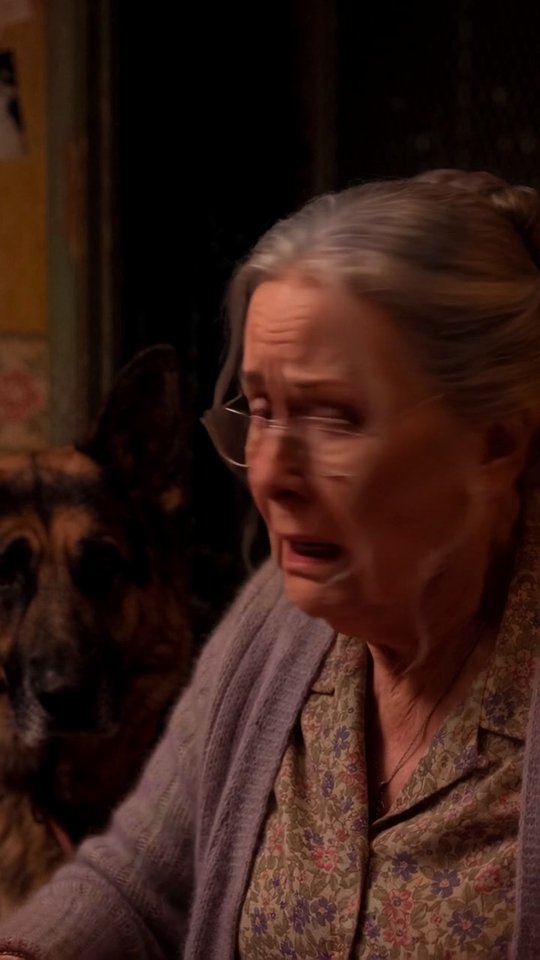
“Monday afternoon, you took the van to town,” I said. “You left at 2:00 p.m. and came back at 7:15. The log shows you drove seventy-four miles. Where did you go?”
Rita’s face went white. She looked at the sheriff, then back at me. “I stopped in Elko. I needed to pick up a prescription.”
“Elko is fifty-two miles one way. That’s a hundred and four miles round trip. The log shows seventy-four. You’re missing thirty miles. Where were you?”
The investigator’s eyes sharpened. “We’ll need to verify that timeline. Mrs. O’Sullivan, do you have documentation of your whereabouts Monday afternoon?”
“I was here all day. Dr. Patel called me at 3:30 p.m. I can give you his number.”
Sheriff Crowley frowned. “Rita, why were you in Elko?”
Rita’s hands were shaking. “I told you. Prescription.”
“Which pharmacy?” the investigator asked.
Rita didn’t answer. The silence stretched out. Then, quietly, she said, “I saw someone at the credit union. A man. He was coming out of the branch, and he looked exactly like the description from the account paperwork.”
My breath caught. “You saw Eugene Malloy?”
“I don’t know his name. But he was carrying a folder with the sanctuary’s name on it. I followed him to a gas station, watched him get into a truck with Montana plates. I wrote down the license number.” She pulled a crumpled receipt from her pocket.
Sheriff Crowley took the receipt. “Why didn’t you tell me this last night?”
“Because I was scared. Because I didn’t want to believe—” Rita’s voice broke. “I’m sorry. I should have trusted you.”
The investigator was already on her phone. Thirty seconds later, she looked up. “Vehicle registered to Eugene David Malloy, age fifty-three, Billings, Montana. He’s got priors—identity theft, forgery, wire fraud. Active warrant out of Idaho.”
My legs felt weak. “He’s been using my name for eight months.”
“And your nonprofit status,” the investigator said. “He targeted you because small-town sanctuaries don’t have sophisticated fraud detection. Rita’s call yesterday probably spooked him.”
Sheriff Crowley turned to me. “Maureen, I’m sorry. We should have dug deeper.”
I looked at Rita. She was crying now. “I’m so sorry,” she whispered. “I thought I was protecting the sanctuary.”
“You were,” I said quietly. “You saw something wrong and you acted. You just didn’t have all the information.”
The investigator closed her tablet. “Mrs. O’Sullivan, come to the county office tomorrow to file a formal report. We’ll freeze the fraudulent accounts and start recovery. You’re not facing charges. You’re a victim.”
Three days later, Sheriff Crowley called. They’d caught Eugene Malloy at a motel outside Boise. He’d been running the same scam across four states, targeting elderly nonprofit founders. The van’s odometer log—Rita’s seventy-four-mile record—provided the timeline that placed her in Elko when Malloy was leaving the credit union.
Rita moved back into the cottage. We didn’t talk much at first. The trust had frayed. But one evening, as we fed the dogs together, she said, “I should have asked you first.”
“You were protecting something you loved,” I replied. “I can’t fault you for that.”
Finnegan pressed between us, his tail wagging slowly. And in that moment, standing in the Nevada dust with the dogs barking and the sun setting orange over the highway, I realized the sanctuary had survived not in spite of Rita’s accusation, but because she’d cared enough to fight for it.
The money I’d spent over four years had saved thirty-seven dogs. Eugene Malloy’s theft had nearly destroyed everything. But it was Rita’s seventy-four-mile drive and a crumpled receipt that proved sometimes the people who challenge us are the ones who save us in the end.