I sat at my kitchen table that Tuesday afternoon, the three theater debentures spread before me like artifacts from another lifetime, and tried to understand how Vincent had kept this secret for twenty-five years.
The cream-colored certificates felt almost like the silk I used to line costume bodices, thick and substantial, watermarked with the theater’s old logo—a pair of comedy and tragedy masks intertwined with Rhode Island’s state flower.
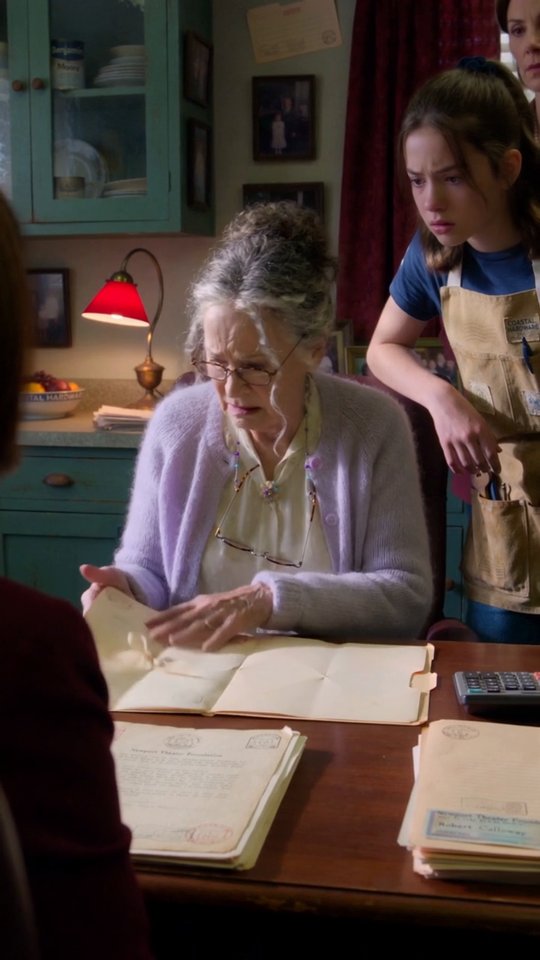
Each one bore Vincent’s careful signature in fountain pen ink that had faded to sepia. I’d called Lily after hanging up with the theater accountant, my voice shaking so badly she thought something terrible had happened.
Now she sat across from me, still wearing Vincent’s carpenter’s apron, studying the certificates with the same focused intensity she brought to her geometry homework. “1989,” she read aloud. “That’s the year you got married, right?”
I nodded, my throat too tight to speak. We’d been married in the theater’s small rehearsal hall, surrounded by velvet curtains and the smell of greasepaint.
Vincent had built our altar from reclaimed stage lumber, sanding it smooth and finishing it with tung oil until it glowed like honey. He must have bought these right after the wedding.
The theater had been struggling that year, its roof leaking, its furnace failing every winter. The artistic director had launched a restoration campaign, selling debentures to longtime supporters.
I remembered the fundraising gala, remembered sewing emergency alterations backstage while Vincent charmed donations from local business owners. But he’d never mentioned buying debentures himself.
We’d been so careful with money back then, living in a tiny apartment above the hardware store, saving every spare dollar for a down payment on a house. “How much did each one cost?” Lily asked.
I found the purchase receipt tucked inside the ribbon—$2,400 per certificate, paid in full. Seven thousand two hundred dollars total, a fortune for us in 1989.
I felt dizzy imagining Vincent scraping together that money from his furniture commissions, hiding it from me, planning this surprise for decades into the future.
I drove to the theater alone that afternoon, needing to see those uncashed checks with my own eyes. The building stood on Thames Street, its brick facade painted deep burgundy since my retirement.
Inside, the lobby smelled exactly as I remembered—old wood, fresh paint, that particular mustiness of costumes stored in cedar. The accountant, a woman named Patricia whom I’d never met, greeted me with a folder so thick it barely closed.
“Mrs. Stanhope, I’ve worked here twelve years and I’ve been waiting for this moment the entire time,” she said, her eyes bright. She spread the checks across her desk in chronological order.
The earliest ones were handwritten, the theater’s old address printed in the corner. Later checks came from a printing company, then shifted to a more modern bank.
But every single one bore the same amount: $1,122 annually, divided from the theater’s net proceeds. Thirty-four checks, never cashed, accumulating to $38,148 plus this year’s payment of $1,134.
Patricia handed me a calculator and a ledger showing the theater’s payment history. “We sent letters every year to your old apartment address,” she explained. “When those came back undeliverable, we tried the phone book, searched public records.”
I thought of all the years Vincent and I had lived in our little house on Margin Street, unreachable because we’d moved six months after he purchased the debentures. “He was going to tell you,” Patricia said softly.
She showed me Vincent’s original application, filed in the theater’s archive. In the section marked “Purpose of Investment,” he’d written in his careful block letters: “For my wife Cora’s retirement fund. She has given this theater thirty years of invisible labor. When she stops sewing, she should have her own stage.”
I pressed my hand to my mouth, tears spilling over. Vincent had died three months before my planned retirement, three months before he would have surprised me with this gift.
“There’s more,” Patricia said, pulling out a second folder. Inside were letters from the theater’s board, written over the years, expressing gratitude for Vincent’s investment.
One from 2003 mentioned that his debentures had helped fund the costume shop’s new ventilation system. Another from 2011 thanked him for supporting the theater through the recession when ticket sales had plummeted.
Each letter addressed to Vincent personally, sent to the old apartment, returned unopened. “Your husband saved this place,” Patricia said. “Without those debentures, we would have closed in 2008.”
I asked Patricia about the scholarship idea, and she pulled out preliminary paperwork. “The board would be honored,” she said. “We could structure it so the annual dividends fund one full scholarship per year.”
We spent two hours working through the details. The Cora and Vincent Stanhope Costume Design Scholarship would cover tuition, materials, and a summer apprenticeship at the theater.
I kept $8,000 for myself—enough to restore Vincent’s workshop and finish his incomplete projects. The rest, nearly $31,000, went into an endowment account that would grow and give year after year.
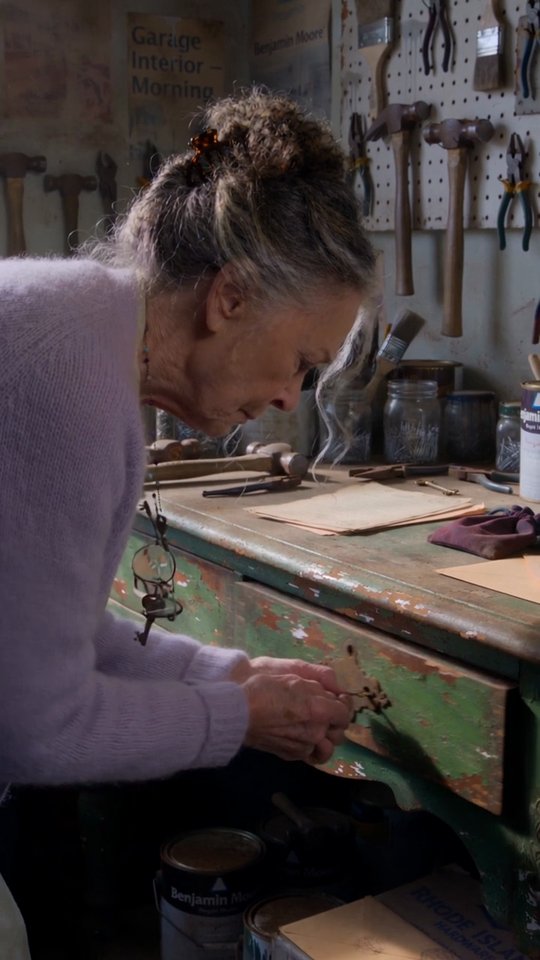
That evening, Lily and I returned to the garage together. I unlocked the workbench drawer fully this time, removing everything Vincent had stored there.
Beneath the debentures we found his project notebooks, leather-bound volumes filled with sketches and measurements. The Victorian music box for Lily appeared on page forty-seven, drawn in meticulous detail.
He’d planned inlay work on the lid—a scene from “The Nutcracker,” Lily’s favorite ballet. We found the cherry wood panels already cut and sanded, waiting in a box beneath the workbench.
I taught her to use Vincent’s tools that week—the small plane for smoothing edges, the cabinet scraper for final finishing, the careful art of gluing veneer. She had his patience, his steady hands.
The music box took us six weeks to complete, working every Saturday morning in the garage. When we finally wound the key and “Clair de Lune” filled the workshop, I felt Vincent’s presence so strongly I looked up expecting to see him at the vise.
I gave the music box to Lily on her birthday, along with the carpenter’s apron and Vincent’s favorite chisel set. “These are for building things that matter,” I told her.
The first scholarship recipient, a girl named Maya from Providence, visited in September. She arrived with a portfolio of costume sketches, her hands already marked with needle pricks and fabric dye.
I recognized that hunger in her eyes—the need to create beauty from cloth and thread, to transform actors into characters. “My mom cleans houses,” Maya said quietly. “She can’t afford design school.”
I handed her the scholarship letter, watched her face transform as she read the amount. “This is for four years?” she whispered, and I confirmed it covered everything she needed.
She cried then, and I held her the way I wished someone had held me at nineteen when I’d chosen theater work over college because I couldn’t afford both.
Last month the theater held a small ceremony dedicating the scholarship in Vincent’s name. They mounted a plaque in the costume shop, right above the industrial sewing machines where I’d spent three decades hemming velvet and stitching silk.
Lily read Vincent’s original application statement aloud, her voice steady and clear. Maya stood beside her in a dress she’d designed herself, already apprenticing in the shop.
I keep the debentures in Vincent’s restored workbench now, in a drawer that opens smoothly, no longer swollen with grief and salt air.
Lily’s learning to turn spindles on his lathe, practicing the rhythm he tried to teach me years ago. She wants to build a cradle someday, she says, like the one Vincent made when she was born.
I watch her work and think about invisible labor, about love that builds slowly across decades, about gifts that wait patiently in locked drawers until the moment we’re finally ready to receive them.
Vincent knew I would find those debentures eventually. He knew I would understand what he’d been building all along—not just furniture or music boxes, but a future where people like us have stages of our own.
The garage smells like sawdust and machine oil again, like love made tangible, like every beautiful thing he never had the chance to say aloud but built into the grain of everything he touched.