I sat in my kitchen Saturday morning, staring at Dale Pruitt’s check for $22,000, wondering if Warren had known all along that the clapper belonged to his family.
The town attorney had given me a folder of documents—deeds, shipping manifests, court filings from 1923—that traced the Sanderson Steamship Company back four generations.
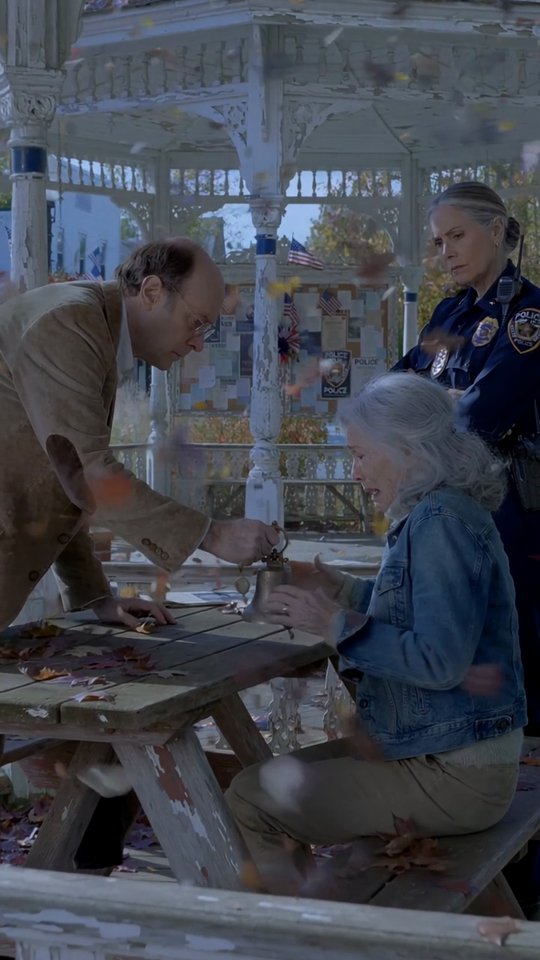
Warren had never mentioned it.
His parents died when he was twelve, and he’d been raised by an aunt in Vermont who never spoke about the family business.
I called the Litchfield Historical Society and asked to see their archive on the *Litchfield Belle*.
The archivist, a young woman named Phoebe, led me to a basement room filled with cardboard boxes and yellowed newspaper clippings.
She pulled out a leather-bound ledger dated 1889.
“The *Litchfield Belle* was the finest passenger vessel on the Housatonic River. Your husband’s great-grandfather, Samuel Sanderson, commissioned it in 1887.”
I traced my finger down the passenger lists—hundreds of names, dates, destinations.
Phoebe showed me a photograph of the ship docked at Bantam Lake, its brass bell gleaming in the sunlight.
“The ship sank in a storm in November 1889. Three passengers drowned. Samuel Sanderson spent two years trying to salvage it, but the river was too deep.”
She pulled out another document—a salvage report from 1891.
“A team of divers recovered the bell and clapper in 1891. Samuel mounted them in his home as a memorial. When he died in 1919, his son donated them to the historical society—or so the society claimed.”
I looked up.
“Claimed?”
Phoebe nodded.
“Samuel’s son, your husband’s grandfather, contested the donation. He said the society had taken the bell without permission after his father’s funeral. The case went to court in 1923, but it was dismissed on a technicality.”
She showed me a faded newspaper clipping: *Sanderson Family Loses Bell Dispute*.
“When your husband’s grandfather died in 1934, the family stopped fighting. The bell stayed in the society’s collection, but the clapper went missing in 1987.”
I felt a chill.
“Warren took it.”
Phoebe closed the ledger.
“Maybe he thought he was taking back what belonged to his family.”
I drove to the Torrington sanctuary that afternoon.
Cleo was resting in a shallow pool, her bandaged stump elevated on a foam pad.
The vet, a woman named Dr. Kirsch, sat beside me on a bench.
“She’s healing beautifully. The anonymous donation covered a custom prosthetic and a permanent habitat. She’ll live here for the rest of her life.”
I watched Cleo’s yellow eyes blink slowly in the sunlight.
“Do you know who sent the money?”
Dr. Kirsch shook her head.
“The wire came from an account registered to ‘Sanderson Estate Trust.’ Does that mean anything to you?”
I felt my breath catch.
That night, I went through Warren’s old filing cabinet in the basement.
Buried under tax returns and insurance policies, I found a manila envelope marked *Family Records*.
Inside was a handwritten letter dated 1986, addressed to Warren from a lawyer in Hartford.
The letter explained that Warren was the sole surviving heir of the Sanderson Steamship Company.
A trust had been established in 1934 by his grandfather, with funds held in escrow until a legal claim to the family’s stolen property could be resolved.
The trust was worth $340,000.
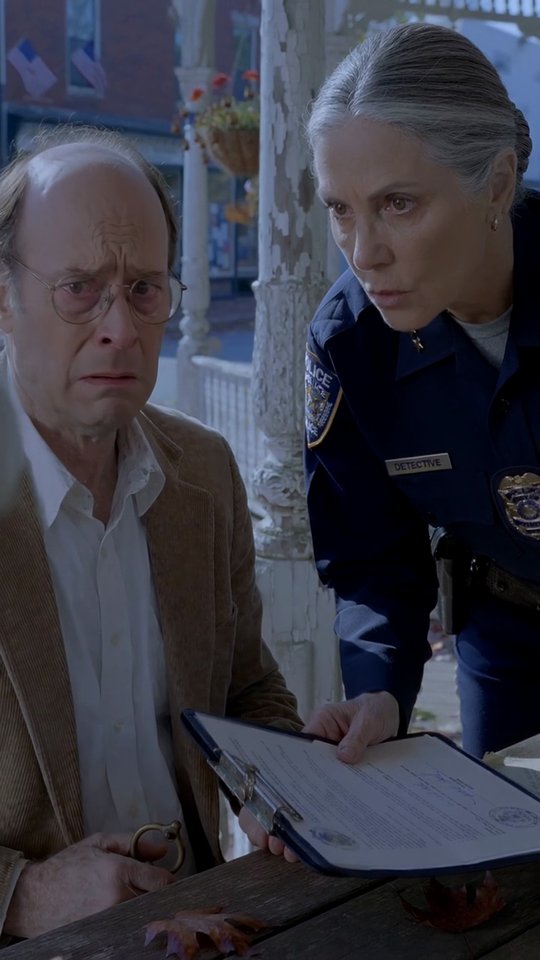
Warren had never touched it.
At the bottom of the envelope was a note in Warren’s handwriting: *For Trudy—when the time is right*.
I sat on the basement floor and cried.
Monday morning, I met with the estate lawyer listed in the letter.
His name was Milton Cross, and his office smelled like old books and lemon polish.
“Mrs. Sanderson, your husband instructed me to release the trust funds only if the clapper was legally returned to the family. When the town attorney contacted me last week confirming your ownership, I authorized the wire transfer to the sanctuary.”
I stared at him.
“Warren planned this?”
Milton nodded.
“He believed the clapper would eventually prove the family’s claim. He wanted the money to go toward something meaningful—something you cared about.”
He slid a document across the desk.
“The remaining trust balance is $328,000. It’s yours.”
I couldn’t speak.
Milton leaned back in his chair.
“Your husband was a patient man, Mrs. Sanderson. He knew the truth would come out eventually.”
I drove back to the sanctuary and sat beside Cleo’s pool until sunset.
Dr. Kirsch brought me a cup of coffee.
“You’ve been here for three hours. Are you okay?”
I told her about the trust, the letter, Warren’s plan.
She sat down beside me.
“So what will you do with the money?”
I watched Cleo slide into the water, her scarred body moving with surprising grace.
“I’m going to build a wildlife rehabilitation center. For animals no one else will take.”
Dr. Kirsch smiled.
“What will you call it?”
I looked at the empty space on my wrist where Warren’s watch used to sit.
“The Sanderson Sanctuary.”
Three months later, I stood in front of a newly built cedar lodge on twenty acres of wetland outside Litchfield.
Dale Pruitt had helped me find the land—he’d given me the $22,000 check as a donation and refused to take it back.
The sanctuary had enclosures for injured foxes, a flight aviary for hawks, and a climate-controlled pool for Cleo.
Above the main entrance, I mounted the brass clapper on a walnut plaque, the inscription polished and gleaming: *Litchfield Belle – 1889*.
Underneath, I added a smaller brass plate: *In memory of Warren Sanderson, who taught me that the truth always finds its way home*.
The day we opened, over two hundred people came.
Phoebe from the historical society brought the original ledger and displayed it in the visitor center.
The town attorney gave a speech about the importance of family legacy and second chances.
Dale Pruitt stood in the back, wearing a clean blazer, his eyes damp.
And as the sun set over the wetlands, I heard the faint echo of a riverboat bell ringing across the water—just like Warren always said it would.