Mayor Raymond Booker stood in my living room, his eyes fixed on the wooden soldier.
“Mrs. Wallace, I apologize for the intrusion. This is rather urgent.”
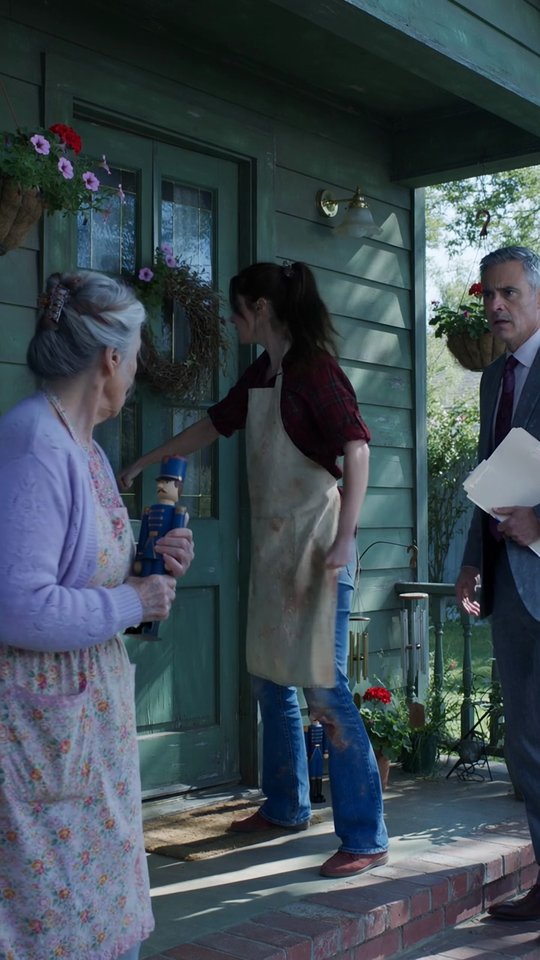
I gestured to the sofa. He sat. I remained standing.
“What’s this about a property deed?”
He opened the manila folder he’d been carrying. Inside were photocopies of old documents, maps, survey reports.
“In 1984, the town of Lambertville acquired a three-acre parcel on the Delaware River for a proposed community workshop center. The deed was signed by then-mayor Mitchell Grange and witnessed by a local craftsman who donated the initial funding.”
“I don’t understand what this has to do with me.”
“That craftsman was your husband, Vernon Wallace.”
The room tilted slightly.
“Vernon donated money for a community center?”
“Seven thousand, one hundred and ten dollars. His life savings at the time. The deed stipulated that if the center was never built, the land would revert to his heirs along with the original donation plus forty years of accrued interest.”
I sat down.
“The center was never built?”
“No. The funding dried up. The town used the parcel for storage. We forgot about the deed entirely until last week when a developer submitted plans to build condominiums on that exact plot. Our attorney found the original agreement buried in the archives.”
He pulled out a survey map. Circled in red was a rectangular lot along the river.
“Current assessed value is one-point-two million dollars. With interest on the original donation, you’re owed approximately one-point-four million total.”
The number didn’t register.
“Why are you here? Why not just mail me a letter?”
“Because the deed specifies that the transfer can only be executed in the presence of a physical token—a hand-carved wooden soldier toy that Vernon Wallace created as proof of his craft legacy. Without that soldier, the deed is void and the land remains town property.”
I looked at the mantel.
“You’re saying Vernon carved a soldier in 1984?”
“According to the deed, yes. He was supposed to pass it to his heirs along with documentation explaining its significance. We’ve been searching for that toy for eight days. Then this morning, my assistant drove past your house and saw you standing on your neighbor’s porch holding what appeared to be a wooden soldier. She called me immediately.”
I stood, walked to the mantel, picked up the toy.
“This isn’t from 1984. I carved this three months ago.”
Mayor Booker’s face fell.
“You’re certain?”
“Completely. I made it for the little boy next door.”
He exhaled slowly, closing the folder.
“Then I apologize for wasting your time. Without the original soldier, there’s no legal mechanism to transfer the deed. The town will proceed with the condominium sale.”
He stood to leave.
I looked down at the soldier in my hands.
The hollow base.
“Wait.”
I unscrewed the base.
The rolled document slid into my palm.
I unfolded it carefully.
The town seal. Mayor Mitchell Grange’s signature. The date: November 12, 1984.
And at the bottom, in Vernon’s careful handwriting: “To my wife Arthurine—This land is for you to build what I could not. The soldier is the key. Love always, V.”
Mayor Booker stared at the document.
“Where did you find that?”
“In Vernon’s workbench. This morning. I didn’t know what it was, so I put it inside the soldier.”
“But you said you carved that soldier recently.”
“I did.”
“Then where’s the original?”
I walked to the garage.
Vernon’s workbench sat against the far wall, covered in tools and sawdust.
I opened the bottom drawer.
Beneath the envelope, wrapped in faded newspaper, was another wooden soldier.
Older, darker wood, the paint cracked and faded.
But unmistakably the same design.
I carried it back inside.
Mayor Booker took it carefully, turning it over.
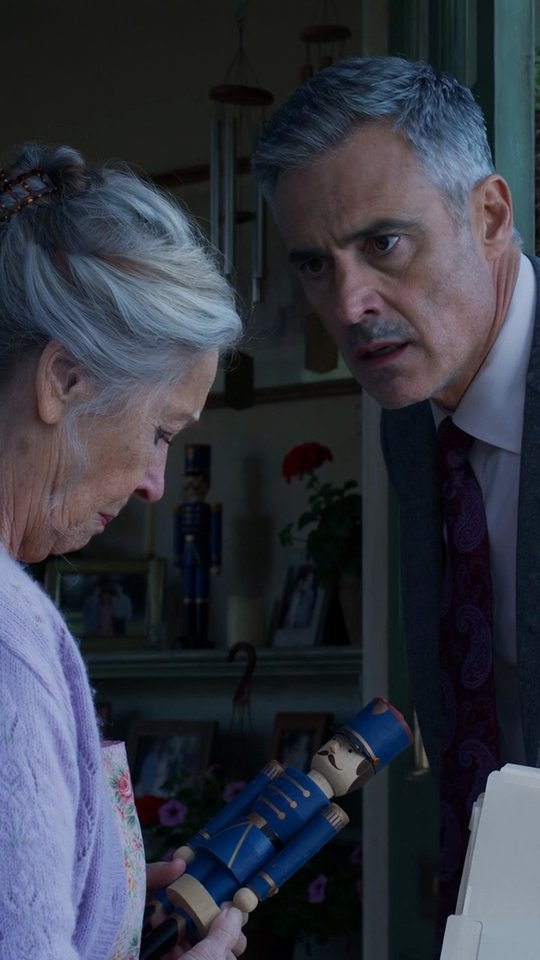
“This is it. The original. See the stamp on the base? Vernon’s maker’s mark from the 1980s.”
He unscrewed the base of the old soldier.
Inside was a small brass key and a handwritten note.
The note read: “For the workshop that will teach the next generation to build with their hands. —V.W.”
Mayor Booker looked at me.
“Mrs. Wallace, you’re now the legal owner of three acres of prime riverfront property and the recipient of one-point-four million dollars in restitution. What do you intend to do with it?”
I thought about Pauline’s words.
Meddling old fool.
I thought about Oliver’s face through the fence.
I thought about Vernon’s hands teaching me to carve.
“I’m going to build the community workshop Vernon wanted. A place where people can learn woodworking, carpentry, crafts. Free classes for anyone who wants to learn. Especially kids who don’t have access to tools or teachers.”
The mayor smiled.
“I think Vernon would approve.”
He left twenty minutes later with the original soldier, the deed, and a promise to begin the legal transfer immediately.
I sat at the kitchen table holding the soldier I’d carved for Oliver.
The new one.
The one Pauline had rejected.
Two days later, I knocked on her door again.
She opened it, her face immediately hardening.
“I told you—”
“I know what you told me. I’m not here to argue. I’m here to say thank you.”
She blinked.
“Thank you?”
“If you hadn’t slammed that door, I wouldn’t have gone looking through Vernon’s workbench. I wouldn’t have found the deed. I wouldn’t have discovered what my husband left me. So thank you, Pauline.”
I held out the new wooden soldier.
“This is still for Oliver. No strings attached. If you don’t want it, throw it away. But I made it with love, and I want him to have it.”
I set it on the porch railing and walked away.
That evening, I saw Oliver playing in his yard.
The soldier was in his hands.
He was marching it along the fence, making quiet battle sounds.
Pauline stood on the porch watching him.
She saw me and raised one hand.
Not quite a wave.
Not quite an apology.
But something softer than before.
I raised my hand back.
Six months later, the Vernon Wallace Community Workshop opened on the riverfront.
Twelve workbenches, full tool sets, kilns, sewing stations, a small forge.
We offered free classes three evenings a week and all day Saturday.
Pauline enrolled Oliver in the beginner woodworking course.
He carved a duck.
Painted it yellow.
Gave it to me as a thank-you gift.
I keep it on my mantel next to the new soldier.
Vernon’s original soldier sits in a display case at the workshop entrance, along with the deed and his handwritten note.
People stop to read it every day.
They ask me about Vernon.
I tell them he was a man who believed that everyone deserves to learn how to build something beautiful with their own hands.
And that sometimes the greatest gifts are hidden inside the smallest things.
Waiting for the right moment to be found.