I didn’t sleep that night.
I sat at my kitchen table with the ticket stub under a magnifying lamp, reading the faded print over and over until the letters blurred.
Margaret A. Howell. Whitefish to Seattle. July 14, 1976.
My mother had never mentioned a trip to Seattle.
Not once in sixty-three years.
I made coffee at five-thirty Sunday morning and walked to Hugh’s duplex in the dark.
His porch light was on.
I knocked.
No answer.
I knocked again, harder.
The door opened six inches.
Hugh stood in the gap, unshaven, wearing the same clothes from yesterday.
“I’m not talking about this,” he said.
I held up the ticket stub.
“You don’t have a choice.”
He tried to close the door.
I put my foot in the frame.
“Uncle Hugh, I’m sixty-three years old. I deserve to know who my father was.”
His shoulders sagged.
He opened the door.
Inside, his living room smelled like stale tobacco and old newspapers.
We sat on opposite ends of a faded plaid couch.
He stared at the floor.
“Your mother swore me to secrecy,” he said finally.
“When?”
“Nineteen seventy-six. Right after she came back from Seattle.”
I waited.
He rubbed his face with both hands.
“She was twenty-seven. Working as a bookkeeper at the lumber mill in Columbia Falls. She met a man that spring. A geologist doing survey work for the Forest Service.”
“What was his name?”
“Thomas. Thomas Brennan.”
The name meant nothing to me.
“They had an affair,” Hugh continued. “Lasted about three months. He was married. Had a family in Seattle. When Margaret found out she was pregnant, she told him. He gave her money for a bus ticket and told her to take care of it.”
My stomach turned.
“She went to Seattle?”
“She did. Took the train on July fourteenth. Stayed in a motel near the Greyhound station for two days. But she couldn’t go through with it.”
He looked at me then.
His eyes were red.
“She came home. Told our mother she’d made a mistake. Grandmother didn’t ask questions. Just took her in. And when you were born in March, Margaret told everyone the father was a man named Donald MacQuarrie—a logger she’d dated briefly and who’d moved to Alaska before she knew she was pregnant.”
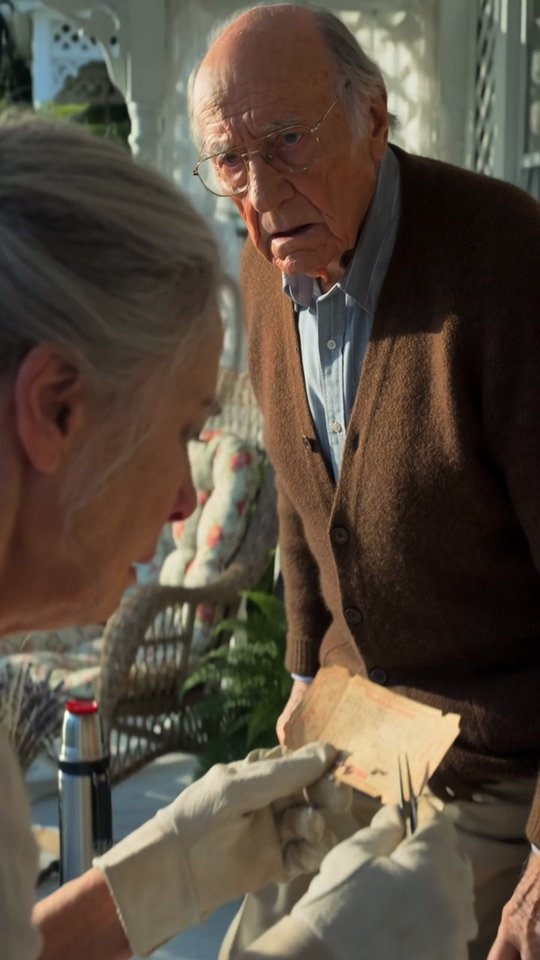
“Donald MacQuarrie,” I said slowly. “The man she married in seventy-seven.”
“She met him eight months after you were born. He knew the truth. Married her anyway. Raised you as his own. He was a good man, Fiona.”
I felt like the floor had dropped out from under me.
“Why did Grandmother press the ticket stub in the herbarium?”
Hugh’s mouth twitched.
“I think she wanted someone to find it someday. She told me once that secrets have a way of growing heavier the longer you carry them. Maybe she thought if it was hidden in plain sight, it would eventually come to light when it was supposed to.”
I looked at the ticket stub in my hand.
A piece of paper that had been waiting forty-eight years to tell me the truth.
“Did my mother ever try to contact Thomas Brennan?”
“No. He sent her two hundred dollars in an envelope with no return address a month after she came back. She never heard from him again.”
I sat there for a long time.
Hugh got up, made instant coffee, and brought me a chipped mug.
“Are you angry?” he asked.
I didn’t know.
I felt hollow.
“I don’t know what I feel.”
He nodded.
“Your mother loved you, Fiona. More than anything. And Donald loved you. That’s what matters.”
I wanted to believe him.
But I kept thinking about the man in Seattle who’d given my mother money to erase me.
I went home an hour later.
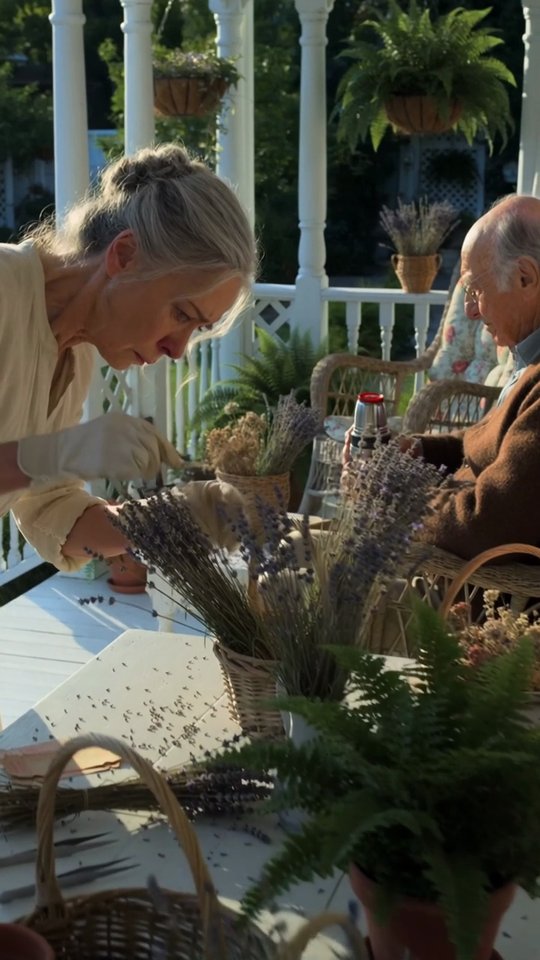
The herbarium sheets were still spread across my porch table.
I sat down and cataloged the rest of them, one by one, with cotton gloves and a steady hand.
When I got to the lavender sheet, I placed the ticket stub back between the pressed stems and sealed it with a strip of archival tape.
Then I wrote a note on the back in pencil.
“Margaret A. Howell. July 14, 1976. The day she chose to keep me.”
I donated the entire collection to the Montana Historical Society in Helena the following week.
They’re on display now in a climate-controlled case in the museum’s botanical wing.
Visitors can see my grandmother’s meticulous handwriting, the delicate pressed petals, and—if they look closely at the tenth sheet—a faded train ticket stub that tells a story about a young woman who took a trip she never talked about and made a choice that gave me my life.
I went to see the exhibit last month.
Hugh came with me.
We stood in front of the lavender sheet for a long time.
He put his hand on my shoulder.
“She was brave,” he said quietly.
I nodded.
Because she was.
And so, in her own way, was my grandmother—pressing a secret between two sprigs of lavender and trusting that someday, someone would find it and understand.