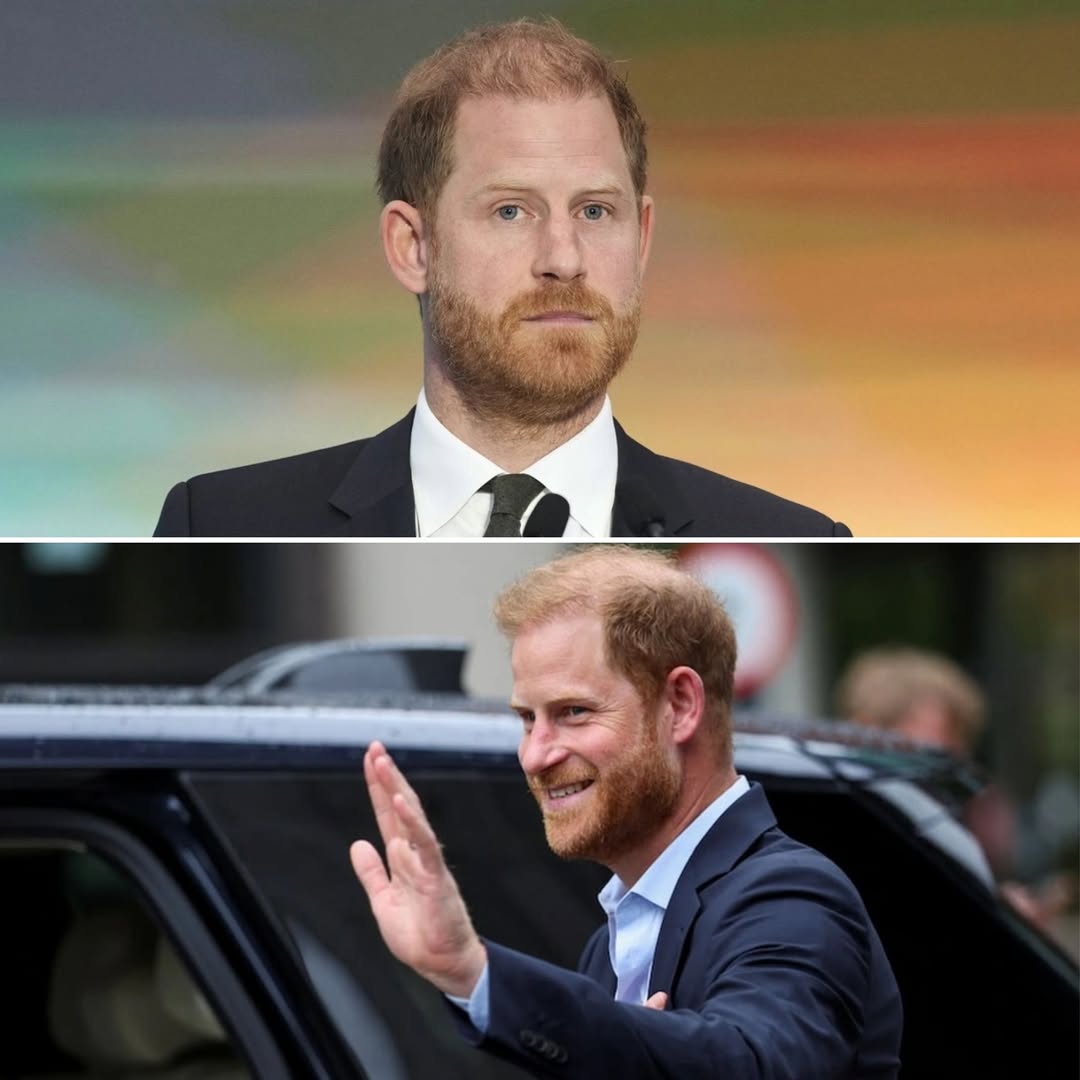
 The British monarchy has survived centuries of upheaval, but it seems even a modern morning talk show can still spark a constitutional firestorm. Good Morning Britain (GMB), ITV’s flagship breakfast program, found itself at the center of a digital maelstrom this week after posing a question that many viewers deemed not just controversial, but fundamentally “treasonous.”
Prince Harry as King? New Poll Triggers Strong Backlash From Royal Fans
The outcry began when the show’s official social media handle on X (formerly Twitter) posted a deceptively simple poll: “Should Prince Harry be King?” What was intended as a lighthearted tie-in to a panel discussion quickly devolved into a textbook example of how not to engage a public that remains fiercely protective of Royal protocol.
The debate was rooted in comments made by renowned royal writer Richard Kay on the Palace Confidential podcast. Kay, who maintained a close personal confidence with the late Princess Diana, shared a poignant historical anecdote about her vision for her sons. According to Kay, Diana harbored a private belief that her younger son, Harry, possessed a temperament perhaps better suited for the burden of the Crown than his more reserved older brother, William.
“She, in her mind, was preparing the way for the possibility that it would be Harry who succeeded his father,” Kay revealed. “She had a nickname for Harry: She used to call him ‘Good King Harry’—a throwback to medieval days.”
While Kay’s insights were meant to provide a nostalgic look at a mother’s intuition, the GMB production team took the narrative a step further by putting the question to a public vote. The backlash was instantaneous, vitriolic, and widespread.
Prince Harry, Duke of Sussex, departs The Royal Courts of Justice after attending day 4 of a court case against Associated Newspapers Ltd on January 22, 2026, in London, England. (Image Source: Getty Images | Max Mumby/Indigo)
The poll’s results were mathematically decisive: 80% of respondents voted “No.” However, the primary source of the outrage wasn’t the result itself, but the fact that the question was being asked at all.
Critics were quick to point out that the British monarchy is not a democratic institution; the line of succession is governed by the Act of Settlement and the principle of primogeniture, not by X polls or morning show panels. One incensed viewer summed up the sentiment of many, posting: “So you’re peddling treason? You do understand that we don’t vote for our monarch, don’t you? This pathetic poll should be taken down ASAP!”
The sentiment echoed across the platform, with users accusing the show of manufacturing “unnecessary controversy” and “pointless” debate. One user bluntly stated, “That is the most ridiculous poll I’ve ever seen!!!! GMB. Do better.” Another combined constitutional defense with personal animosity toward the Duke of Sussex, writing: “He is a traitor! We already have a king in waiting! He needs to stay in Montecito with Meghan Markle!”
The controversy highlights a growing divide between the media’s desire for “viral” royal content and the public’s understanding of the Crown’s legal structure. Despite Prince Harry and Meghan Markle’s high-profile departure from royal duties in 2020—the move colloquially known as “Megxit”—Harry’s legal standing in the line of succession remains unchanged.
Prince William with Diana, Princess of Wales, and Prince Harry on the day he joined Eton in September 1995. (Image Source: Getty Images | Anwar Hussein)
As it stands today, the hierarchy is as follows:
The Prince of Wales (Prince William)
Prince George of Wales
Princess Charlotte of Wales
Prince Louis of Wales
The Duke of Sussex (Prince Harry)
Prince Archie of Sussex
Princess Lilibet of Sussex
For Harry to ever ascend the throne, a catastrophic event would have to bypass his brother and all three of William’s children. Therefore, asking the public if he should be King is seen by traditionalists as an exercise in futility that serves only to undermine the current “King in waiting,” Prince William.
The GMB incident raises broader questions about the role of the media in modern Britain. By framing the succession as a matter of opinion rather than law, broadcasters risk eroding the very tradition they claim to cover. For many, the poll felt like an attempt to treat the Royal Family like a reality television show—an “Idol” style competition where the “winner” is determined by fan engagement.
Richard Kay’s original comments were a reflection of a mother’s private musings from thirty years ago. By translating those musings into a 24-hour news cycle poll, GMB managed to offend both the supporters of the Duke of Sussex (who saw it as a setup for failure) and the staunch monarchists (who saw it as a violation of constitutional norms).
In an era where the Sussexes are increasingly viewed through a polarized lens, any mention of Harry’s return to the royal fold—even hypothetically—is bound to trigger a reaction. However, the intensity of this specific backlash serves as a reminder that for the British public, the Crown represents stability and law.
Prince Harry and Meghan Markle, Duke and Duchess of Sussex, leave after a service of thanksgiving for the reign of Queen Elizabeth II at St Paul’s Cathedral in London, Friday, June 3, 2022, on the second of four days of celebrations to mark the Platinum Jubilee. (Image Source: Getty Images | Matt Dunham – WPA Pool)
While Princess Diana may have affectionately envisioned a “Good King Harry” in the 1990s, the reality of 2026 is far more rigid. Prince Harry remains in California, the line of succession remains in place, and as GMB learned the hard way, the throne is not—and likely never will be—subject to a public vote.
As one viewer aptly put it, the question was simply “irrelevant.” In the world of the British Monarchy, the law of the land will always trump the noise of social media.