I heard Karen Hullbrook before I saw her.
“Stop right there. I’m calling 911.”
Her voice cut across the morning like a siren arriving ahead of itself. I stood beside my half-closed garage door with a coffee mug in one hand and the remote in the other, then turned slowly toward the end of my driveway. Karen was planted there in white sneakers, pastel cardigan, and the kind of self-righteous posture that made people look guilty just by breathing. Her phone was already up, aimed at me like evidence.
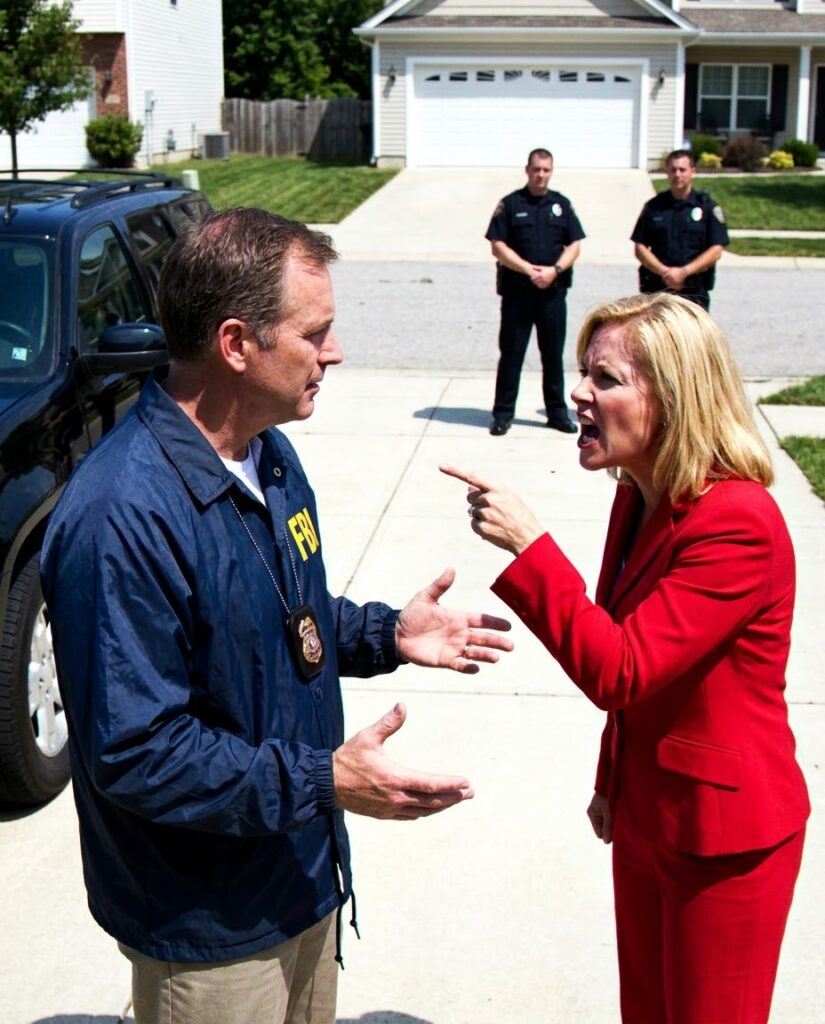
“You’re hiding something in there,” she shouted. “I saw the lights. I heard the machines. This is illegal activity.”
Behind me, the garage door motor hummed as the steel panel paused halfway down. In front of me, Karen’s lips trembled with outrage so practiced it felt rehearsed.
“Karen,” I said, keeping my voice flat, “this is my garage.”
“We’ll see what the authorities think.”
I remember taking one slow sip of coffee after she said it. Not because I was nervous. Not because I wanted to provoke her. I just understood, in that exact second, that she had no idea who she had just called the police on.
That was the thing about Silver Ridge Estates. From the outside, it looked like the kind of neighborhood printed inside real estate brochures and church bulletins. Driveways. Clean sidewalks. Matching mailboxes. Tasteful shades of gray and beige stretched across two looping streets where every lawn seemed combed into obedience. A maple tree stood over the cul-de-sac at the corner lot I bought, and every afternoon its shadow slid neatly over my driveway and cooled the front of my garage. That shadow was one of the reasons I chose the house.
I was fifty-two when I moved there, old enough to know what I wanted and tired enough to want little. Quiet. Shade. A garage big enough for my tools. A place where nobody asked what I used to do, and where the loudest moral crisis on any given day might involve a trash can lid or the wrong kind of mulch.
The garage was the center of the life I wanted. Pegboard tools. Clean rags folded in stacks. Steel drawers that opened with a satisfying thud. A 1974 Norton Commando on a stand under the left wall, chrome polished by patient weekends. A radio with a bent antenna that played classic rock when the weather was good and static when it wasn’t. I liked the sound of simple things in that room: the click of sockets, the scrape of sandpaper, the soft hiss of solder cooling into place. Broken things made sense to me. They told you what hurt, if you listened long enough.
Silver Ridge had rules, of course. The homeowners association made sure of that. The welcome binder was thick enough to stop bullets. Approved shrubs. Approved mailbox styles. Approved fence stains. A page on exterior visibility. Another on recreational equipment. And one rule that made me laugh the first time I read it: garage doors were not to remain open more than fifteen minutes at a time unless actively loading or unloading.
I remember thinking, who exactly is standing out there with a stopwatch?
I got my answer on the second day.
Karen Hullbrook knocked on my door with the confidence of a woman who believed every doorstep already belonged to her. She was in her mid-fifties, hair sprayed into an arrangement too deliberate to move naturally, and she carried a slim binder under one arm like a sermon. Her smile was polished, but her eyes were measuring the foyer before she even introduced herself.
“Welcome to Silver Ridge,” she said. “We value neighbors who value standards.”
I told her I generally liked standards when they involved electrical safety and honest brakes.
She laughed like she was rewarding a harmless child. Then she opened the binder, found a tab with speed, and tapped a paragraph with a manicured finger.
“We simply ask that resident projects remain tidy. And private. We don’t want garage activity creating the impression of commercial use.”
I glanced past her toward my driveway, where a toolbox sat closed beside two unopened moving boxes.
“You think the socket set looks entrepreneurial?”
Karen’s smile thinned. “I think appearances matter.”
That became her religion.
At first, the notes she left for me were almost funny. A sticky note on my front step because I watered the lawn at noon instead of before nine in the morning. Another because my hose was visible from the street. Another because the trash can lid wasn’t fully closed. Every one of them was signed with a round, cheerful K that somehow looked accusatory.
I taped the notes above my workbench in the garage. Little yellow warrants. They amused me for the first couple of weeks.
Then the notes became printed notices.
One morning, I found an envelope taped to the garage frame containing a formal violation sheet. Noise. Unapproved activity. Safety concern. Attached was a photograph of me leaning over the Norton while the garage door was halfway down to keep glare off the chrome. Beneath it, in Karen’s handwriting, were the words: visible work suggests commerce.
I took the paper across the street to Priya Raman, my neighbor with a lawyer’s posture and dirt under her fingernails from the roses she trained by hand.
She read it once and exhaled through her nose.
“This is nonsense,” she said.
“That was my legal interpretation too.”
“She likes people who explain themselves,” Priya said, handing the notice back. “Don’t.”
The problem with people like Karen is that they force every ordinary action into a trial. Why is your garage door half closed? Why do you need those tools? Why were you working after dark? Why did a delivery truck stop at your house twice last week? They pile question on question until the question itself becomes the accusation.
I tried to keep things civil. I waved when we passed on the sidewalk. I kept my radio low. I worked reasonable hours. I trimmed the boxwoods by the porch even though I did not care what shape a boxwood held in the eyes of strangers.
It didn’t matter.
Karen had decided that privacy meant secrecy, and secrecy meant guilt.
The neighborhood understood that much about her. At a Saturday yard sale, my neighbor Laya winced when I told her Karen had timed my garage door.
“She says closed doors send messages,” Laya said.
“What kind?”
“That you have something to hide.”
Her husband, Ken, appeared beside us carrying a box of cracked plastic dinosaurs and said, “In this zip code, privacy is suspicious.”
We laughed, but only a little. In Silver Ridge, people spoke carefully in public. Nobody wanted to become the next topic in Karen’s newsletter.
She sent those too. Friday afternoons, usually. The kind of neighborhood bulletin that pretended to celebrate community while quietly naming the week’s sinners. Pet waste. Improper hedge maintenance. Visual clutter. Then one evening she added a new initiative called Neighborhood Watch 2.0 and a warning about garage-based activity that may undermine property values. Under the heading she used a stock image of a wrench over caution tape.
Subtlety was never her strength.
I called the non-emergency police line once, mostly to hear sanity in another human voice. I asked the dispatcher what counted as illegal garage use.
“As long as you’re not running a chop shop, you’re fine,” she said.
“Define chop shop.”
“You would know if you were running one.”
That answer comforted me more than it should have.
The Thursday before Karen called 911, it rained all morning. I kept the garage door down for twenty minutes while I soldered a wire harness and waited for humidity to settle. When I finally hit the remote, the door rolled up to reveal Karen standing under the maple tree with her phone already recording.
“I timed it,” she said.
“I hope you beat your personal best.”
“It was twenty minutes.”
“It was rain.”
“Rules are rules.”
“So is gravity. Still, we jump.”
I shouldn’t have said that. Not because it was cruel, but because she wasn’t interested in truth. She was interested in escalation. The moment my answer sounded like resistance, she stiffened like a machine shifting into the next gear. She walked away typing before she reached the sidewalk.
That night, I stood alone in the garage and looked at the Norton under the work lamp. Chrome, rubber, steel, patience. Machines are honest. People aren’t. I told myself not to react. I had not moved to Silver Ridge to start a war with a woman who photographed garbage cans for sport.
Then Saturday came.
The sun was barely over the rooftops. I had the garage half open, Fleetwood Mac low on the radio, and the carburetor parts spread on a towel. I heard the click of heels on concrete before Karen spoke. She marched up my driveway with her binder under one arm and her phone in the other.
“Mr. Cole,” she said. “You were informed about Section 9.2 last month.”
“Yes, Karen, I remember.”
“And yet here you are again with the door half closed.”
“It’s sunny.”
She took a photograph.
“There have been reports of suspicious activity from your property,” she said. “People have seen lights and heard machinery late at night.”
“Those reports have names, or are the raccoons talking now?”
Her jaw tightened. “If you won’t take this seriously, I will have to escalate.”
“You keep using that word like you’re climbing a mountain.”
“Step away from the garage.”
I looked at her. Really looked at her. At the pulse jumping in her neck, at the excitement under the outrage. This wasn’t fear. It was appetite.
“Karen,” I said, “you’re filming a man fixing a carburetor. You don’t need a warrant. You need a hobby.”
That was when she lifted the phone, pointed it at my face, and shouted the line that opened this whole mess.
“Stop right there. I’m calling 911.”
I blinked once. “You’re calling the police because I closed my garage?”
“I’m calling because you’re acting hostile and possibly armed.”
“With what?”
“I saw metallic objects!”
I almost laughed. Instead, I leaned against the workbench and listened while she spoke to dispatch in a voice trembling with performance.
“This is Karen Hullbrook, HOA president of Silver Ridge Estates. We have a male resident barricaded in his garage. Possible weapons. Acting erratic.”
Barricaded. The door was half open.
Five minutes later, two police SUVs turned into the cul-de-sac with lights flashing. Curtains moved all over the block. Karen waved both arms as if guiding helicopters onto a carrier deck.
“That’s him!” she yelled. “Don’t let him close the door!”
I took another sip of coffee, pressed the remote, and let the garage door slide down the rest of the way until only a foot of daylight remained. Karen gasped like I had detonated something.
The officers approached carefully, but not with the urgency Karen wanted. One was young and polite. The other was older, broad in the shoulders, with the tired face of a man who had handled far too many suburban emergencies involving absolutely no emergency.
“Sir,” the younger one called, “can you step outside for me?”
“Of course.”
I lifted the door and stepped into the light with the mug still in my hand.
Karen moved behind one of the police vehicles. “Be careful. He’s unpredictable.”
The older officer looked past me into the garage. Tools. Motorcycle. Shelf of parts. Nothing more dangerous than a torque wrench and my coffee.
“This the barricade?” he asked.
I shrugged. “Only thing being held hostage is a stubborn carburetor.”
The younger officer’s mouth twitched. “We got a call about possible weapons and threatening behavior.”
“I own metal tools,” I said. “She finds that philosophical.”
Karen stepped forward, indignant. “He’s evasive. Cold. Trained.”
The older officer turned slightly. “Trained at what, ma’am?”
“Something military. Maybe law enforcement. You can tell.”
“Calm isn’t illegal,” he said.
“It should be when it’s suspicious.”
That was the moment I knew she had gone too far even for herself.
The older officer asked for identification. I handed him my driver’s license. He looked at it, then at me, then back at the card. Something in his expression shifted almost invisibly. Recognition, but incomplete.
“Appreciate your cooperation, Mr. Cole,” he said. “Looks like a false alarm.”
Karen’s voice sharpened. “False alarm? I demand you search the property.”
“We don’t have probable cause for that.”
“I’m probable cause. I’m the HOA president.”
The younger officer looked away so he could laugh in private.
The older one handed my license back. “Ma’am, if you knowingly place false emergency calls, that’s an issue in itself.”
Karen’s face turned pink with fury. “You think you’re untouchable,” she snapped at me. “I’ll find out who you really are.”
That line landed harder than the 911 call. It wasn’t neighborhood pettiness anymore. It was threat, curiosity sharpened by obsession. The officers left after giving her a warning. Karen stood in the street staring at my garage while I lowered the door again. For one quick second, through the narrowing gap, I saw something in her face that wasn’t anger.
Fear.
Not fear of me. Fear of being seen.
I sat on the stool by my workbench after the sirens faded and looked at my reflection in the steel toolbox. I had promised myself, when I retired, that I was done with digging. Done with pulling threads. Done with reading lies until the pattern underneath them showed its bones.
But curiosity is a reflex. Some people collect recipes. I collect inconsistencies.
I opened my laptop.
Public records first. Nothing unusual at the surface. Karen Hullbrook, resident of Silver Ridge. HOA president. Clean property history. Minimal employment trail. Too minimal. No meaningful records before 2009. No citations. No business disputes. No ugly little accidents. Perfect people do not exist. Only curated ones do.
I sent a secure message to Emma Harper in Washington. Former agent under me, now senior enough to ask quiet questions in loud places.
Need a deep pull on Karen Hullbrook, Silver Ridge Estates. Possible alias. Early sealed records if available.
Her reply came fast.
Retirement looks boring on you. I’ll dig.
Next day, Priya caught me at the mailbox.
“She’s telling people she caught you doing something illegal,” Priya said.
“Did she specify what, or are we crowdsourcing the crime?”
Priya smiled despite herself. “Mostly she keeps saying you’re too calm.”
“That’s going to sound terrible on the indictment.”
Priya leaned against her porch rail. “How long are you going to let her do this?”
That question stayed with me.
Two nights later, Harper called through an encrypted line.
“Weird file,” she said without greeting. “There’s a sealed state record tied to the name, but the history before 2009 is practically vacuumed out. That doesn’t happen naturally.”
“Alias?”
“Looks likely. Give me twelve hours.”
By morning she had more. Karen Hullbrook had once been Cara Lee Holman. Baton Rouge arrest in 2003 connected to a hate-motivated bar assault. Charges later buried through a state rehabilitation program. Financial fraud investigation in 2006 tied to a nonprofit that moved money through shell vendors. Charges dropped. Identity protection order entered in 2009 under circumstances still partially sealed.
“Witness or manipulator?” I asked.
Harper exhaled. “My money is manipulator.”
Mine too.
I sat in the garage after that call and let the pieces settle. Assault. Fraud. New name. New suburb. New little kingdom built out of binders and controlled lawns. Her obsession with order suddenly looked less like civic passion and more like camouflage.
Harper kept pulling.
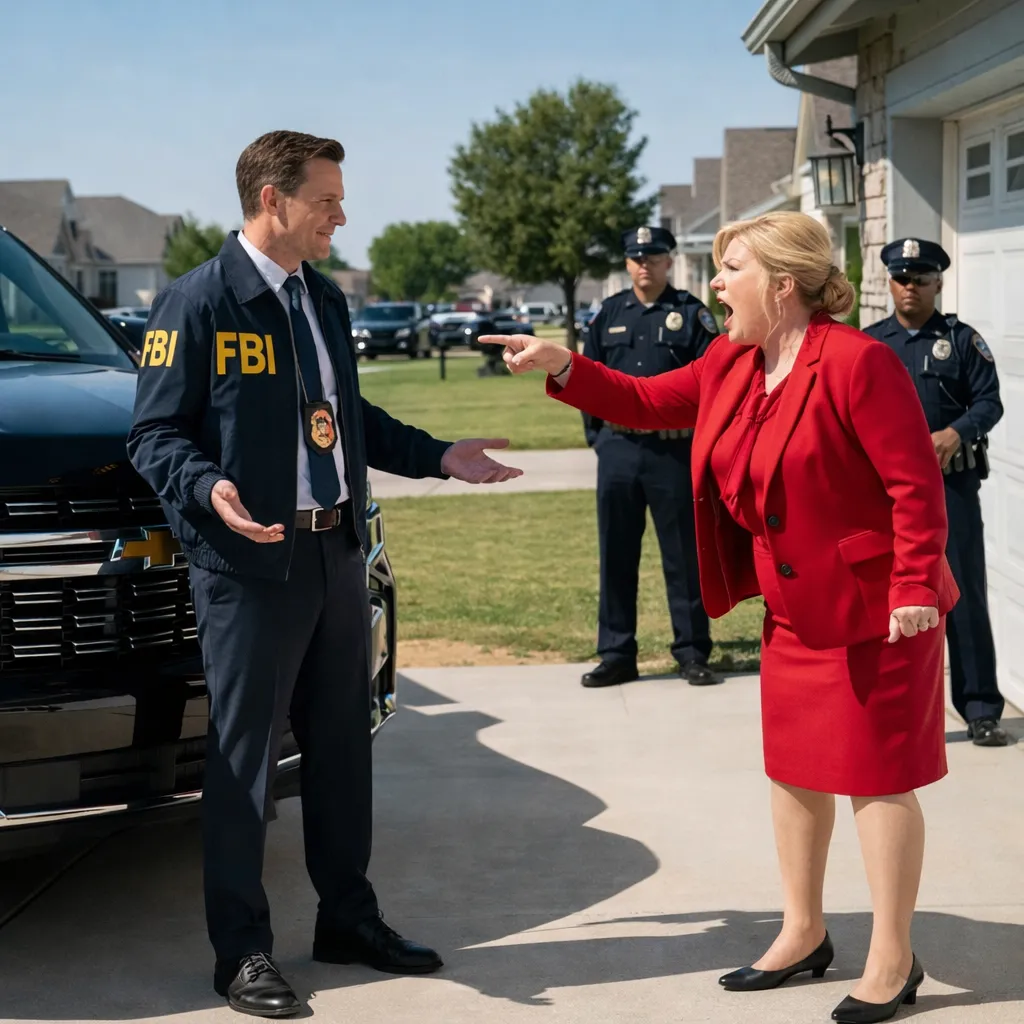
That evening she sent a list of vendors associated with Silver Ridge expenditures from public filings and local contractor records. Half existed only on paper. Three were registered to a post office box in Arizona. One connected indirectly to a shell nonprofit called Sunline Community Initiative.
The same nonprofit that appeared in Karen’s old fraud trail.
That was the moment the story changed shape. She wasn’t just harassing me because she loved control. She was protecting something.
I attended the next HOA board meeting for the first time. Karen sat at the head of the long oak table with an American flag behind her and a vase of fake lilies to her right. Her binder lay open in front of her like scripture. Board members flanked her with the rigid smiles of hostages at a family photo session.
“Well,” Karen said sweetly when she saw me, “how brave of you to show up after last weekend’s incident.”
“Just here to learn how justice works around here.”
She smiled without warmth. “We prefer order.”
The meeting was mostly theater. Pool hours. Shrub maintenance. A motion about approved exterior lighting. Then Karen pivoted, as I knew she would, to “ongoing safety concerns relating to unauthorized garage activity.”
People looked down. One board member, Leonard Weiss, avoided her eyes completely. That interested me more than Karen’s speech did.
After the meeting I caught Leonard in the hallway.
“How long has she handled the finances?” I asked.
He flinched before he answered. “Since before I joined.”
“You’ve seen the books?”
“Summaries.” He swallowed. “Never raw ledgers.”
“Why not?”
Leonard glanced toward the meeting room doors. “She says transparency is handled internally.”
That phrase was absurd enough to be useful.
I went home, opened the HOA binder, and read every bylaw until midnight. Buried in Section 12.4 was the kind of clause only a control addict would assume nobody else would ever read: any member in good standing could request access to association expenditure records with seventy-two hours’ written notice.
So I sent Karen a polite email.
In the spirit of transparency, I’d like to review the last two years of HOA expenditure records pursuant to Section 12.4.
Her response came fifteen minutes later.
Your tone is noted. Records can be reviewed at the next scheduled meeting.
That was Karen at her purest. Petty, confident, already irritated by the fact that I had quoted her own rules back to her.
Three days later, I arrived at the clubhouse with a leather folder and enough patience to be dangerous. Karen had arranged a stack of binders on the table. Leonard sat beside her, pale. A timid board member named Ruth kept checking her phone like she wanted rescue from another planet.
“I trust this is about putting our misunderstanding behind us,” Karen said.
“Exactly. I just want to see where my dues go.”
She slid one binder across the table.
The receipts inside were too clean. Fresh toner. Uniform paper stock. Dates aligned like soldiers. Real records age unevenly. Fake ones age all at once because they were born together.
“Impressive,” I said, turning pages. “Mind if I make copies?”
“That won’t be necessary.”
“Section 12.4 suggests otherwise.”
Her eyes hardened.
“I can prepare summaries.”
“Numbers are easier when everyone sees the same ones.”
For a second, the room went absolutely still. Leonard coughed into his fist. Ruth stared at the far wall. Karen smiled, but it was a blade now.
“I’ll have our internal team assemble a proper packet.”
Internal team. Silver Ridge didn’t have an internal team. It had Karen and fear.
I left without a page in my hand but with exactly what I needed: nervousness, refusal, and confirmation that the money trail mattered.
That night, Harper and I cross-checked every vendor name from Karen’s binder against federal and state tax databases. Out of eleven contractors, five did not legally exist. Three were tied to the Arizona box Harper had flagged. One connected to a landscaping firm linked to Karen’s brother, Steven Holman, who had once surfaced in a racketeering case involving the same extremist network from her sealed record.
“Classic layering,” Harper said. “HOA dues into fake maintenance, fake maintenance into a nonprofit, nonprofit into family accounts.”
“How much?”
“At least one hundred twenty thousand over three years.”
Enough to hurt a neighborhood. Enough to matter in court.
The next morning Karen taped another violation notice to my garage. Harassment of HOA President, this one said in red ink. She was trying to create a counter-file on me. I almost admired the reflex.
Instead of reacting, I built a trap.
I parked my pickup halfway inside the garage and left a stack of boxes marked PROPERTY FILES on the workbench where Karen could see them from the driveway. On top, I placed a USB drive labeled GRANT REPORTS. The drive contained exactly one document: a decoy audit summary of Sunline Community Initiative and an invisible tracker Harper designed to ping the moment anyone copied or opened the file.
Then I waited.
Karen arrived by noon, pretending to photograph flowers near the walkway. She lingered long enough to study the workbench, then left.
That evening Harper called.
“We got a hit. Six-seventeen p.m. Someone accessed the file from an IP assigned to the Silver Ridge HOA office.”
“Good.”
“Careful,” she said. “She’s unstable.”
“I know.”
Two days later Karen cracked.
I was sanding a maple board in the driveway when her white Lexus shot to the curb. She climbed out waving papers, face flushed and eyes bright with panic.
“You think you’re clever,” she shouted. “Planting false documents to frame me.”
I set the sander down. “That’s a serious accusation.”
“You hacked HOA files!”
“Interesting,” I said. “Why would you assume I had HOA files unless you looked at mine?”
She froze for half a heartbeat. It was enough.
“You’re dangerous,” she said, then grabbed for her phone. “I’m calling 911.”
“Again?”
This time I did not try to stop her. I wanted witnesses.
When the officers arrived, I recognized one immediately. Officer Lane had sat in on federal briefings years earlier. He recognized me too, but he was professional enough not to show it beyond a slight tightening around the eyes.
“Everything okay here?” he asked.
“I believe Ms. Hullbrook is upset,” I said. “She says I hacked her files. Perhaps she can explain how data from my drive ended up on her device.”
Karen’s head snapped toward me. “What? That’s absurd.”
Lane held out his hand. “Ma’am, do you have the device you used?”
Her confidence faltered visibly. “This is harassment.”
“Hand over the phone.”
She did.
Harper verified the tracker within minutes. Karen’s phone had accessed the decoy file. Her office computer had copied it. Time stamps. Chain of custody. Neat as a textbook.
“You set me up,” Karen whispered.
“No,” I said. “You set yourself up. I just left the door open.”
Her breathing turned shallow. She looked from me to Officer Lane and back again.
“He’s not who he says he is,” she said.
Lane’s tone changed by half a degree. “Ma’am, I strongly recommend you stop talking.”
For the first time since I met her, Karen looked uncertain instead of outraged.
The next morning unmarked cars filled the cul-de-sac before sunrise. Federal agents, county investigators, local deputies. Efficient people in windbreakers carrying folders and warrants. Karen stepped onto her porch in a pink blazer like she thought color still counted as armor.
When they read her rights, she started shouting about HOA sovereignty, harassment, and an unlawful vendetta. Nobody listened. Neighbors watched from behind curtains and front hedges while the woman who had fined them for chalk drawings was guided down her own front steps in handcuffs.
She met my eyes once across the street.
I lifted my coffee mug in a small salute.
By noon, the whole neighborhood was shaking with rumor. By evening, it had facts.
The emergency HOA meeting was packed. Harold Bishop, the vice president, tried to maintain order from the front of the clubhouse, but panic had a louder voice than he did. Residents demanded explanations. Leonard clutched a folder like it contained oxygen.
Harold finally looked at me. “Mr. Cole,” he said, “perhaps you should address everyone.”
So I did.
I walked to the front, opened my folder, and laid out the numbers in plain English. Transfers from HOA accounts. Payments to Sunline Community Initiative. Shell vendors. False invoices. Landscaping that never happened. Community improvement work billed but never performed. Money routed into personal accounts connected to Karen’s old identity and her brother’s businesses.
Murmurs turned into anger. Anger turned into something uglier: relief.
People began speaking all at once.
“She fined me for repainting my fence.”
“She threatened my son over a scooter.”
“She said my wheelchair ramp violated the aesthetic code.”
“She made us replace our mailbox twice.”
Every story sounded petty by itself. Put together, they described the same thing: coercion disguised as administration.
Leonard stood and asked the question everyone else was thinking.
“How did you get all this?”
I looked around the room at faces that had spent years living under a woman who treated bylaws like divine law. Then I answered honestly.
“My name is Daniel Cole. I moved here to retire quietly. Before that, I served as director of the Federal Bureau of Investigation.”
Silence fell so hard it seemed to alter the air pressure.
Someone dropped a pen.
Harold blinked twice. “The FBI?”
“Yes.”
A nervous laugh rippled through the room, the kind people use when fear loses its script.
I explained only what mattered. That Karen had a sealed criminal history under another name. That the seals had been lifted. That her financial trail was solid. That no one in the room needed to be afraid of her anymore.
Afterward, people apologized for believing the rumors. I told them what I had told victims for years: survival often looks like silence until somebody has enough proof to speak louder than the lie.
Local news arrived by sunset. I gave them one sentence.
“The law applies to everyone, including people who hide behind homeowners bylaws.”
That clip ran for two days.
Karen tried to cut a deal from county detention by hinting there were bigger players behind the money. There usually were. Harper followed those trails while I stayed in Silver Ridge and watched the neighborhood recover like a body after the fever breaks.
Priya became acting HOA president by unanimous vote. She rewrote complaint procedures, demanded open books, and banned unilateral fines without board review. The first new motto she proposed for the community bulletin board was simple: Order without fear.
Nobody objected.
The garage changed too. The place Karen treated like a criminal front became neighborhood neutral ground. Leonard brought over a lamp to fix. Ken showed up with a mower that wouldn’t start. A teenager from down the block asked if I would teach him how to change brake pads on his truck. Friday evenings turned into informal repair nights. People brought broken appliances, wobbling bikes, squeaky fans, and folding chairs with stripped bolts. Some things we fixed. Some things we replaced. All of it mattered.
Trust, like any engine, runs better when people are willing to take it apart together.
Karen’s preliminary hearing came six weeks later. I testified. She stared at me across the courtroom with hollowed eyes and tried twice to interrupt before the judge shut her down. When the prosecutor asked why I began investigating her, I said, “Because she called 911 on me for closing my own garage.”
Even the judge smiled at that.
The sentence arrived two months after. Eight years for fraud, identity theft, and obstruction. Restitution to the HOA. Additional federal fines. No glamour. No melodrama. Arithmetic. Loss entered into the record and returned in part to the people she stole from.
The morning after sentencing, Silver Ridge felt different in a way no brochure could have captured. Kids rode scooters in the cul-de-sac after dark. People left lawn chairs out overnight. Music drifted from a grill on Maple Court and nobody reported it. Someone painted tulips along a curb in sidewalk chalk, and the universe did not end.
I stood in my driveway that evening with a mug in my hand and watched the maple shadow stretch over the garage again. Same house. Same tools. Same bent radio antenna. But the sound of the place had changed. Not louder. Safer.
Harper called once more near sunset.
“She was part of something bigger,” she said. “We’re tracing related HOA shells in two other states. Your garage war triggered a wider case.”
“Good.”
“You ever think about coming back?”
I looked through the open garage door at the Norton under the hanging bulb, finally restored, polished, ready.
“No,” I said. “I think about staying human.”
Harper laughed and told me to keep my phone on.
That night I poured one last cup of coffee and stepped onto the driveway. The air smelled like pine, oil, and someone’s charcoal grill. Across the street, Priya was talking with neighbors under porch light, relaxed in a way I had never seen before Karen’s arrest. Down the block, children’s laughter bounced off the pavement where Karen’s voice used to live.
I pressed the remote.
The garage door rolled down slowly, steady and familiar. Earlier that sound had meant suspicion, surveillance, accusation. Now it meant something else. Closure. Privacy without guilt. Peace earned instead of borrowed.
The steel door met the concrete with a soft final click.
For the first time since I moved to Silver Ridge Estates, that sound belonged to me.
THE END