The lottery numbers burned into my mind the second they appeared: 4, 12, 28, 35, 42, Mega Ball 11—numbers that split my life into two irreversible paths.
I was sitting alone in a cramped basement beneath a suburban home in Harborpoint City, a place that never truly felt like mine. The space was barely livable—a fold-out bed against cold concrete walls, a faulty heater, and a battered laptop resting on stacked boxes.
When every number matched, I didn’t celebrate. I didn’t move. Instead, a heavy calm settled inside me, deeper than excitement.
Upstairs, laughter drifted from a dinner party my family was hosting—a world I existed in physically, but was never truly part of.
The prize was announced again: $450 million. After taxes, I knew I’d walk away with about $280 million—money no one in my family could trace back to me.
But this hadn’t started that night.
Three years earlier, I had walked into a discreet law office wearing my maintenance uniform from Asterline Technologies—the same company my father worked for, though no one knew I was employed there as a cleaner. I carried $50,000 in cash and asked attorney Vivian Halbrook to build an untraceable blind trust, ensuring complete anonymity if I ever came into money.
When she asked why, I told her the truth: I wanted to see if my family loved me—or only tolerated me when I stayed invisible.
She created a structure under the name Meridian Arc Holdings, separating everything from my identity.
Two weeks later, I claimed my winnings through that system. To the world, I was just another anonymous winner.
I kept working in silence—not out of necessity, but to observe.
My father, Malcolm, was obsessed with status and appearances. My mother, Elira, measured everything in wealth and reputation. My brother, Jace, was treated as the golden success despite a trail of financial disasters I quietly fixed behind the scenes.
Every crisis they faced—debts, job risks, legal troubles—I resolved through hidden channels. Anonymous transfers covered bills. Strategic investments protected careers. Legal settlements erased scandals.
And still, I remained invisible.
I lived in the basement of a house I financially sustained, watching dinners where I was barely acknowledged, listening to my brother take credit for success built on lies.
One night, my father discovered me cleaning floors at his company. Instead of concern, he reacted with embarrassment.
“You’re ruining my image,” he said.
So I became even more invisible.
Three years passed like that—until the night of their anniversary party.
The house was transformed into a display of wealth. Guests filled the rooms, measuring each other by status.
During a break, I baked a simple lemon cake—a memory from when our family still felt real.
At seven, I carried it upstairs.
My father immediately tried to push me away. My mother looked at the cake with disgust—and threw it into the trash without hesitation.
My brother laughed.
Something inside me broke—not loudly, but completely.
I told them I would leave the next morning.
They accepted without hesitation.
That night, I stayed in a penthouse I secretly owned, looking out over the city as I set everything in motion. Legal triggers. Financial shutdowns. Corporate enforcement.
By morning, it had begun.
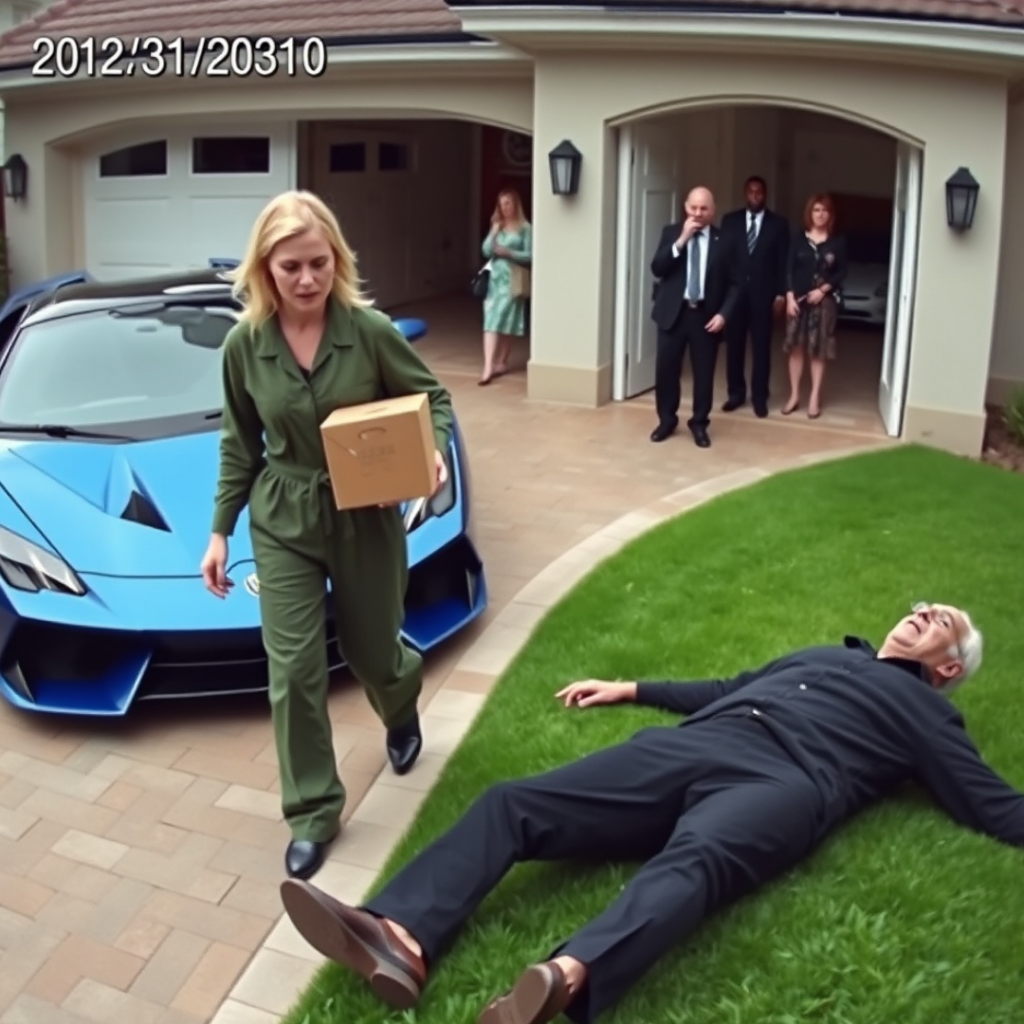
I picked up a matte-black Bugatti Chiron Super Sport and drove back to their neighborhood. The engine alone drew attention.
When I stepped out, they didn’t recognize me.
“Hello, Father,” I said calmly. “I came to take what’s mine.”
Confusion turned to sh0ck.
Then a corporate executive arrived with documents confirming I owned Asterline Technologies—and had been controlling everything behind the scenes for years.
I explained it all: the debts I cleared, the jobs I protected, the problems I erased.
Piece by piece, their reality collapsed.
My father broke under the weight of it. Medical help was called.
I made sure everything was handled—legally, financially, completely.
Then I left.
No apology could undo what had been revealed. No regret could restore what had never existed.
As I drove away from Harborpoint City, I realized something simple:
Wealth hadn’t changed me.
It had only exposed the truth.
People don’t become different when they gain power—
they just become more visible versions of who they’ve always been.
And for the first time in my life, I moved forward alone—
not empty,
but free.

The first call came forty-three minutes after I left Harborpoint City.
I saw my mother’s name flash across the dashboard screen while the Bugatti cut through the coastal highway like a shadow.
For a moment, I simply stared at it.
Three years of silence.
Three years of cold glances.
Three years of being treated like a stain they tolerated only because removing me would have required acknowledging I existed.
And now she was calling.
I let it ring until the screen went dark.
Then it rang again.
And again.
By the fourth call, I finally pressed accept.
For several seconds, neither of us spoke.
I could hear her breathing.
Unsteady.
Fragile.
Nothing like the woman who had looked at the cake I made with my own hands and dropped it into the garbage as if it had contaminated her kitchen.
“Adrian…” she whispered.
It was strange hearing my name in her voice.
She almost never used it.
Usually it was him.
Or your brother.
Or simply silence.
I kept my eyes on the road.
“Yes?”
Her voice cracked.
“Please come back.”
Not how could you.
Not why didn’t you tell us.
Not we were wrong.
Just:
Come back.
Because even now, she still thought I was something that belonged to that house.
I laughed once under my breath, though there was no humor in it.
“You threw me away long before I left.”
“No—”
“You did.”
Her breath hitched sharply.
In the silence, I could picture her standing in that marble kitchen, perfectly dressed, gripping her phone with trembling fingers while guests whispered in the next room about the son she had never really seen.
“Your father is in the hospital,” she said quietly.
“The doctors think it was stress.”
I tightened my grip on the steering wheel.
Malcolm Kane.
The man who spent his entire life worshipping power.
The man who had taught everyone around him that love was transactional.
The man who looked at his youngest son and saw only humiliation.
And somehow, even after everything, hearing he had collapsed still made something inside my chest tighten.
“I already made sure he has the best care available,” I said.
She fell silent.
Because of course I had.
Even after everything—
I still handled the damage they created.
“Why?” she asked.
That question nearly made me pull the car over.
Not because I didn’t have an answer.
Because I had too many.
Because despite every cruel word, every dismissal, every wound they left in places no one else could see—
some broken part of me had spent my entire life hoping they would become a family worth saving.
Because I knew what it felt like to be abandoned.
Because becoming rich had never made me cruel.
Only honest.
“Because I refuse to become like you,” I said.
Then I ended the call.
The penthouse overlooking the bay had floor-to-ceiling glass and enough empty space to fit their entire house inside its living room.
For three years, I had owned it.
For three years, I had never truly lived there.
It had been an investment.
A symbol.
A place I could have escaped to any night I wanted.
But trauma has a strange way of convincing you that suffering is familiar enough to feel like home.
When I stepped inside that evening, the silence hit me first.
No footsteps above me.
No doors slamming.
No muffled voices reminding me I was unwanted in a house my money had quietly preserved.
Just silence.
Pure.
Absolute.
Unforgiving.
And for the first time in my life—
I realized freedom could feel lonely before it felt peaceful.
I stood there for a long time, staring at the city lights reflected in the glass, until a voice behind me said,
“You finally did it.”
I turned.
Vivian Halbrook stood near the entrance, holding a slim leather folder against her side.
She had been the only person who knew the entire truth.
The only person who had watched me build an empire in secret while pretending to be invisible.
She crossed the room and set the folder on the table.
“They’ve started contesting everything.”
I gave a dry smile.
“That was faster than expected.”
She opened the folder.
“Your brother tried to access company reserves.”
“He can’t.”
“He found that out.”
“And?”
“He threatened to sue.”
That made me laugh for real.
Jace had spent his life failing upward because someone always protected him from consequences.
And for years—
that someone had been me.
“No,” I said.
“He threatened to sue the wrong person.”
Vivian’s expression softened slightly.
“There’s something else.”
She slid a photograph from the folder.
It was surveillance still from Asterline’s executive parking garage.
My brother.
Meeting with a competitor.
An envelope changing hands.
My eyes narrowed.
“What is that?”
Vivian looked at me carefully.
“Corporate espionage.”
I stared at the photo.
For three years, I had protected him from financial collapse, gambling debts, public scandals, reckless investments, and lies that would have destroyed anyone else.
And while I was doing that—
he had been selling company information behind closed doors.
Not because he needed money.
Because he thought he was untouchable.
My jaw tightened.
“How long?”
“Seventeen months.”
I looked up sharply.
“You knew?”
“I suspected.”
She held my gaze.
“You weren’t ready to see it.”
That hit harder than I expected.
Because she was right.
I had spent years uncovering who my family truly was while still refusing to see the ugliest parts.
Because accepting strangers can hurt you is easy.
Accepting family can destroy you willingly—
that takes longer.
“What do you want to do?” she asked.
I looked back at the photo.
At the brother who had smiled while my mother threw away the only birthday cake I had ever made for them.
At the man who had accepted my sacrifice as if it were his right.
And for the first time—
I felt absolutely nothing.
“No more protection,” I said.
“Handle it.”
Vivian nodded once.
And just like that—
the last shield between Jace and the consequences of his own choices disappeared.
Two days later, Harborpoint exploded.
Asterline Technologies announced an internal criminal investigation.
Board members resigned.
News stations camped outside the family estate.
Shareholders demanded answers.
Financial blogs began circulating one headline over and over:
MYSTERY OWNER OF ASTERLINE EXPOSES INTERNAL CORRUPTION
My name was still protected.
But my family’s was not.
By sunset, Jace had been escorted out of headquarters in handcuffs.
The footage played on every local station.
My mother fainted when she saw it.
And my father—
my proud, ruthless father—
reportedly stared at the screen without speaking for nearly an hour.
Then he asked only one question.
“Did Adrian know?”
When Vivian told me that, I almost smiled.
Because after a lifetime of not seeing me—
he finally understood the one truth that mattered.
I had seen everything.
Three nights later, I went to the hospital.
Not because they asked.
Because I needed to know whether closure was real or just another lie people tell themselves when pain becomes exhausting.
Malcolm Kane looked smaller in a hospital bed.
That was the first thing I noticed.
Not weak.
Just smaller.
As though power had been the only thing keeping his body upright all those years, and now that illusion had been stripped away, there was less of him left than anyone expected.
His eyes opened when I entered.
For several seconds, he only stared.
Not at the tailored black coat.
Not at the watch on my wrist.
Not at the man I had become.
He stared at me the way people stare at ruins after a storm—
trying to understand how something they ignored could suddenly become impossible to look away from.
“You came,” he said hoarsely.
I stood near the window.
“You’re surprised?”
He gave a weak, bitter smile.
“I don’t know what to expect from you anymore.”
I almost answered,
Now you know how I felt for thirty years.
But I didn’t.
Because some wounds no longer needed words.
He swallowed hard.
“Were you really helping us all that time?”
I looked at him.
“The mortgage.”
“Jace’s debts.”
“Mother’s tax audit.”
“Your board investigation two years ago.”
“The merger that saved Asterline.”
“Yes.”
His face changed.
Not disbelief.
Something worse.
Recognition.
Because he was finally seeing the truth in reverse—
every disaster that had mysteriously disappeared,
every problem that had somehow resolved itself,
every miracle he had arrogantly assumed he deserved—
had come from the son he treated like a disappointment.
“Why?” he asked.
The same question my mother had asked.
The same question none of them deserved.
But this time, I answered.
“Because I kept thinking if I saved you enough times…”
my voice stayed calm,
“…one day you might notice I was there.”
His eyes filled.
And that—
more than the shouting,
more than the betrayal,
more than the collapse—
was the moment that almost broke me.
Because I had imagined this for years.
Them realizing.
Them regretting.
Them finally seeing me.
And standing there, watching my father cry in a hospital bed—
it didn’t feel like victory.
It felt like grief.
For the family I never actually had.
He covered his face with shaking hands.
“I failed you.”
I stood there in silence.
Then I said the only honest thing left.
“Yes.
You did.”
No anger.
No cruelty.
No revenge.
Just truth.
And somehow,
that hurt him more than anything else could have.
When I left the hospital, rain had started falling over Harborpoint.
Cold.
Steady.
Clean.
I stood beneath the awning while the city blurred under silver light.
For years, I thought money would change everything.
Then I thought revenge would.
But the truth was harder than that.
Money could buy distance.
Power could buy justice.
Silence could buy time.
But none of it could buy back the years spent begging for love from people who only understood value.
Some losses stay losses.
No matter how rich you become.
My phone vibrated once.
A message from Vivian.
Everything is finalized.
The estate has been transferred.
You are free.
I read it twice.
Then slipped the phone back into my pocket.
Free.
It was a strange word.
Because freedom doesn’t always feel like triumph.
Sometimes—
it feels like standing alone in the rain,
realizing the life you survived can never be the life you return to.
A black car pulled to the curb.
My driver stepped out and opened the rear door.
I took one last look at Harborpoint City—
at the place that had spent years convincing me I was nothing—
and for the first time,
I believed otherwise.
Then I got in.
And this time when I left—
I never looked back.