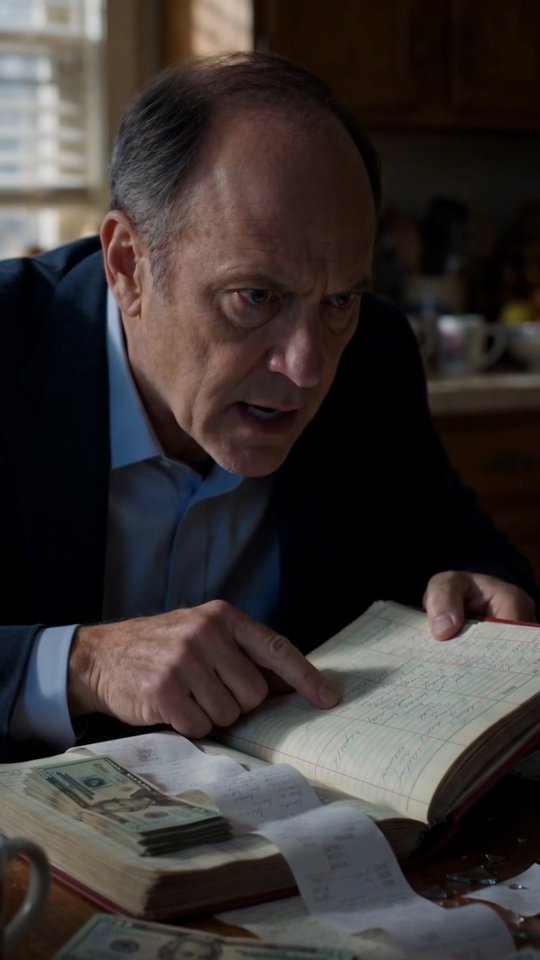
I sat at my kitchen table for twenty minutes after Philip Renner and the others left, staring at that last receipt until the numbers blurred together.
The student account number belonged to a boy named Marcus Whitfield.
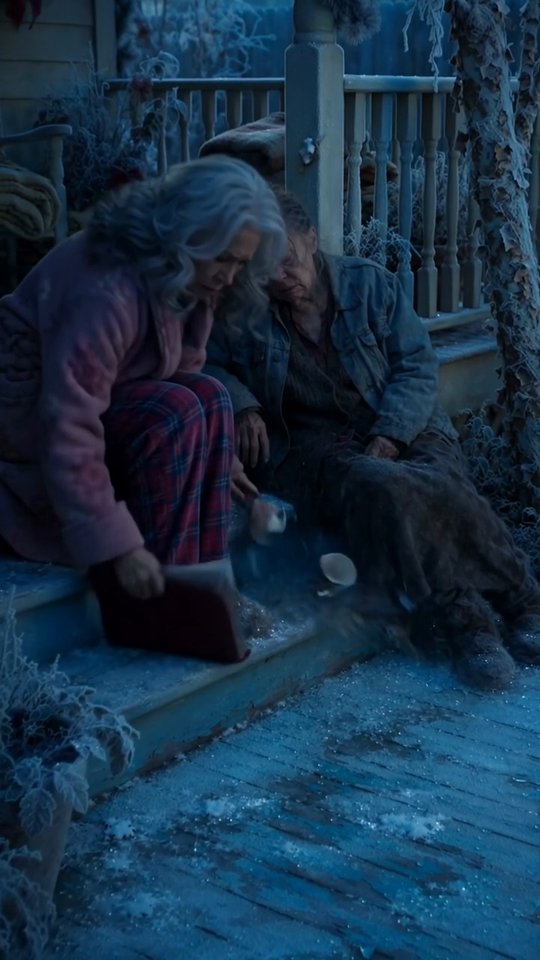
He was my daughter’s son.
My grandson.
A child I hadn’t seen since he was two years old, when my daughter Jenna cut me out of her life after a fight about her husband’s gambling debts and my refusal to co-sign a loan for their failing coffee shop in Riverton.
That was sixteen years ago.
Jenna stopped answering my calls, moved three times without telling me, and eventually I stopped trying.
I didn’t know she’d moved back to Lander.
I didn’t know Marcus was attending the same middle school where Lorraine worked.
And I certainly didn’t know his lunch account had been overdrawn badly enough that Lorraine felt compelled to pay for his meals out of her own pocket.
I walked to the conservatory that afternoon in a daze, barely noticing the cold wind that cut through my wool coat.
The orchids needed misting, the tropical ferns were drooping in their clay pots, and the humidity sensors were beeping because I’d forgotten to refill the reservoir tanks.
I went through the motions mechanically, my mind replaying Lorraine’s words over and over.
Don’t let them take it back.
Make sure the kids get their names cleared.
That evening, I drove to the hospice center on Tenth Street, a low brick building with a parking lot full of potholes and a sign that flickered in the dusk.
Lorraine was in Room 14, propped up on pillows, an oxygen tube running under her nose.
Her eyes were closed, but when I pulled a chair close to her bed, she opened them slowly.
“You came,” she whispered.
“I saw the last receipt,” I said quietly. “Marcus Whitfield. That’s my grandson.”
Lorraine’s mouth curved into a faint smile.
“I know,” she said. “I recognized the last name. He has your eyes.”
My throat tightened.
“You knew he was my grandson, and you still paid for his lunches?”
She nodded, her fingers plucking weakly at the thin blanket covering her legs.
“He came through the line every day with an empty account. Wore the same jacket all winter, the one with the torn sleeve. Never complained, never asked for anything. Just stood there looking at the tray like he was trying to decide if it was worth the embarrassment.”
I pressed my palms against my knees to stop them from shaking.
“Why didn’t you tell me?”
Lorraine’s eyes glistened.
“Because it wasn’t my place. You and Jenna had your reasons. But Marcus didn’t deserve to go hungry because of it.”
I stayed with her for another hour, holding her hand while the hospice nurse came in to check her vitals and adjust her medication drip.
When I finally left, the sky was dark and the parking lot lights were buzzing like trapped insects.
The next morning, Philip Renner called me.
“We’ve finished verifying all four hundred twelve receipts,” he said. “Every single transaction checks out. Lorraine paid for those lunches with her own debit card over six years. The total comes to exactly eight thousand four hundred and fifty dollars.”
I asked him what would happen next.
“We’re clearing every account,” he said. “And we’re setting up a scholarship fund in Lorraine’s name. The district is matching her contribution, and we’re reaching out to local businesses for additional donations.”
He paused.
“There’s something else. Marcus Whitfield’s mother came into my office this morning. She wanted to know why her son’s lunch debt had been erased.”
My heart hammered against my ribs.
“What did you tell her?”
“I told her the truth. That a cafeteria worker named Lorraine had been paying for kids’ lunches out of her own pocket for years, and that Marcus was one of them.”
Philip cleared his throat.
“She asked if she could meet Lorraine. I gave her the hospice address.”
I drove back to the hospice that afternoon, my hands gripping the steering wheel so tightly my knuckles went white.
When I reached Room 14, I saw a woman standing in the doorway.
She was thinner than I remembered, her blonde hair pulled back in a messy ponytail, wearing a waitress uniform with a name tag that said “Jenna” in faded black letters.
She turned when she heard my footsteps.
For a long moment, neither of us spoke.
Then she stepped aside, and I saw Marcus sitting in the chair beside Lorraine’s bed.
He was eighteen now, tall and lanky, with dark hair that fell over his forehead and the same green eyes I saw in the mirror every morning.
Lorraine’s hand rested on his, her fingers pale and frail against his tanned skin.
“She told me what she did,” Jenna said quietly. “All those lunches. All that money.”
Her voice broke.
“I didn’t know we qualified for free lunch assistance. I was too proud to apply. I thought we could manage.”
I took a step into the room.
“You’re managing now,” I said softly.
Jenna’s eyes filled with tears.
“I’m sorry, Mom. For everything. For cutting you out. For being so stubborn.”
I crossed the room and wrapped my arms around her, and she collapsed against me, sobbing into my shoulder the way she used to when she was a little girl and scraped her knee on the gravel driveway.
Marcus stood and looked at me, his expression uncertain.
“I’m Claire,” I said, my voice shaking. “Your grandmother.”
He nodded slowly.
“Mom told me about you. I always wondered why we never saw you.”
Lorraine’s voice, thin and raspy, cut through the silence.
“Now you know,” she whispered. “Now you all know.”
Three days later, Lorraine passed away in her sleep.
The school district held a memorial service in the middle school gymnasium, and more than three hundred people showed up—students, parents, teachers, cafeteria workers.
Philip Renner stood at the podium and read aloud from the ledger, listing every act of quiet generosity Lorraine had performed over six years.
When he finished, the room was silent except for the sound of people crying.
Jenna and Marcus sat beside me in the front row, and when the service ended, Marcus leaned over and whispered, “She saved me. I didn’t even know it.”
The scholarship fund raised forty-two thousand dollars in the first two weeks.
It now covers free lunches for any student in the district who needs them, no questions asked, no paperwork required.
They named it the Lorraine Holloway Fund.
And every year on the anniversary of her death, the cafeteria serves her favorite meal—chicken pot pie with buttermilk biscuits and apple cobbler—free to every student who walks through the line.
Jenna and Marcus come to my house every Sunday now.
We sit at the kitchen table and drink tea from chipped stoneware mugs, and sometimes we talk about Lorraine and the ledger she left behind.
Marcus is studying agriculture at the community college and wants to work in conservation.
Last week, he asked if he could volunteer at the conservatory on weekends.
I handed him a pair of pruning shears and showed him how to trim the overgrown ferns without damaging the root systems.
He worked carefully, his hands steady, his focus absolute.
And when he finished, he looked up at me and smiled.
It was the same smile I used to see on Jenna’s face when she was young, before life got complicated and pride built walls between us.
I think about Lorraine every day.
About the way she paid for those lunches in silence, never asking for recognition or gratitude.
About the way she brought my family back together without ever intending to.
And I realize now that some debts can never truly be repaid.
But they can be honored.
One meal at a time.