I didn’t sleep that night.
I sat at my kitchen table with the cashier’s check spread flat under the brass lamp Vincent and I bought at an estate sale in 1987, the green-and-cream paper glowing under the sixty-watt bulb.
$11,900.
Made out to Howard Eugene Cobb.
Dated April 14, 2002.
Never cashed, never deposited, sewn into a coat lining and hidden for twenty-three years.
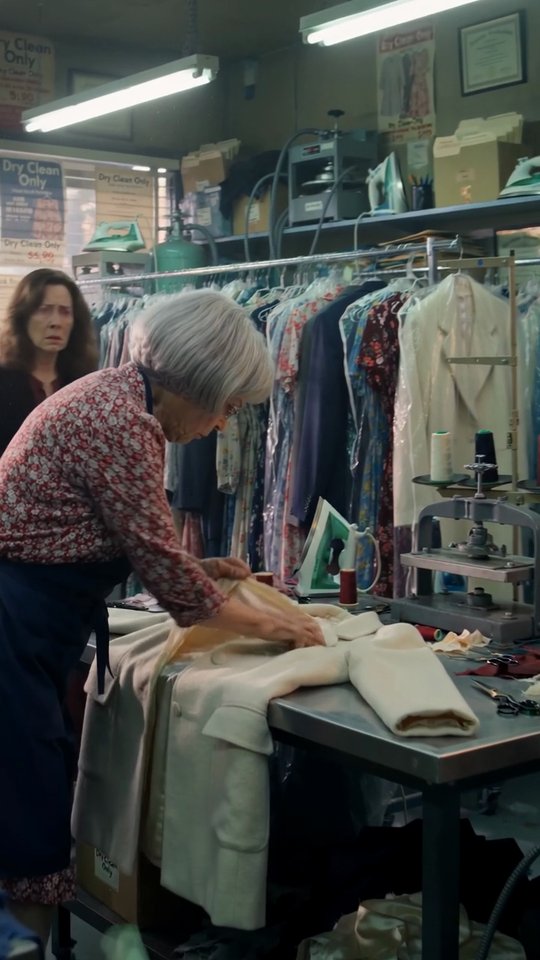
I kept thinking about the woman who’d brought the box of coats into my shop — Margaret, red-rimmed eyes, no last name, no phone number.
She’d said her father had passed two weeks earlier.
Was Howard Eugene Cobb her father?
And if so, why hadn’t she found the check when she cleaned out his house?
Sunday morning I opened the shop early and called First Baptist Church.
The secretary, Linda Watts, answered on the third ring.
I asked if she knew a Margaret whose father had recently passed.
Linda was quiet for a moment, then said, “Margaret Cobb. Her father Howard died two weeks ago. Quiet man. Lived alone on Bloomfield Road for thirty years after his wife passed.”
My chest tightened.
Howard Cobb.
The name on the check.
I thanked Linda and hung up.
Then I sat at the counter staring at the box of coats still waiting to be pressed.
Margaret Cobb had donated her father’s coats without knowing what was hidden inside one of them.
I could call her.
I could return the check and forget the whole thing.
But something stopped me.
Why would Howard Cobb sew $11,900 into a coat lining?
Why wouldn’t he cash it?
What was he hiding from?
Monday morning I drove to First National Bank on Main Street and asked to speak with the manager.
Thomas Ridley met me in his office — a bald man in his late sixties with reading glasses on a chain and a framed photograph of his grandchildren on the desk.
I handed him the check.
He studied it for a long moment, turning it over, holding it up to the light.
Then he set it down carefully and looked at me.
“Where did you get this?”
I told him the whole story — the donated coats, the crude stitching in the lining, the woman named Margaret.
Thomas leaned back in his chair and folded his hands.
“This check was reported stolen in April 2002.”
The words hit me like cold water.
“Stolen?”
He nodded slowly.
“Howard Cobb worked as a bookkeeper for Bardstown Lumber Company for thirty-two years. In the spring of 2002, the company accountant discovered that eleven thousand nine hundred dollars was missing from the payroll account. A cashier’s check had been issued and never cashed. The company filed a police report. Howard Cobb was questioned but never charged. He retired two months later and lived quietly until his death.”
I sat there staring at the check on Thomas’s desk, my mouth dry.
“So he stole it.”
“The case was never proven,” Thomas said carefully. “But the timing was suspicious. The check was issued to Howard as a retirement bonus. He claimed he lost it. The company believed he cashed it under the table. But if he never cashed it…” He trailed off, looking at the check again.
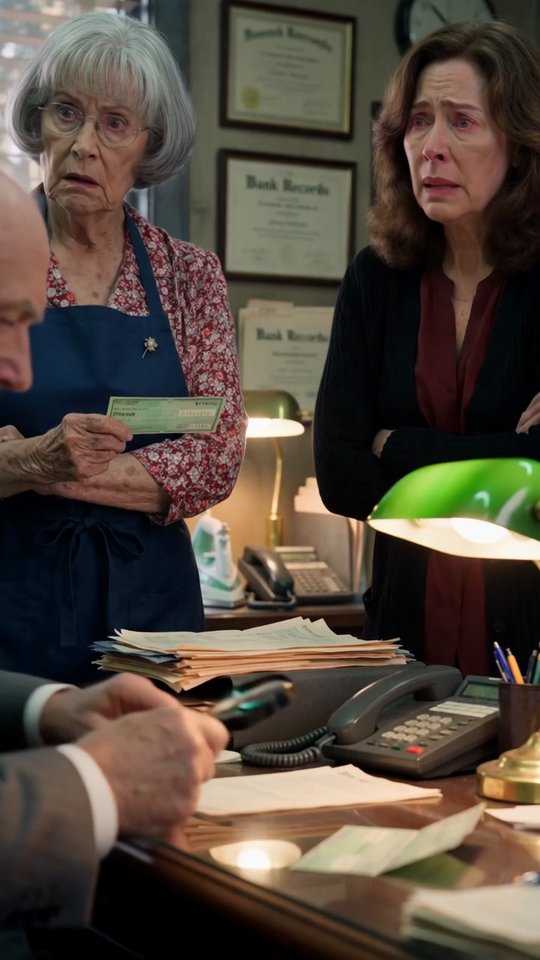
“Then he hid it,” I finished.
Thomas nodded.
“The question is why.”
I drove back to the shop with my hands shaking on the steering wheel.
Howard Cobb had stolen $11,900 from his employer, hidden the check in his coat lining, and lived with that secret for twenty-three years.
He never spent the money.
He never cashed the check.
He just… kept it.
That evening Margaret Cobb walked into my shop.
She looked older than I remembered — gray circles under her eyes, her black cardigan wrinkled.
She asked if the coats were ready.
I told her to sit down.
Then I showed her the check.
Margaret stared at it for a long time without speaking.
Finally she looked up at me, tears running down her face.
“I knew,” she whispered.
“You knew he took it?”
She nodded.
“My mother was dying. Cancer. The treatments weren’t covered by insurance. Dad worked at the lumber company for thirty-two years and they wouldn’t help. So he… he took the money. But he couldn’t bring himself to cash it. He said it felt like blood money. He sewed it into his coat and told my mother he’d found a way to pay for her treatments. But she died three weeks later, before he ever used it.”
Margaret wiped her eyes with the back of her hand.
“He kept that coat in his closet for twenty-three years. He told me once that he couldn’t throw it away and he couldn’t cash the check. It was his punishment. His reminder.”
I sat down beside her.
“What do you want me to do with it?”
Margaret looked at the check, then at me.
“The lumber company closed in 2015. The owner died. There’s no one left to return it to.”
She folded the check carefully and slid it across the counter toward me.
“My father spent twenty-three years carrying that guilt. I don’t want it. And I don’t think you should carry it either.”
She stood up and walked to the door.
Then she turned back.
“Donate it to the hospital cancer fund. In my mother’s name. Let it do some good.”
Two weeks later I walked into Flaget Memorial Hospital and handed the hospital foundation director a cashier’s check for $11,900.
I told them it was a donation in memory of Elizabeth Cobb.
They asked who was making the donation.
I said it was anonymous.
The director smiled and thanked me.
I walked out into the parking lot and sat in my truck for a long time, watching the afternoon sun glint off the hospital windows.
Vincent’s tape measure was still hanging on the nail beside my steam press when I got back to the shop.
I ran my thumb over the worn brass ends and thought about the weight we carry, the secrets we sew into our lives, the small acts of grace that let us finally set them down.
Howard Cobb never cashed that check because he couldn’t forgive himself.
But maybe, twenty-three years later, someone else could.