The second sentence on Raymond’s note read: “If you’re reading this, the camellia worked. Now look in the jewelry box.”
My hands wouldn’t stop shaking.
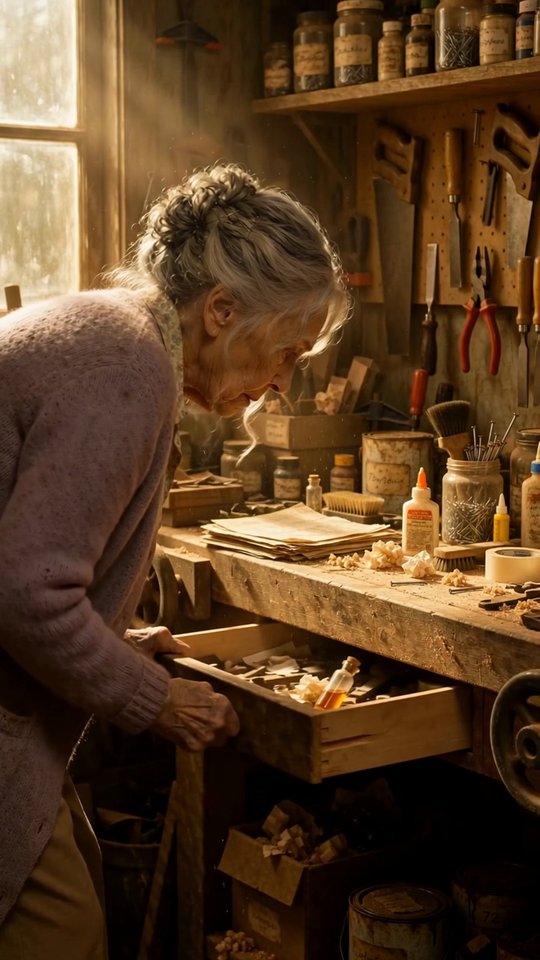
I set the note down on the workbench and turned to the half-finished jewelry box still clamped in the vise.
It was made of cherry wood, the grain dark and rich.
Raymond had been sanding it smooth when he died.
The lid wasn’t attached yet, just resting loosely on top.
I lifted it carefully.
Inside lay a small leather journal, its cover worn soft with age.
I opened it to the first page.
Raymond’s handwriting filled every line.
“March 1962. Met an old woman today on my postal route. Mrs. Hazel Edmonds, Route 7, Box 34. She showed me her garden. Said her grandmother brought camellia cuttings from Japan in 1891. Said they were the only ones in Arkansas that bloomed in January.”
I turned the page.
Decades of entries.
Raymond had been visiting Mrs. Edmonds every week for forty years.
Learning propagation techniques.
Studying old botanical methods.
Recording bloom cycles and soil compositions.
In 1987, he wrote about the greenhouse fire in Little Rock.
“Mrs. Edmonds heard the news on the radio. She cried for an hour. Said her grandmother’s camellias were the last of their kind. I asked if she had any cuttings left. She said no. The freeze of 1985 killed her last plant.”
But three pages later, dated 1989, Raymond’s handwriting changed.
Smaller. More careful.
“Found something today. In the woods behind Mrs. Edmonds’ old property. The house burned down last year, but I walked the fence line anyway. There’s a root sucker growing from the old stump. One single shoot, maybe six inches tall. I took a cutting. Mrs. Edmonds would have wanted me to save it.”
I sat down on Raymond’s stool, the journal open in my lap.
He’d spent thirty-five years keeping that cutting alive.
Grafting it.
Re-rooting it.
Preserving it in honey and distilled water when he knew his heart was failing.
He’d researched the endowment grant.
Calculated the exact amount.
Left me instructions he knew I’d find only when I was ready.
My phone rang.
Dr. Cho.
I answered, my voice barely steady.
“Mrs. Alverez, the cambium layer is intact. We can propagate this. But there’s something else.”
She paused.
“I ran a genetic analysis. This cutting doesn’t just match the extinct Eureka Camellia. It’s older. The cellular structure suggests it came from a parent plant that predates the 1891 introduction. Your husband saved something that shouldn’t exist. A ghost cultivar. Botanists are going to want to study this for decades.”
I closed my eyes.
Raymond had known.
He’d known exactly what he was protecting.
Dr. Cho continued, her voice softer now.
“The conservatory board met this morning. The endowment grant is approved. $7,650 will be deposited into your account by the end of the week. But Mrs. Alverez, we’d like to name the restoration project after your husband. The Raymond Alverez Memorial Camellia Conservancy. If you’ll allow it.”
I couldn’t speak.
Tears ran hot down my cheeks.
“There’s one more thing,” Dr. Cho said quietly. “We’d like you to be our community liaison. We’re going to teach propagation workshops here in Eureka Springs. Sharing the old techniques your husband preserved. We can pay a small stipend. It’s not much, but—”
“Yes,” I whispered.
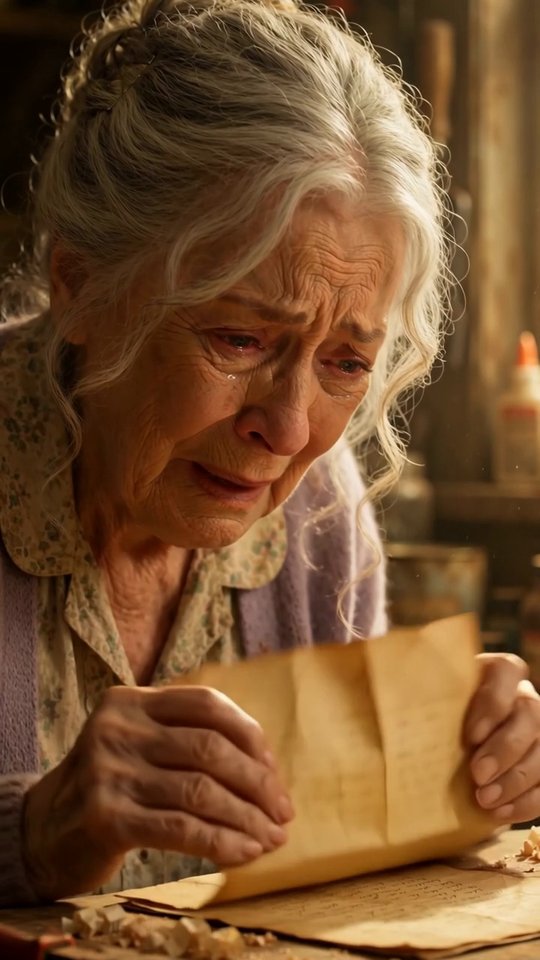
I hung up and sat in the workshop as the last light faded.
Raymond’s journal lay open on the workbench.
I turned to the final entry, dated three days before he died.
“Doris—If you’re reading this, I’m gone. I’m sorry I kept secrets. I’m sorry I didn’t tell you about Mrs. Edmonds or the camellia or the years I spent learning to keep beautiful things alive. But you taught me everything that mattered. You taught me that a garden isn’t about what you take from the soil. It’s about what you leave behind. The grant money is for you. Spend it however you want. But the camellia—that’s for everyone. Let them grow it. Let them learn from it. Let them remember that some things are worth saving, even when the world says they’re already lost. I loved you every day. Keep growing.”
I folded the journal closed and pressed it to my chest.
Outside, the garden waited in darkness.
Tomatoes and zinnias and green beans.
Ordinary things.
But tomorrow, I would plant something else.
Something rare.
Something saved.
I walked to the kitchen and made a cup of tea, Raymond’s journal on the table beside me.
The house felt different now.
Not empty.
Full.
Full of secrets that had waited patiently to bloom.
Two weeks later, Dr. Cho returned with a small potted cutting.
The first successful graft from Raymond’s preserved specimen.
We planted it together in the garden, in the spot where Raymond used to sit on summer evenings.
Lily helped dig the hole.
She patted the soil down carefully, her hands gentle.
“Will it really bloom in January, Grandma?” she asked.
I looked at the fragile green leaves, barely visible in the afternoon light.
“Your grandfather believed it would,” I said. “And he was never wrong about growing things.”
That night, I sat in the workshop and finished the cherry wood jewelry box.
Sanded it smooth.
Attached the hinges.
Lined the interior with felt.
Inside, I placed Raymond’s journal and the tissue paper that had wrapped the vial.
On the lid, I carved four words with Raymond’s old chisel.
“For Doris. Keep Growing.”
The box sits on my dresser now.
Every morning, I open it and read one entry from the journal.
Every evening, I close it and walk to the garden.
The camellia is growing.
Slowly.
Patiently.
In January, it will bloom.
And when it does, I’ll cut a single flower and bring it to Raymond’s grave.
Not because he’s gone.
But because he’s still here.
In every leaf.
Every root.
Every beautiful thing we choose to save.