I met Leonard Haines at his office on Third Street Wednesday morning.
The building smelled like old carpet and lemon furniture polish.
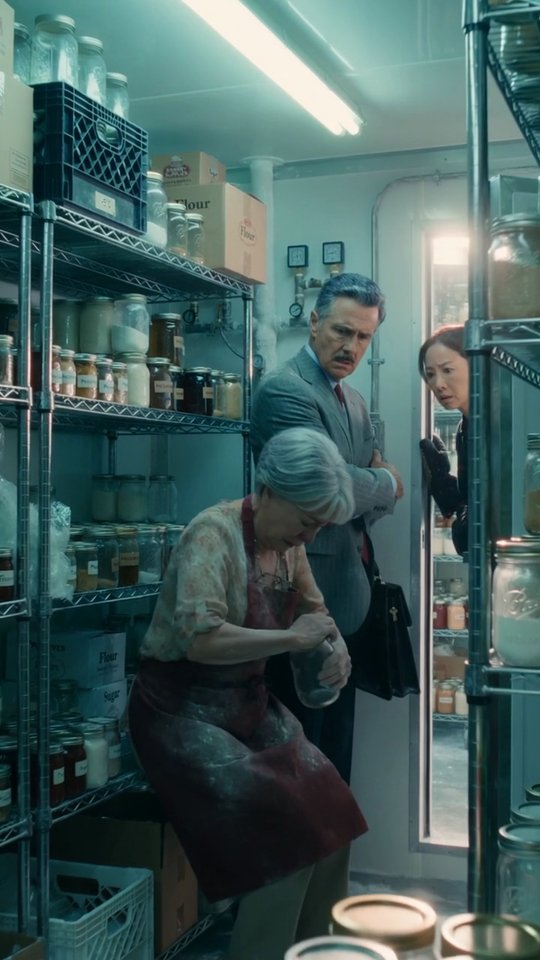
He led me into a conference room with a single envelope and a small brass key on the table.
The envelope was yellowed at the edges.
My mother’s handwriting on the front: “For Francesca — Open only after you find the lid.”
My hands shook as I broke the seal.
Inside was a two-page letter written in her slanted cursive.
“My darling Frankie, if you’re reading this, you’ve found the brass lid on the sourdough jar. That means you’ve been faithful. You’ve kept the starter alive. You’ve honored the promise you made at my bedside. Now I can tell you the rest.”
I wiped my eyes and kept reading.
“In 1983 I was twenty-three years old and pregnant with you. Your father had just left. I had no money, no family in America, and no idea how I would survive. I went to St. Croix Church and sat in the back pew and prayed for a miracle.”
“The next morning I found an envelope under my apartment door. Inside was $1,200 in cash and a note that said, ‘Anonymous gifts preserve dignity.’ No name. No return address. Just that one sentence.”
“That money paid my rent for three months and bought the used oven I needed to start baking wedding cakes. It saved my life. It saved yours.”
I had to stop reading.
I’d never known any of this.
Leonard handed me a tissue and waited.
I kept going.
“I tried for two years to find out who sent that money. I asked everyone. No one knew. So I made a promise to God: when I had enough, I would do the same for someone else. In 1985 I saved $1,200 and left it under the door of a young mother whose husband had died. I used the same words: ‘Anonymous gifts preserve dignity.’”
“It felt like breathing after holding my breath for two years.”
“I kept doing it. Every year. Sometimes twice a year. I kept a list of every family I helped in a ledger I hid in the sourdough jar’s false-bottom lid. The brass lid you found is that ledger. The engraving on the outside is the total I gave. The engraving on the inside is the rule I lived by.”
I looked at Leonard.
“There’s a ledger inside the lid?”
He nodded.
“Your mother had it custom-made by a metalworker in Red Wing. The lid unscrews into two pieces. The inner piece holds a rolled parchment with every name, date, and amount she ever gave.”
I pulled the brass lid from my purse and twisted it.
It separated into two thin discs.
Inside was a tightly rolled piece of parchment no bigger than my thumb.
I unrolled it on the table.
Forty years of names written in pencil.
Dates.
Dollar amounts.
Some I recognized.
The single father whose heat got turned on in 1987 was Mr. Callahan, who used to buy banana bread every Saturday.
The widow in 1991 was Mrs. Lindgren, who worked at the post office and always smiled when she saw my mother.
The teenager in 1996 was Amy Kowalski, who now taught third grade at Stillwater Elementary.
I read every name twice.
Then I read the last paragraph of my mother’s letter.
“The key Leonard is holding opens a safety deposit box at First National Bank. Inside that box is $11,000. It’s everything I saved in the last two years of my life. I was going to give it away, but I got sick too fast. I want you to finish what I started. But here’s the condition, Frankie: you can’t give it to strangers. You have to give it to someone you know. Someone you see every day. Someone whose dignity you can preserve with your own hands. That’s the only way the gift stays alive.”
I looked up at Leonard.
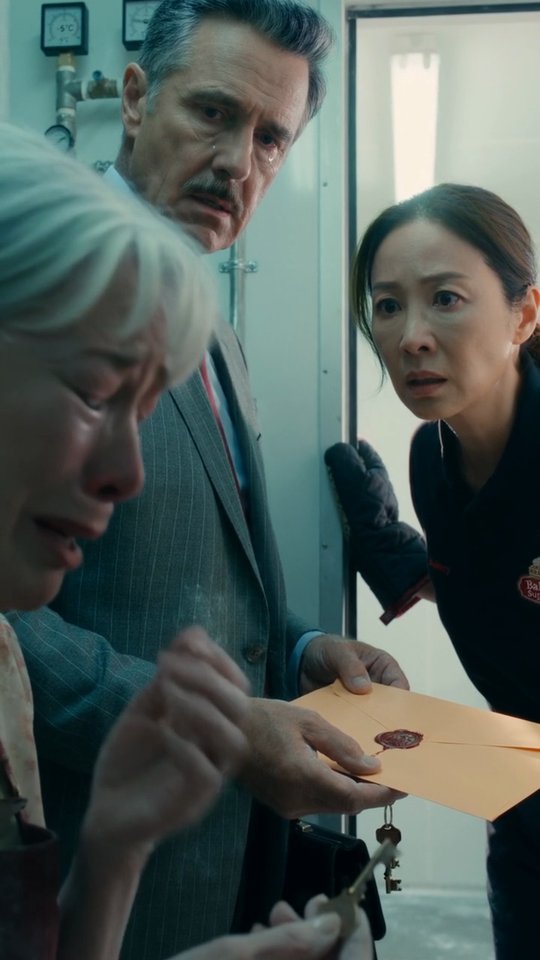
“She wanted me to give away eleven thousand dollars?”
He smiled.
“She wanted you to understand why she lived the way she did. And she wanted you to choose whether to continue it.”
I sat in that conference room for twenty minutes staring at the parchment and the key.
Then I thought about Lila.
My assistant.
She’d worked at the bakery for three years.
She was twenty-eight, single, and supporting her younger brother who had cerebral palsy.
She came in early every morning and stayed late every night and never complained.
Two weeks ago I’d overheard her on the phone with a landlord begging for one more week to pay rent.
I’d pretended not to hear.
Now I couldn’t stop thinking about it.
I took the key and drove to First National Bank.
The manager led me to the vault and opened box 447.
Inside was a single envelope with $11,000 in hundred-dollar bills and a handwritten note: “Preserve dignity.”
I put the money in my purse and went back to the bakery.
Lila was restocking the display case.
I asked her to come into the back office.
She looked nervous.
I handed her the envelope.
“What’s this?”
“A gift. From someone who believes you deserve better than begging landlords for time.”
She opened it.
Her face went white.
“I can’t take this.”
“You can. And you will. The only condition is that someday, when you’re able, you do the same for someone else.”
She started crying.
I hugged her and told her my mother’s story.
When I finished she looked at me and said, “I’ll never forget this.”
I smiled.
“You’re not supposed to forget. You’re supposed to remember so you can pass it on.”
That night I went home and put the brass lid back on the sourdough jar.
I fed the starter the way my mother taught me.
And I made a new promise: every year I’d find someone who needed help and I’d give it the way she did—quietly, anonymously, and with the same words engraved on that brass lid.
Anonymous gifts preserve dignity.
My mother spent forty years proving that sentence true.
Now it’s my turn.