I didn’t sleep that night.
I sat on the couch with Rusty curled at my feet, scrolling through every video clip Diane had sent me, watching the same dark-coated figure appear and disappear like a ghost at the edges of my property.
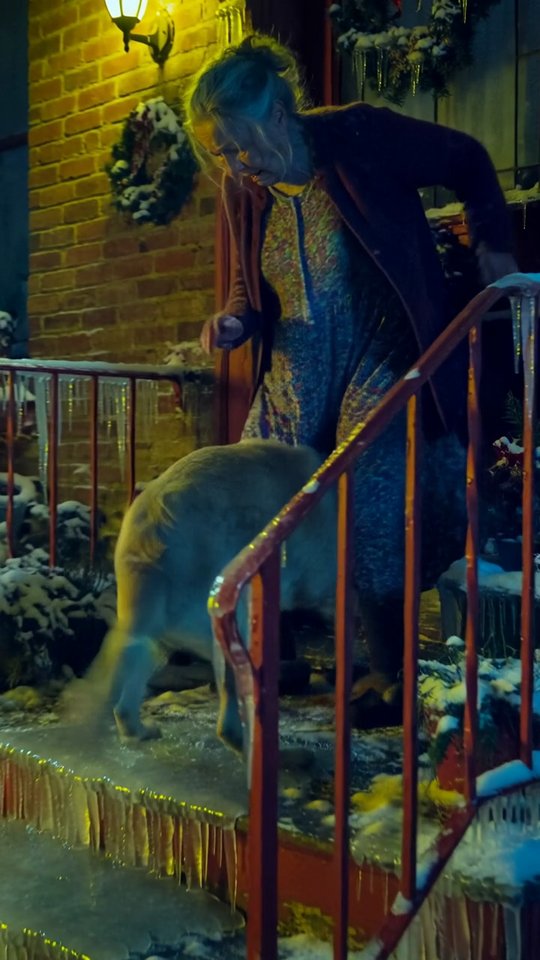
Each time, Rusty chased him away.
Each time, the man returned a few weeks later.
By three in the morning, I’d counted seven separate appearances spanning from October through January.
Always on nights when ice or snow made the streets treacherous.
Always when I would have been most vulnerable if I’d slipped and fallen outside.
I kept coming back to that fraudulent security invoice—the $2,190 bill addressed to Marcus Aldridge at my address.
I’d thrown the envelope away, but I remembered the company name: SecureWatch Home Solutions.
I Googled it at dawn.
The website looked legitimate—testimonials, service packages, a customer portal.
But when I clicked the “Contact Us” page, the phone number led to a disconnected line.
The physical address listed was a vacant lot in Columbus.
I called the Chillicothe Police Department again and spoke to Officer Raymond Keller, the same man who’d taken my report the day before.
I told him about the fake security company and the fraudulent invoice.
He asked me to forward everything—the bill, the website screenshots, the ring doorbell footage.
I sent it all within ten minutes.
He called me back two hours later.
His voice was quieter than before, more careful.
“Mrs. Pritchard, we ran the name Marcus Aldridge through our system. He’s a person of interest in a string of elder-fraud cases across southern Ohio. He poses as a home security contractor, convinces elderly homeowners to install monitoring equipment, then uses the cameras to track their routines and identify when they’re most isolated or vulnerable.”
My stomach dropped.
“He never installed anything in my house.”
“No,” Officer Keller said. “But he tried. That invoice was likely a phishing attempt—if you’d called the number on the bill to dispute the charge, he would have asked for personal information or remote access to your computer. When that didn’t work, he started showing up in person, watching your property, waiting for an opportunity.”
I looked down at Rusty, still sleeping on the rug.
“And the dog?”
“We’re still trying to figure that out,” Officer Keller admitted. “But based on the footage, it’s clear the animal recognized a threat and intervened repeatedly. We’ve contacted animal control and the county shelter to see if anyone reported a missing dog matching his description seven months ago.”
I thanked him and hung up.
That afternoon, I walked to the Methodist church two blocks over—the place where Rusty always disappeared after eating.
The church secretary, a woman named Pauline, greeted me at the door.
I described Rusty and asked if she’d seen him around the property.
Her face softened immediately.
“Oh, you mean Beau,” she said. “He belonged to Mr. Harlan Whitmore, one of our longtime parishioners. Harlan passed away last April—heart attack, very sudden. Beau ran off the day of the funeral and no one could find him. We assumed he’d been picked up by animal control or adopted by someone passing through.”
She led me to a small memorial board in the church vestibule.
There was a photo of an elderly man in a plaid shirt, smiling, with a yellow dog sitting at his feet.
The dog had one torn ear.
“Harlan lived alone,” Pauline continued. “But he used to walk this neighborhood every evening, checking on the older folks who lived by themselves—making sure their walkways were clear in winter, their porch lights worked, that sort of thing. Beau always went with him.”
I stared at the photo.
“Did Harlan know me?”
Pauline nodded.
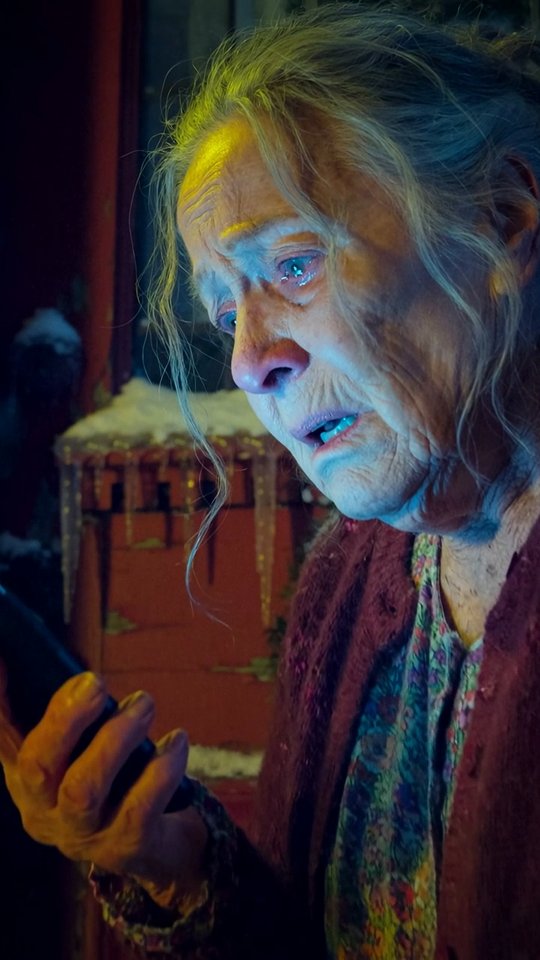
“He mentioned you a few times. Said you were a widow living alone on Walnut Street, same as him. I think he worried about you, especially during the winter months.”
I felt my throat tighten.
I walked home slowly, Rusty—Beau—padding quietly beside me.
When I reached my porch, I knelt down and looked him in the eyes.
“You were finishing his route, weren’t you?”
He licked my hand once, then sat.
Officer Keller called me the next morning.
“We’ve made an arrest,” he said. “Marcus Aldridge was picked up late last night trying to access another elderly woman’s property in Waverly. We found equipment in his vehicle—portable cameras, lock-picking tools, fake invoices. He’s being charged with multiple counts of attempted fraud and stalking.”
I exhaled for what felt like the first time in days.
“Did he say anything about my house?”
“He admitted he’d been monitoring your property for months, waiting for a night when you’d be outside alone during bad weather. He planned to stage a fall, offer to help you inside, and then convince you to sign over access to your bank accounts while you were disoriented. But every time he got close, your dog would appear and chase him off.”
I looked at Beau, lying in a patch of sunlight near the fireplace.
“He’s not my dog,” I said quietly. “He belonged to a man who used to watch over this neighborhood. I think he’s just continuing the work.”
Officer Keller was silent for a moment.
“Well, Mrs. Pritchard, I’d say that dog saved your life. Multiple times.”
I hung up and sat on the floor next to Beau.
He lifted his head and rested it on my knee.
I thought about Harlan Whitmore—a man I’d never officially met, but who had quietly looked after me from a distance.
And I thought about this dog, who had refused to abandon his route even after his owner was gone.
I pulled out my phone and opened the oldest video clip one more time.
The timestamp read October 14th, 8:42 p.m.—the first freeze of the season.
In the footage, Beau sat on my porch, staring at the door.
And in the corner of the frame, barely visible, Marcus Aldridge stood at the edge of my driveway, watching.
But this time, I noticed something I’d missed before.
Just before Beau charged toward Aldridge, the dog turned his head slightly and looked directly at the ring doorbell camera.
As if he knew someone would eventually see the footage.
As if he wanted to make sure there was a record.
I closed the video and scratched Beau behind his torn ear.
“You’re staying,” I whispered. “No more sleeping under porches. No more wandering the alleys. You’ve earned a real home.”
He sighed deeply and closed his eyes.
That evening, I walked to the Methodist church and asked Pauline if I could have the photo of Harlan and Beau from the memorial board.
She smiled and handed it to me.
I brought it home and set it on the mantel, next to my late husband’s brass stargazing telescope.
Two men I’d never properly known, both of whom had quietly watched over me when I needed it most.
Beau stood and walked to the mantel, staring up at Harlan’s photo.
Then he turned, walked back to the rug, and lay down.
His work, finally, was done.