The deputy’s name was Michael Trent. I’d seen him around Fairhope for years. He directed traffic during football games. Helped with school events. Always polite. Always professional.
But standing in that hospice doorway, his face held something I’d never seen before. Tension. Maybe concern.
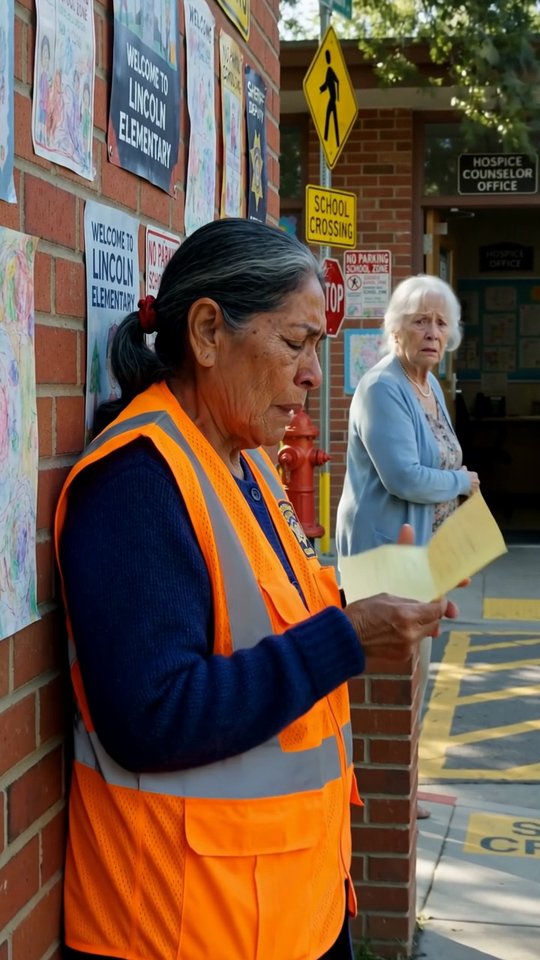
Ruth Ann opened her eyes. She looked at Deputy Trent, then back at me. “It’s all right, Carmen. He knows.”
I felt my pulse quicken. “Knows what?”
Deputy Trent stepped into the room. He removed his hat. “Mrs. Villarreal, I’m not here in an official capacity. I’m here because Ruth Ann called me three days ago and asked me to watch for you.”
I stared at the ticket in my hand. “I don’t understand.”
Ruth Ann’s voice was barely a whisper. “I’m dying, Carmen. Pancreatic cancer. Stage four. The doctors say I have maybe two weeks.”
My chest tightened. “Ruth Ann, I’m so sorry.”
She waved a frail hand. “Don’t be. I’ve had a good life. But before I go, I needed you to understand why we did what we did. And I needed someone to witness it. Someone official.”
Deputy Trent pulled a chair closer. “Mrs. Collier asked me to document her statement. She wanted it on record.”
I sat slowly. “What statement?”
Ruth Ann took a shallow breath. “The morning of March fourteenth, 2011, you saved Emma’s life. That red pickup ran the light doing forty-five in a school zone. The driver was texting. He never even looked up.”
I remembered the sound. Tires screeching. Emma’s scream. My arm shooting out, grabbing her backpack, yanking her back onto the curb. The truck’s mirror missing her face by inches.
Ruth Ann continued. “Emma is my only child. My whole world. And you didn’t hesitate. You didn’t think. You just moved.”
I felt tears sting my eyes. “Anyone would have done the same.”
“No,” Ruth Ann said firmly. “Not everyone. I’ve seen people freeze. I’ve seen people look away. You acted.”
She paused, gathering strength. “That afternoon, Dottie, Maxine, Joelle, and I met at Maxine’s house. We were shaken. Grateful. We wanted to do something for you. Something meaningful.”
Deputy Trent opened a small notebook. He was writing everything down.
Ruth Ann went on. “We decided to start a lottery pool. Five dollars each. We were going to invite you to join as the fifth member. A little group. Something fun. A way to include you in our circle.”
I looked at the ticket. The five numbers circled in red.
“We bought the ticket at the Gas-N-Go on Highway 98,” Ruth Ann said. “Maxine picked the numbers. Birthdays. Anniversaries. Random picks. We didn’t think anything of it.”
She coughed. Deputy Trent poured water from a plastic pitcher. She sipped, then continued.
“That night, the drawing happened. I was home with Emma. She was doing homework. I checked the numbers online around nine o’clock.” Ruth Ann’s eyes grew distant. “All five matched. I stared at the screen for ten minutes. I couldn’t breathe.”
I felt my hands trembling again. “Seventy-one thousand dollars.”
“Seventy-one thousand,” Ruth Ann repeated. “Split five ways, that’s over fourteen thousand each. Life-changing money for us. We were all on teacher pensions. Budgets were tight.”
She looked at me. “But the moment I realized we’d won, all I could think about was you. We were going to ask you to join the pool the next day. We hadn’t done it yet. Technically, you weren’t part of the group.”
Deputy Trent glanced up from his notebook. “But Mrs. Collier felt you deserved a share.”
Ruth Ann nodded. “More than a share. I called Dottie, Maxine, and Joelle that night. Told them we’d won. Told them we had to include Carmen. They agreed immediately. You’d saved Emma. You deserved it.”
I felt a lump in my throat. “So why didn’t you tell me? Why let it expire?”
Ruth Ann’s face crumpled. “Because the next morning, when I saw you at the crosswalk, I couldn’t do it. I looked at you in that vest, smiling at the kids, doing your job like you always did, and I realized something.”
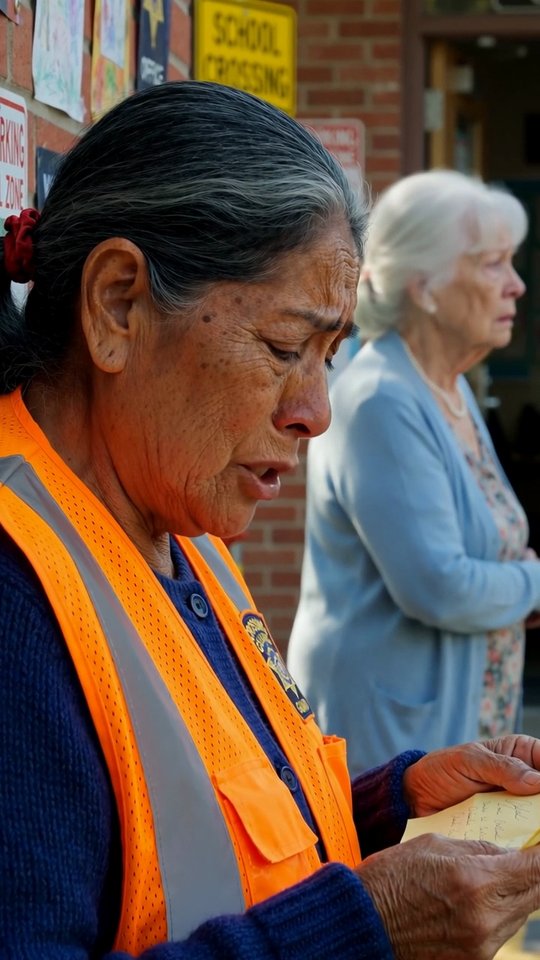
She wiped her eyes. “If I handed you fourteen thousand dollars the day after you saved my daughter, it would cheapen what you did. It would make it transactional. Like we were paying you for Emma’s life.”
I opened my mouth to protest, but she raised her hand.
“I know you wouldn’t have seen it that way,” Ruth Ann said. “But I would have. Every time I looked at you, I would’ve wondered if you thought we were trying to buy your heroism. And I couldn’t live with that.”
Deputy Trent leaned forward. “So Mrs. Collier made a decision.”
Ruth Ann nodded. “I told the others we were letting the ticket expire. Dottie argued. Maxine cried. Joelle said I was crazy. But I held firm. I said we were going to hide the ticket somewhere you’d find it someday. Somewhere safe. Somewhere meaningful.”
I looked at my vest. “My pocket.”
“Your vest hangs in the equipment closet every night,” Ruth Ann said. “Two weeks after the drawing, I went to the school after hours. The janitor let me in. I slipped the ticket into your vest pocket. Deep. Where you wouldn’t find it by accident.”
She smiled faintly. “I made the others swear never to mention it. I told them that someday, maybe years from now, you’d reach into that pocket and find it. And you’d know.”
I felt tears sliding down my face. “Know what?”
“That you mattered,” Ruth Ann whispered. “That what you did mattered more than money. That four women you barely knew valued your life and your character so much that we’d rather lose a fortune than risk tainting the purity of your action.”
Deputy Trent closed his notebook. “Mrs. Collier asked me to document this because she wanted you to understand it wasn’t a mistake. It wasn’t forgotten. It was intentional.”
I stared at the ticket. Fourteen years old. Worthless now. But somehow, in that moment, it felt priceless.
Ruth Ann reached for my hand again. “I’m sorry it took so long. I thought I’d have more time. But the cancer moved fast. I called Dottie last week and told her to make sure you found it before I died.”
I squeezed her hand gently. “Dottie put it back in my vest yesterday.”
Ruth Ann nodded. “She was supposed to. I wanted you to find it. I wanted you to come here. I wanted to see your face when I told you the truth.”
I couldn’t speak. My throat was too tight.
Deputy Trent stood. “I’ll leave you two alone. Mrs. Collier, I’ve documented everything. It’s on record now.”
Ruth Ann thanked him. He nodded to me and left quietly.
I sat with Ruth Ann for another hour. We talked about Emma, who was now twenty-two and teaching second grade in Mobile. We talked about the other women. Dottie’s garden. Maxine’s grandchildren. Joelle’s new hip.
We talked about the crosswalk. The kids. The morning routines. The small, quiet rhythms of a life spent watching over others.
When I finally stood to leave, Ruth Ann held my hand one last time. “Carmen, promise me something.”
I nodded.
“Don’t ever think you’re invisible. Don’t ever think what you do doesn’t matter. You’ve touched more lives than you’ll ever know.”
I kissed her forehead. “Thank you, Ruth Ann.”
She smiled. “Thank you, Carmen.”
I drove home with the ticket on the passenger seat. When I got to my apartment, I framed it. Hung it on the wall next to a photo of me in my vest, standing at the crosswalk, whistle around my neck.
Ruth Ann passed away nine days later. Dottie, Maxine, Joelle, and I sat together at the funeral. We didn’t talk about the ticket. We didn’t need to.
The next morning, I went back to my corner. Oak Street and Magnolia. Six a.m. sharp. I put on my vest, checked the pockets out of habit, and smiled.
Some things, I realized, are worth far more than seventy-one thousand dollars.