Carolyn Reese stood three feet from my porch, her grey suit immaculate despite the July heat, her handshake firm and cool.
The technician behind her adjusted his wire-rimmed glasses and opened a second briefcase on the hood of the sedan.
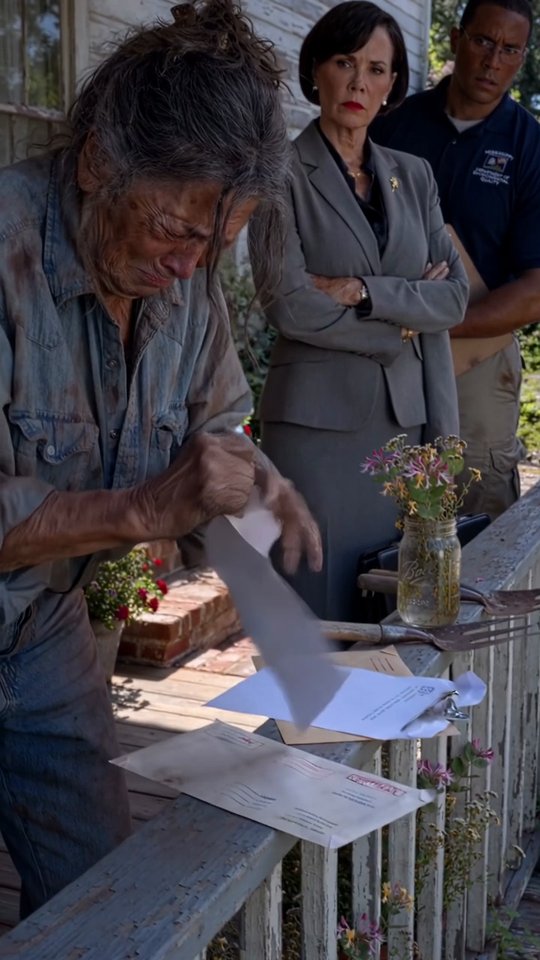
“Ms. Gillespie, may we sit down somewhere? This will take a few minutes to explain properly.”
I led them to the shaded side of the cottage where I keep two weathered Adirondack chairs and a small folding table.
Carolyn sat, crossing her legs and placing a folder on her lap.
The technician remained standing, clipboard in hand.
“The water sample we collected tested positive for mineral signatures consistent with a pre-colonial artesian spring,” Carolyn began. “Do you know what that means?”
I shook my head, still clutching the certified letter.
“An artesian spring occurs when underground pressure forces water upward through geological fissures. The spring beneath your property was capped sometime in the early 1800s, likely by the original landowners. Your well accidentally tapped into it when it was drilled.”
She opened the folder and pulled out a geological survey map marked with overlapping colored zones.
“This spring is protected under state heritage conservation law because it’s believed to have been a sacred water source for Chickasaw communities before European settlement. The mineral profile is unique—untouched by modern agricultural runoff, naturally filtered through limestone aquifers that date back twelve thousand years.”
I stared at the map, trying to make sense of the colored lines.
“So what does that mean for me? Do I lose the well?”
Carolyn glanced at the technician, then back at me.
“Not exactly. The state isn’t going to force you to cap it. But we do need to reclassify your property under a conservation easement. That means certain restrictions on land use, and it also means mineral rights transfer to the state.”
“Mineral rights?”
The technician stepped forward.
“The water itself has commercial value, Ms. Gillespie. Artesian spring water of this purity can be bottled and sold. There are companies that would pay significant money for access.”
My stomach tightened.
“You’re saying someone’s going to come dig up my yard and bottle the water?”
Carolyn raised a hand.
“No. That’s exactly what the conservation easement prevents. The spring stays protected. No commercial extraction, no drilling, no disturbance. But the state does acquire legal oversight to ensure it remains untouched.”
I felt dizzy.
“And what do I get out of this?”
Carolyn pulled another document from the folder.
“The state offers compensation to landowners who agree to conservation easements on heritage sites. In your case, because you’re not the legal owner of the property—Gerald Whitmore is—we’d be negotiating with him. But as the primary resident and caretaker, you’d be entitled to a stewardship stipend.”
“A stipend?”
“Twelve hundred dollars a month, renewable annually, as long as you continue to maintain the property and monitor the well site according to state guidelines.”
I sat back in the chair, the number ringing in my ears.
Twelve hundred dollars a month.
For forty years I’d worked this land for room and board and a modest salary that barely covered groceries.
Twelve hundred a month would change everything.
“There’s one more thing,” Carolyn said quietly. “The well water you’ve been drinking—it’s some of the purest natural water we’ve ever tested. No contaminants, no heavy metals, no modern pollutants. You’ve essentially been drinking water that’s been naturally filtered for millennia.”
The technician smiled slightly.
“Most people pay a fortune for bottled spring water that’s a fraction of this quality. You’ve had it on tap your whole life.”
I looked toward the well house, half-hidden by honeysuckle vines.
All those years, every glass I drank, every pot of coffee I brewed, every tomato I watered—it had all come from something ancient and sacred.
Something I’d never known I was protecting.
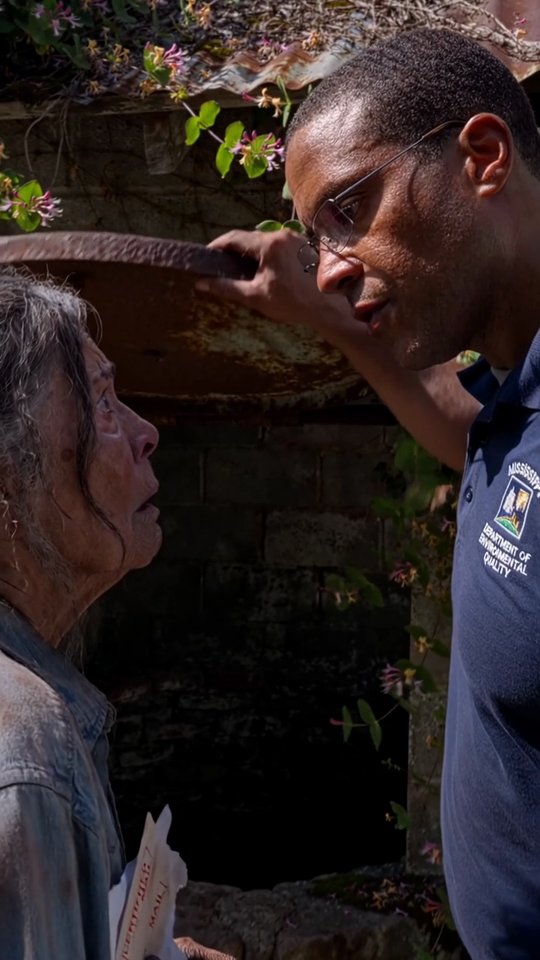
“What do I need to do?” I asked.
Carolyn handed me the document.
“Sign this acknowledgment of the conservation easement. We’ll handle the paperwork with Mr. Whitmore. The stipend starts next month, and we’ll install a monitoring station near the well to track water levels and quality. You’ll continue living here and working the land exactly as you have been.”
I took the pen she offered.
My hand shook slightly as I signed my name on the line.
Carolyn countersigned, then stood and shook my hand again.
“Thank you, Ms. Gillespie. You’ve been a steward of this land longer than most people stay in one place. The state recognizes that.”
They packed up their briefcases and drove away, gravel crunching under the sedan’s tires.
I sat alone on the porch as the sun dipped lower, casting long shadows across the herb bed.
Pauline’s Buick appeared up the drive an hour later.
She climbed out carrying a covered dish—fried chicken, from the smell.
“Well?” she asked, settling into the chair beside me. “What’d they say?”
I told her everything.
The artesian spring, the conservation easement, the twelve hundred a month.
Pauline’s eyes went wide.
“Rhonda Gillespie, you’ve been sitting on a goldmine and didn’t even know it.”
I laughed, a sound that surprised me.
“Not a goldmine, Pauline. Just water. Old, clean water.”
She squeezed my hand.
“Sometimes that’s worth more than gold.”
We sat together as the evening cooled, sharing fried chicken and lemon bars, watching fireflies rise from the overgrown camellia hedges.
The next morning I walked out to the well house and lifted the tin roof.
I lowered a tin cup on a rope, the way I’d done a thousand times before.
The water came up cold and clear, faintly mineral, unchanged.
I drank it slowly, tasting limestone and time, tasting something older than memory.
And for the first time in forty years, I understood what I’d been given.
Not just a place to live, not just work to fill my days.
But a trust.
A quiet, unseen responsibility to protect something that had existed long before me and would flow long after I was gone.
I replaced the tin roof and walked back to the cottage.
The tomatoes needed picking, the roses needed deadheading, the herb bed needed weeding.
The work was the same.
But now I knew what I was really tending.
Not just a farmhouse estate in Oxford, Mississippi.
But a living piece of history, hidden beneath honeysuckle vines and cracked linoleum.
And I would keep it safe.