The number on my phone screen was local, but I didn’t recognize it.
I answered anyway.
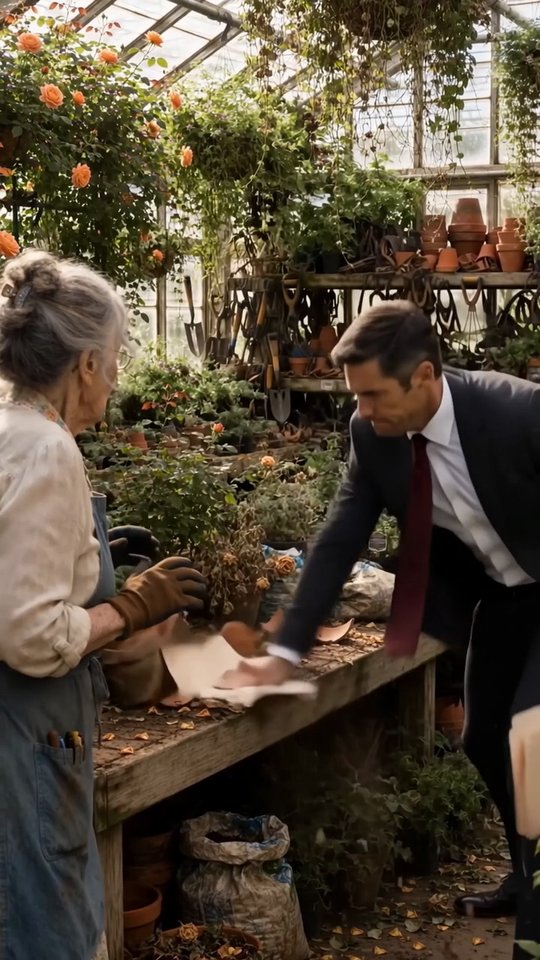
“Mrs. Beaumont? This is Dr. Lucinda Marsh from the Colorado Agricultural Extension. I heard about what happened with Verdant BioPharm.”
I sat up straighter.
“How did you hear about that?”
“Small town. The librarian mentioned you’d been researching plant patents. I specialize in heritage crop genetics, and I think you might have a case.”
I felt a flicker of something I hadn’t felt in days.
Hope.
“They already took my roses,” I said quietly.
“Did you keep any cuttings?”
I thought of the box in my basement.
“Yes.”
“Good. Bring them to my lab tomorrow morning. I want to run a genetic test.”
Tuesday morning, I drove to the university extension office in Durango.
Dr. Marsh was younger than I expected, maybe forty, with short auburn hair and dirt under her fingernails.
She reminded me of myself thirty years ago.
I handed her the damp cuttings.
She laid them on a sterile tray and examined the stems under a magnifying lamp.
“These are incredibly old genetics,” she said. “Look at the cell structure. This isn’t modern hybridization.”
She took tissue samples and placed them in small vials.
“I’m going to sequence the DNA and compare it to Verdant’s patent filing. If your roses predate theirs, we’ll have proof.”
“How long will that take?”
“Three days.”
I went home and waited.
I couldn’t go into the greenhouse.
It felt like walking into a funeral home.
I spent those three days sitting on the Victorian porch, wrapped in my mother’s quilt.
I thought about Ida Hartley, the mining camp cook who’d planted the original roses in 1887.
I thought about the women who’d tended them through harsh winters and summer droughts.
I thought about my husband, who’d built the cedar benches in the greenhouse with his own hands.
Friday afternoon, Dr. Marsh called.
“Eloise, you need to come to my office. Now.”
I drove back to Durango.
When I walked into her lab, she was standing in front of a computer screen covered in colored graphs.
She turned to me, and her eyes were bright.
“Your roses are genetically distinct from Verdant’s patent. In fact, Verdant’s roses contain markers that are direct descendants of your cultivar.”
I stared at her.
“What does that mean?”
“It means they didn’t invent a new rose. They stole yours.”
My legs felt weak.
I sat down in the nearest chair.
“How is that possible?”
Dr. Marsh pulled up another screen.
“In 2016, Verdant BioPharm sent researchers to Colorado to collect ‘wild specimens’ for their breeding program. I found the expedition report in a public database. They visited Silverton.”
I remembered 2016.
A group of graduate students had come to my nursery, asking to photograph my roses for a “regional flora survey.”
I’d let them take cuttings.
I’d even given them my grafting notes.
“They used my roses to develop their patent,” I said slowly.
“Yes. And here’s the important part: your genetic line contains a naturally occurring compound called anthocyanin-7, which has pharmaceutical applications. Verdant has been synthesizing it for a new anti-inflammatory drug that’s currently in clinical trials.”
She handed me a printed article from a medical journal.
“That drug is worth an estimated $340 million annually.”
I looked at the paper.
The words blurred together.
“Under the Plant Variety Protection Act and subsequent biopiracy amendments, if Verdant derived commercial pharmaceutical compounds from your heritage cultivar without consent, you’re entitled to royalties.”
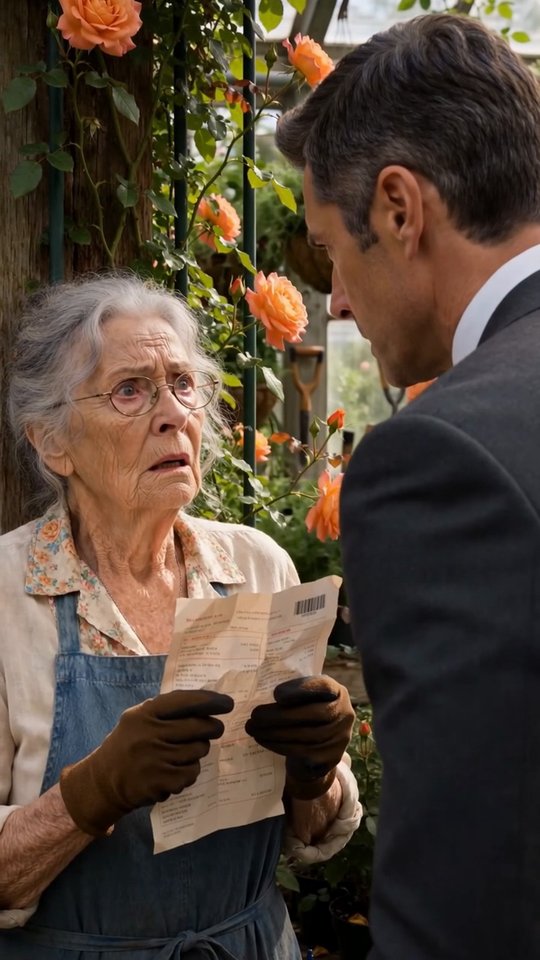
I couldn’t speak.
Dr. Marsh sat down beside me.
“Eloise, you don’t just have a defense. You have a claim.”
She helped me contact a patent attorney in Denver who specialized in agricultural biopiracy cases.
His name was Raymond Soto.
He reviewed Dr. Marsh’s genetic analysis and my garden journals.
Then he called Verdant BioPharm’s legal department.
Two weeks later, I received a certified letter.
Verdant was offering a settlement.
They would return my roses, drop all claims, and pay me $18,000 in “consultation fees.”
Raymond told me to reject it.
“They’re lowballing you because they’re scared. If this goes to court, you’ll win millions.”
I thought about it for a long time.
I thought about the greenhouse, about the empty benches.
I thought about my husband and Ida Hartley and all the women who’d kept those roses alive through generations.
Then I thought about the mining camp, about the rusted bedframe and the broken porcelain.
I called Raymond back.
“I don’t want millions. I want my roses back, and I want them to pay for what they took.”
He negotiated a new settlement.
Verdant returned my entire inventory, paid $127,000 in damages, and agreed to a royalty structure that would give me 2.3% of net revenue from any pharmaceutical products derived from my cultivar’s genetic material.
The first royalty check arrived four months later.
It was for $6,120.
I framed it and hung it in the greenhouse.
The second check, six months after that, was for $14,200.
I used it to install a new irrigation system and hire a part-time assistant.
Her name is Rosalinda.
She’s twenty-three and studying horticulture at the community college.
She reminds me of myself at that age.
We spend our mornings grafting cuttings and talking about soil pH and heritage preservation.
I’ve started teaching workshops on rose propagation.
People come from all over Colorado to learn how to save old cultivars.
I tell them about Ida Hartley.
I tell them about the mining camp and the women who planted beauty in hard places.
I tell them that every rose carries a story, and that story belongs to the people who tend it.
Last spring, Dr. Marsh came to visit.
She brought a graduate student who was researching biopiracy law.
We walked through the greenhouse together.
The apricot climbers were in full bloom.
The air smelled like honey and memory.
“You changed the precedent,” Dr. Marsh said. “Three other heritage growers have used your case to fight corporate patent claims.”
I touched one of the soft petals.
“I just wanted my roses back.”
She smiled.
“You got a lot more than that.”
I still live alone in the cottage.
I still sit on the Victorian porch on cold nights, wrapped in my mother’s quilt.
But now, when I walk into the greenhouse, it’s full again.
Full of roses that survived mining camps and corporate greed and one stubborn old woman who refused to let them go.
And every time I graft a new cutting, I think about the generations of hands that carried these plants forward.
I think about the women who didn’t have lawyers or genetic tests or patent attorneys.
The women who just had dirt under their fingernails and a belief that beauty was worth fighting for.
I’m 71 years old, and I’ve spent most of my life in this greenhouse.
And I’m not done yet.