Leonard’s daughter Rachel stood frozen on the bottom step.
Her eyes moved from her father to me to the silver tea service gleaming under the fluorescent light.
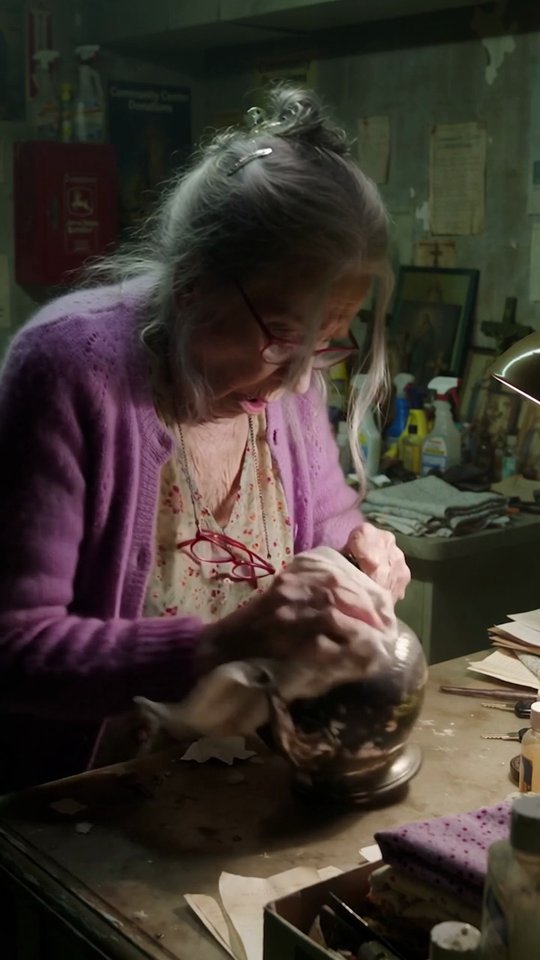
The basement felt smaller suddenly.
“Dad, you promised you’d stay in the car,” Rachel said.
Her voice was tight. Controlled.
Leonard didn’t look at her. He kept his eyes on me.
“I had to do this, Rachel.”
“No, you didn’t.” She stepped forward. “We talked about this. You were supposed to let me handle it.”
I looked down at the yellowed receipt in my hand.
My uncle’s handwriting. Fifty-two years old.
“What’s inside the teapot spout?” I asked Leonard.
Rachel moved fast. She crossed the basement in four steps and reached for the teapot.
I put my hand on it first.
“Don’t,” I said.
Rachel stopped. Her jaw was set.
“Miss Zimmerman, my father has stage four lung cancer. He’s on hospice. He’s confused and—”
“I’m not confused,” Leonard said.
His voice was stronger now.
“I remember every detail of April ninth, 1972.”
Rachel’s face flushed. “Dad, please.”
“Your uncle came to the gin that night to collect his money,” Leonard said to me. “Six thousand dollars. I didn’t have it.”
He sat down heavily on an overturned milk crate near the wall.
“Jerome was angry. He had every right to be. I’d been stalling him for three months.”
I held the teapot against my chest.
“We argued,” Leonard continued. “He said he needed that money to leave town. Start over somewhere. He said he was drowning here.”
Rachel closed her eyes.
“Then someone else showed up,” Leonard said quietly.
The fluorescent light buzzed.
“Who?” I asked.
Leonard looked at his daughter.
“Tell her, Rachel.”
Rachel opened her eyes. They were wet.
“My uncle,” she whispered. “Wayne Pruit. My dad’s older brother.”
Leonard nodded. “Wayne worked security at the gin. Night shift. He heard us arguing and came to see what was going on.”
“Wayne had a temper,” Rachel added softly. “Everyone knew it.”
Leonard’s hands were shaking again. “Wayne told Jerome to leave. Said Dad didn’t owe him anything. Jerome pushed back. Said he had a signed receipt.”
“And then?” I asked.
Leonard’s voice broke. “Wayne hit him. With a cotton bale hook. Just once. But it was enough.”
The basement went silent.
I felt my knees weaken.
“Jerome went down,” Leonard said. “He didn’t get back up.”
Rachel wiped her eyes with the back of her hand.
“Wayne panicked,” Leonard said. “He told me we had to hide it. Said if anyone found out we’d both go to prison.”
“So you did,” I said.
My voice sounded far away.
Leonard nodded. “We buried him that night. Under the old loading dock behind the gin. Poured concrete over it two days later when they repaved.”
I looked down at the teapot.
“What’s in the spout?” I asked again.
Leonard met my eyes. “Jerome’s dog tags. Wayne pulled them off before we buried him. Said we needed insurance in case one of us ever talked.”
“Wayne kept them for forty years,” Rachel said quietly. “When he died in 2014, I found them in his safe deposit box. Along with a confession letter.”
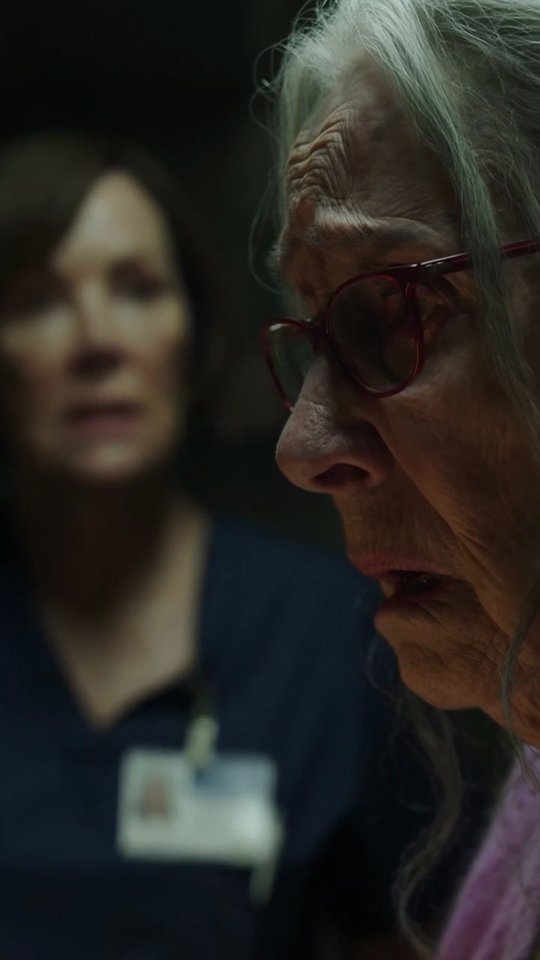
She reached into her scrubs pocket and pulled out a small envelope.
“Wayne wrote it a week before he died. He told my dad where the tags were. Made him promise to return everything when the time was right.”
Leonard stood up slowly. “But I was a coward. I kept putting it off. Then last month the doctor gave me my diagnosis.”
“I told him we’d do this together,” Rachel said. “Anonymously. Just return the silver and the money and let it end there.”
“But I couldn’t,” Leonard said. “I couldn’t die without telling Jerome’s family the truth.”
I unscrewed the lid of the teapot with trembling fingers.
I turned it upside down over the worktable.
Two metal tags on a beaded chain slid out.
They hit the wood with a soft clink.
ZIMMERMAN, JEROME R.
O POS.
BAPTIST.
I picked them up. They were cold.
“The money,” I said. “Where did it come from?”
“I’ve been saving it for thirty years,” Leonard said. “A little every month. It’s what I owed him. With interest.”
Rachel touched her father’s shoulder. “We need to call someone, Miss Zimmerman. The police. A lawyer. I don’t know.”
I looked at Leonard. His face was gray. His breathing was shallow.
“How long does your doctor say you have?” I asked.
“Four months,” he said. “Maybe six.”
I closed my hand around the dog tags.
“My mother spent forty years thinking her brother abandoned her,” I said.
Leonard’s eyes filled. “I’m sorry.”
“Sorry doesn’t bring him back.”
“No ma’am.”
I looked at Rachel. “Your uncle Wayne. Is he buried in Eufaula?”
She nodded. “Fairview Cemetery. Next to my grandmother.”
I set the dog tags on the table next to the receipt.
“I’m calling the police,” I said. “They’ll want to excavate the loading dock. They’ll want statements from both of you.”
Leonard nodded. “I understand.”
“But first,” I said, “I want you to take me to where you buried my uncle.”
Rachel drove us to the old cotton gin in her Honda.
The building was abandoned. Windows broken. Weeds growing through the asphalt.
Leonard walked us around back.
The loading dock was cracked concrete. Faded yellow paint.
“Here,” Leonard said.
He pointed to a spot near the north corner.
“Six feet down.”
I stood there for a long time.
The sun was setting. The sky was orange and purple.
Rachel stood next to her father. Her arm around his shoulders.
“I’ll make sure he gets a proper burial,” I said finally. “Next to my mother.”
Leonard’s voice was barely a whisper. “Thank you.”
I called Sheriff Macomb from Rachel’s phone.
He arrived twenty minutes later with two deputies and a county forensics team.
Leonard gave his statement sitting in the back of Rachel’s car.
It took an hour.
When he finished, Sheriff Macomb looked at me.
“We’ll need a few days to get the excavation permits,” he said. “But we’ll bring your uncle home, Miss Zimmerman.”
I nodded.
The sheriff arrested Leonard that night.
Rachel posted his bail the next morning.
The excavation took four days.
They found my uncle’s remains exactly where Leonard said they would be.
The coroner confirmed cause of death: blunt force trauma to the skull.
Leonard Pruit died six weeks later in the hospice wing of Eufaula Memorial.
Rachel was with him.
So was I.
He asked me to forgive him.
I told him I’d think about it.
We buried my uncle Jerome on a Saturday in October.
Clear sky. Cool breeze. Leaves turning gold.
Pastor Nell said a few words. I read a letter my mother had written to Jerome in 1985, still hoping he’d come home.
Rachel Pruit stood at the back of the cemetery.
She didn’t come close, but she stayed until the end.
When everyone left, I placed the silver tea service on the grave.
Polished. Gleaming.
Returned at last.