I found the blue pickup parked outside a small white house on a dead-end road three miles from the sanctuary.
The dent in the tailgate matched Judith’s description perfectly.
The house sat behind a chain-link fence overgrown with honeysuckle and wild grape vines.
The yard was quiet except for the sound of dogs barking softly somewhere behind the house.
I sat in my truck for ten minutes, gripping the steering wheel, trying to decide whether to knock or call the sheriff.
Finally I got out and walked to the gate.
A wooden sign hung from the fence: “Private Property. No Soliciting.”
I pushed the gate open and walked up the gravel path.
The barking grew louder.
I rounded the corner of the house and stopped cold.
The backyard was filled with dogs.
Not kennels or cages.
Just dogs.
Sleeping on porches, lying in the shade of live oaks, wandering slowly across the grass.
I recognized them immediately.
Rusty, the one-eyed beagle, dozed on a dog bed near the back steps.
Peaches, the blind cocker spaniel, lay curled beside a gray-muzzled Labrador I remembered from two years ago.
There were at least thirty dogs in the yard, all seniors, all moving slowly and peacefully in the morning light.
A man stepped out onto the back porch.
He was tall and lean, with a silver beard and tired eyes.
He wore a flannel shirt and canvas work pants.
He looked at me without surprise, as if he’d been expecting someone to show up eventually.
“You’re from the sanctuary,” he said quietly.
I nodded, unable to speak.
He gestured to a pair of weathered Adirondack chairs on the porch.
“Sit down. I’ll explain.”
His name was Raymond Collier.
He’d been a machinist at the shipyard in Gulfport for thirty-two years before he retired.
He’d been married once.
His wife’s name was Rachel.
They’d had one daughter, also named Rachel, born in 1987.
She died in a car accident when she was nineteen.
“She loved dogs,” Raymond said, his voice flat and distant. “Used to volunteer at the Humane Society every weekend. She always wanted to adopt the old ones. The ones nobody else would take.”
He stared out at the yard, where Rusty had woken and was limping slowly toward the porch.
“After she died, my wife couldn’t handle it. She left a year later. I don’t blame her.”
He paused, rubbing his eyes.
“I didn’t know what to do with myself. The house was too quiet. I started thinking about what Rachel would’ve wanted.”
That’s when he started going to the sanctuary.
He adopted the first dog—an arthritic German shepherd named Duke—six months after Rachel’s death.
Duke lived three more years, comfortable and loved.
When Duke passed, Raymond went back and adopted another senior dog.
Then another.
Then another.
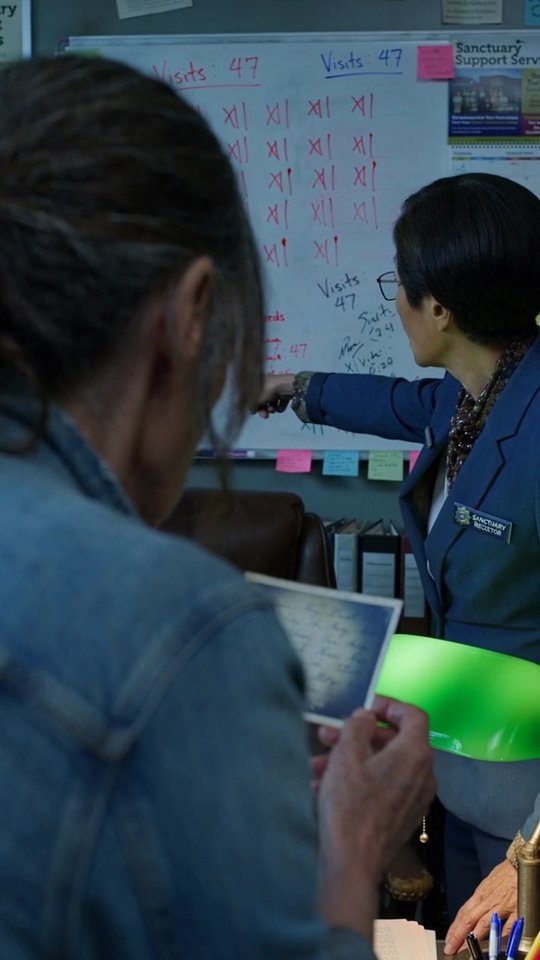
“I don’t keep count,” he said. “But I know it’s been forty-seven.”
He paid $770 for each adoption because that’s what it cost to cover a year of care.
He wanted to make sure the sanctuary didn’t lose money on the old dogs.
He never gave his real name because he didn’t want attention or thanks.
He just wanted to do what Rachel would’ve done.
“They don’t live long,” he said. “Most of them only make it a year, maybe two. But they’re comfortable here. They’re not alone.”
I looked around the yard again, seeing it differently now.
This wasn’t a hoarding situation or some dark secret.
This was a father keeping his daughter’s memory alive in the only way he knew how.
Raymond stood and walked down the porch steps.
Rusty hobbled over to him, tail wagging, and Raymond knelt slowly to scratch behind the beagle’s ears.
“I’ll keep coming as long as I can,” he said. “As long as there are old dogs who need a place to rest.”
I felt tears streaming down my face.
I didn’t try to stop them.
I stayed for another hour, sitting on the porch while Raymond moved through the yard, checking water bowls and distributing treats from a canvas bag slung over his shoulder.
The dogs followed him slowly, tails wagging, content.
Before I left, I asked if I could tell Judith the truth.
Raymond shook his head.
“I’d rather you didn’t. I don’t want people making a fuss.”
I nodded, understanding.
But I updated the sanctuary ledger that night anyway.
Next to the forty-seven hash marks and the letter “R,” I wrote a single line in my own handwriting: “In memory of Rachel Collier, who loved the old ones.”
Raymond kept coming to the sanctuary.
Every few weeks, another senior dog would leave with him in the blue pickup.
And every time, I’d add another mark to the whiteboard, knowing exactly where that dog was going and why.
Some people grieve by building monuments or planting trees.
Raymond Collier grieved by giving forty-seven forgotten dogs a soft place to land.
And in doing so, he gave his daughter’s love a way to live on, one gray muzzle at a time.
I never told anyone else about Raymond’s backyard sanctuary.
But sometimes on quiet nights at the shelter, when I’m updating the adoption log and I see another senior dog heading home in that blue pickup, I think about Rachel.
A nineteen-year-old girl who loved the dogs nobody wanted.
And I think about how love doesn’t end when someone dies.
It just finds new ways to keep giving.
Forty-seven dogs and counting.
Each one a living tribute to a daughter who believed every old soul deserved a soft landing.
And a father who spent $36,200 making sure her dream never stopped coming true.