I didn’t sleep that night.
I sat at my kitchen table in the bungalow on Market Street, the letter from Mama spread out in front of me under the yellow light of the old brass lamp she’d bought at a church sale in 1972.
The envelope with the Kansas return address sat beside my coffee mug.
R. Collier. Ruth Collier. My cousin. Living under my dead sister’s name.
I thought about calling the police. But then I thought about what that would mean.
Mama would be labeled a fraud. Her grave would be disgraced. The parish would ask questions.
And Ruth—the living Ruth—would lose everything. Her Social Security. Her identity. Maybe even her freedom.
I made coffee at five in the morning and drove back to the cemetery.
The sun was just starting to break over the river, painting the headstones pale orange.
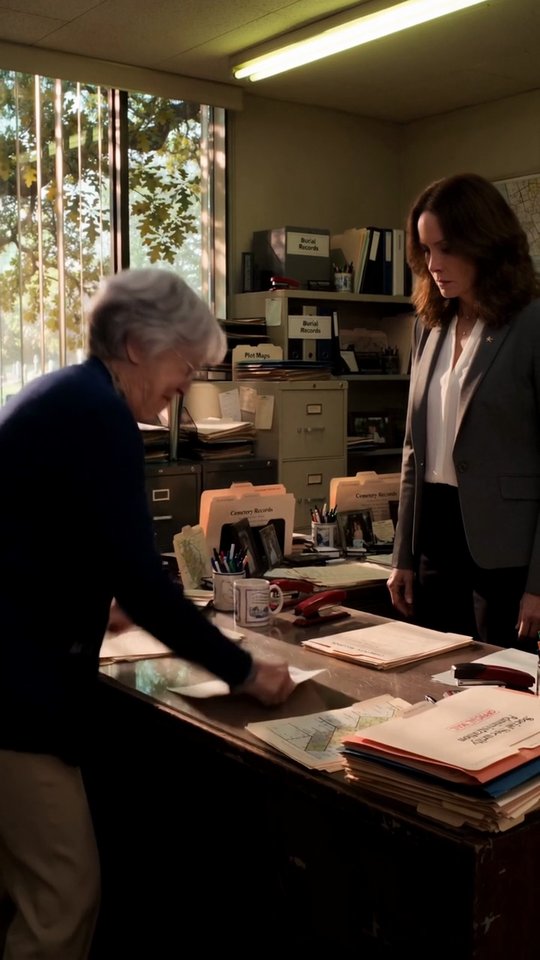
I unlocked the office and pulled out the burial records.
Plot 47 had been purchased in 1984 by Margaret Becker—my mother—two weeks before the funeral.
The death certificate on file was signed by Dr. Raymond Pfaff. He’d been the county coroner. He’d died in 1996.
I called the county clerk’s office in Ste. Genevieve and asked if they had a copy of Ruth Marie Becker’s original death certificate from April 1984.
The woman said she’d check the archives. She called me back an hour later.
She said the certificate listed cause of death as accidental drowning in the Mississippi River. Body recovered April 11, 1984. Identified by next of kin: Margaret Becker.
I hung up and stared at the wall. Mama had identified a body. But whose?
I spent the rest of the morning searching through Mama’s old papers in the basement.
I found a photo album I’d never seen before, tucked inside a cardboard box behind the furnace.
The pictures were from the 1970s. Mama and a woman who looked just like her—same square jaw, same deep-set eyes. That had to be Iris.
And beside Iris in several photos was a teenage girl with dark curly hair and a crooked smile. She looked exactly like my Ruth.
On the back of one photo, in Mama’s handwriting: “Iris, Ruth, and me. Kansas City, 1978.”
I sat on the basement steps holding that photo for a long time. Then I got in my car and drove to Kansas.
The address on the Social Security check led me to a tidy duplex in Overland Park with a small front porch and white shutters.
I parked across the street and waited.
At 3:15 p.m., a woman came out the front door carrying a canvas grocery bag.
She was in her mid-sixties. Dark hair streaked with gray. Same crooked smile.
I got out of the car and crossed the street. She looked up as I approached. Her face went pale.
“Lorraine?” she whispered.
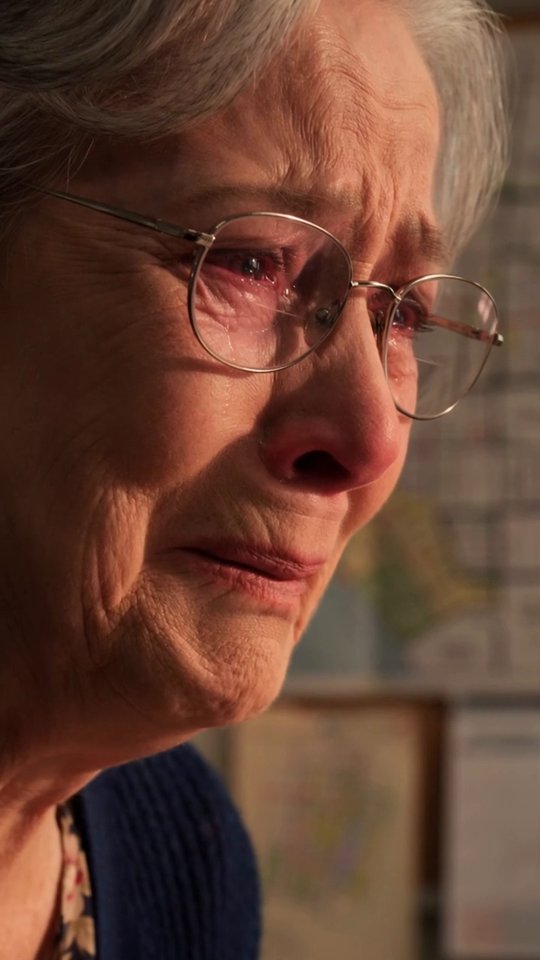
I nodded. She dropped the grocery bag. A can of soup rolled into the gutter.
“I thought you’d never find out,” she said quietly.
We sat on her porch for two hours. She told me everything.
In 1983, her mother Iris had been in trouble. Bad debts. Dangerous people. Ruth—Iris’s Ruth—had witnessed something she shouldn’t have. A man had threatened to kill her.
Iris called Mama in a panic. And then my Ruth drowned. It was a real accident. She’d been swimming alone near the boat launch. The current took her.
But Mama saw an opportunity. She called Iris. They made a plan.
Mama identified the body as Ruth Marie Becker. The funeral happened fast. Closed casket.
And Iris’s Ruth became Ruth Marie Becker. New Social Security number. New life.
The insurance money—$47,000—went to pay off Iris’s debts and help Ruth disappear.
“Your mother saved my life,” Ruth said, tears streaming down her face. “She gave me a future.”
I looked at her and saw my sister. Not the one in the grave. But the one Mama had loved enough to risk everything for.
“I’m not going to tell anyone,” I said finally.
Ruth grabbed my hand. “Why?” she whispered.
I thought about Mama’s letter. About the way she’d gripped my hand at the funeral. About the violets I planted every spring on a grave that held my real sister.
“Because Mama made a choice,” I said. “And I’m going to honor it.”
I drove back to Ste. Genevieve that night. I stopped at the cemetery and stood over plot 47 under the oak tree.
The stars were out. The air smelled like river water and cut grass.
I knelt down and touched the granite headstone.
“I’m sorry I didn’t know sooner,” I whispered. “But she’s safe now. Just like you wanted.”
The next morning, I went back to the basement and pulled out the rest of Mama’s letters.
There were dozens of them. All addressed to Iris. All documenting the plan.
I read every single one. They showed a side of Mama I’d never known. Fierce. Protective. Willing to break the law to save family.
In the last letter, dated three months before Mama died, she wrote: “When Lorraine finds out, she’ll understand. She’s stronger than she knows. She’ll do the right thing.”
I folded the letter carefully and put it back in the trunk.
Then I mailed the $8,890 check back to Ruth in Kansas with a note: “This is yours. Live well. Mama would want that.”
And I planted violets on both sides of the headstone. One for the Ruth we buried. And one for the Ruth Mama saved.
Because sometimes the right thing isn’t the legal thing. Sometimes it’s just love.