I sat on the porch floor, photograph trembling in my hands, while the February morning light turned the rose garden silver.
Rachel, born February 13, 1967.
One day before the blizzard.
One day before my mother allegedly stole nearly six thousand dollars from the church fund.
The baby in the photo couldn’t have been more than a few hours old, wrapped in a quilted blanket I recognized from my mother’s linen closet.
My mother’s face in the picture looked exhausted but tender, her hand cradling the infant’s head with a gentleness I remembered from my own childhood.
But I had no siblings.
My parents never mentioned another child.
I turned the porcelain bluebird over in my palm—it was delicate, hand-painted, the kind of heirloom you’d give to mark something precious.
I pulled out my phone and searched birth records for McMinnville, February 1967.
Found nothing under “Taggart.”
Searched under “Ashford.”
There: Rachel Anne Ashford, born February 13, 1967, to Leona Ruth Ashford and Robert James Ashford.
Mother’s occupation: seamstress. Father’s occupation: roofer.
Father deceased February 14, 1967.
The same day as the blizzard.
I sat back, trying to piece it together.
Robert Ashford died fixing his roof during the ice storm, leaving Leona alone with a newborn and no income.
The church took up a collection—that much I’d found in the newsletter.
But my mother had taken the money and hidden it under the porch.
Why?
I drove to the McMinnville Public Library, asked the reference librarian for old city directories.
Found the 1967 edition, flipped to “A.”
Ashford, Leona R., 712 Maple Street.
Beside it, a handwritten note in the margin: “See also: Taggart, M.”
Someone had cross-referenced them.
I asked the librarian if she knew why.
She shrugged, said the directories were donated by the historical society in the eighties, annotations and all.
I checked the historical society’s website, found a contact number.
A woman named Patty answered, said she’d been the volunteer archivist for thirty years.
I asked if she remembered anything about Leona Ashford.
Long pause.
“You’re Marlene’s daughter, aren’t you?”
My throat tightened. “Yes.”
“Your mother made me promise never to talk about it. But she’s gone now, and I suppose you have a right to know.”
Patty told me to meet her at the society’s office in an hour.
I drove there, hands shaking on the wheel.
Patty was waiting in a small room lined with filing cabinets, a cardboard box on the table in front of her.
“Leona Ashford was your mother’s closest friend,” Patty said quietly. “They grew up together, worked at the cannery during the war, stood up at each other’s weddings.”
She opened the box, pulled out a bundle of letters tied with string.
“When Robert died, Leona was devastated. She had no family, no money, a brand-new baby. Your mother wanted to help, but your father—he was a proud man, didn’t believe in charity. He forbade her from giving Leona anything.”
Patty handed me one of the letters.
It was from my mother to Leona, dated February 20, 1967.
“I can’t send money through the church—Frank would find out. But I have a plan. Trust me.”
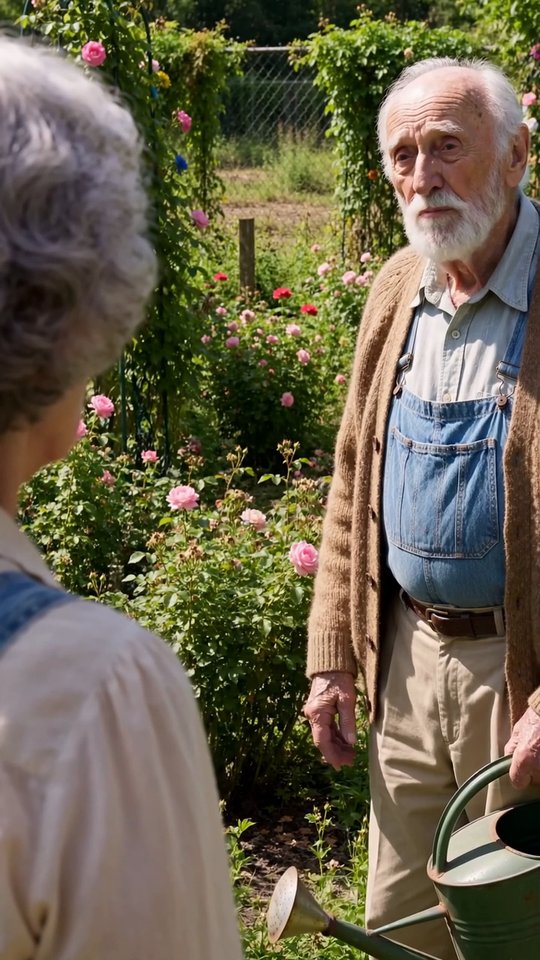
I looked up. “She stole the church fund to help Leona without my father knowing?”
Patty nodded. “She took the money the congregation had collected, hid it under the porch, and planned to give it to Leona in small amounts over time, disguised as gifts or loans. But something went wrong.”
“What?”
Patty pulled out a newspaper clipping from March 1967.
Headline: “Local Seamstress Loses Home, Moves to California.”
The article said Leona Ashford had accepted a job offer in San Francisco and left McMinnville with her infant daughter on March 3, 1967.
“Your mother never got the chance to give her the money,” Patty said. “Leona left too quickly. And by then, the church had already moved on, assumed the fund had been used. Your mother couldn’t return it without confessing what she’d done. So she buried it, literally and figuratively.”
I felt tears prickling my eyes. “Did she ever hear from Leona again?”
Patty hesitated, then pulled out one last item from the box.
A Christmas card, postmarked December 1985, San Francisco.
Inside, a short note in unfamiliar handwriting:
“Marlene, Rachel is eighteen now, starting college. I never forgot your kindness, even though I didn’t understand it then. I hope you’ve forgiven yourself. —L”
I stared at the card, my mother’s name written in fading ink.
“Did my mother ever respond?”
“I don’t know. She never mentioned it to me.”
I drove home in a daze, the lockbox and its contents on the seat beside me.
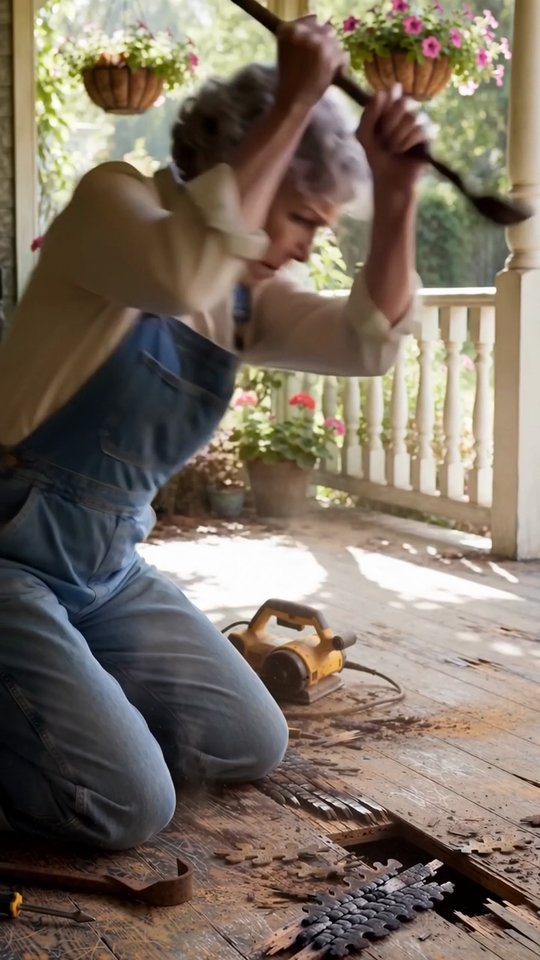
Back on the porch, I knelt where I’d found the hidden compartment, ran my hand along the scorched plank.
My mother had carried this secret for fifty years.
She’d stolen, yes—but out of love, out of desperation to help a friend when no one else would.
I thought about the porcelain bluebird, the photograph, the money she’d never been able to give away.
Then I made a decision.
I looked up “Rachel Ashford” online, added “San Francisco” and “1967.”
Found a LinkedIn profile: Rachel Ashford-Chen, environmental lawyer, Berkeley.
I sent her a message, brief and careful:
“My name is Marcia Taggart. I believe our mothers were friends. I found something that belonged to your family. Can we talk?”
She replied within an hour.
We arranged to meet the following week at a café in Portland.
When I saw her walk in—tall, with her mother’s dark eyes and my mother’s gentle smile—I knew I’d made the right choice.
I gave her the lockbox, the money, the photograph, the bluebird.
She cried when she read my mother’s note.
“Mom never told me about this,” she whispered. “She just said your mother was the kindest person she ever knew.”
Rachel insisted I keep half the money.
I refused at first, but she was firm.
“Your mother sacrificed her peace of mind for us. This is as much yours as it is mine.”
We split it evenly.
She donated her half to a women’s shelter in her mother’s name.
I donated mine to the McMinnville church, anonymously, with a note:
“In memory of Marlene Taggart, who loved more than she could say.”
Before Rachel left, she handed me the porcelain bluebird.
“Keep this. Mom would want you to have it.”
I placed it on the mantle in my living room, beside a photo of my mother.
And every morning, when the light hits that little blue bird just right, I remember: some secrets are kept not out of shame, but out of a love too big to fit into words.