I didn’t sleep Thursday night.
I sat on the Victorian porch steps where Miriam used to watch the sunrise, the quilted blanket she’d given me wrapped around my shoulders.
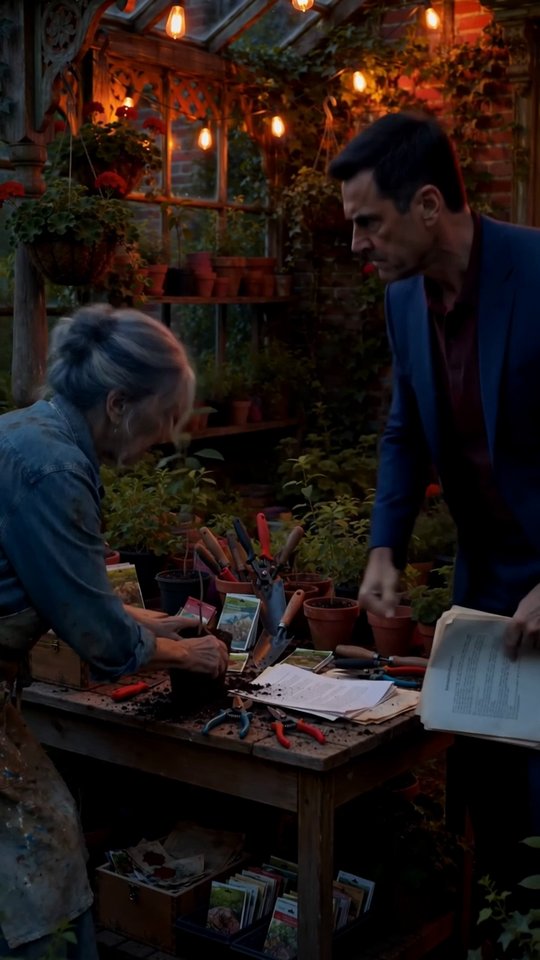
The orchard stretched out before me in the moonlight—thirty trees I’d saved from death, thirty trees that held genetics most people thought were lost forever.
I kept replaying Lucas’s face when he saw the royalty statement.
The way his hands shook.
The way he looked at me like I’d just pulled a trap door open beneath his feet.
Because that’s exactly what Miriam had done.
She’d built a trap for anyone who might try to destroy her life’s work.
And I’d just sprung it.
Friday morning, Lucas’s truck was still parked in the driveway.
I found him in the cottage kitchen, sitting at the table, the lockbox open in front of him.
He’d been there all night.
The registration certificates were spread across the table like tarot cards.
He looked up when I walked in.
“Why didn’t she tell me?”
His voice was quiet. Defeated.
I poured myself coffee from the percolator on the stove.
“She didn’t think she had to. She thought you’d care enough to ask before you sold.”
Lucas rubbed his face.
“I thought this place was worthless. She never talked about money. She lived like she was broke.”
I sat down across from him.
“She wasn’t broke. She was careful. Every dollar she made from the licensing agreement went back into the orchard. New rootstock. Soil amendments. Pest management. She didn’t care about profit. She cared about preservation.”
Lucas picked up one of the certificates.
Zabergäu Reinette. Registered 2014.
“The university pays $6,780 a year for access to these trees?”
I nodded.
“They send graduate students here every spring. They take scion cuttings. They study disease resistance. They’re trying to breed climate-resilient cultivars using genetics from these heirlooms. Your aunt’s orchard is part of a research project that could feed people for generations.”
Lucas set the certificate down.
“And if I bulldoze them, I owe $50,000 per tree.”
“$1,500,000 total. Plus you forfeit the estate. The university gets everything—the land, the cottage, the greenhouse. It’s in the contract.”
He laughed bitterly.
“So I’m trapped.”
I sipped my coffee.
“You’re not trapped. You’re being given a choice. Honor what your aunt built, or lose everything trying to destroy it.”
Lucas stared out the kitchen window at the orchard.
The morning light was turning the leaves gold.
“I don’t know anything about apple trees.”
“Then learn. Or hire someone who does.”
He looked at me.
“You.”
I shook my head.
“You just told me I had seventy-two hours to leave.”
“I was wrong.”
His voice cracked.
“I didn’t understand. I thought this was just sentiment. I didn’t know it mattered.”
I set down my coffee cup.
“Everything matters, Lucas. Every tree. Every graft. Every season. Your aunt understood that. She spent forty years learning it.”
Lucas closed the lockbox.
“If I cancel the development deal, I lose the deposit. $34,000.”
“Then you lose $34,000.”
“And I keep paying you $840 a month to take care of trees I don’t understand.”
I stood up.
“I don’t need your money, Lucas. I need your respect. If you can’t give me that, I’ll leave today and you can figure this out yourself.”
I walked out of the cottage.
I went to the greenhouse and started my morning rounds.
Checking soil moisture. Inspecting new growth. Recording bud development in Miriam’s leather journal.
An hour later, Lucas appeared in the doorway.
He was holding his phone.
“I called the developer. Deal’s off. I’m eating the deposit.”
I kept writing in the journal.
“Good.”
“And I called the university. They’re sending someone next week to discuss expanding the research partnership.”
I looked up.
Lucas stepped inside.
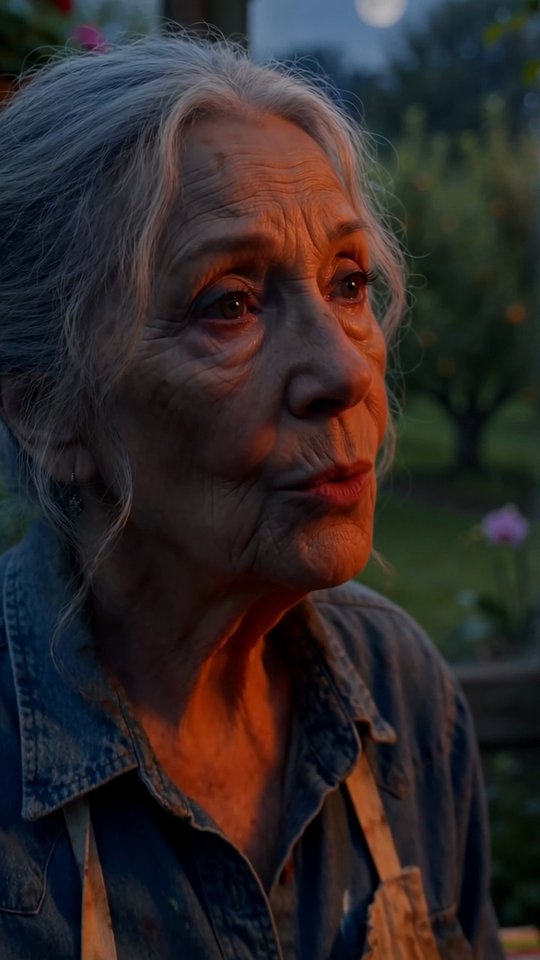
“I also called my accountant. If the licensing agreement brings in $6,780 a year, and I pay you $10,080 annually, plus maintenance costs, this orchard runs at a loss.”
“It always has.”
“So why did my aunt do it?”
I closed the journal.
“Because some things matter more than profit. Because extinction is forever. Because thirty apple varieties that survived railroads and wars and droughts deserve to survive one more generation.”
Lucas leaned against the potting bench.
“Teach me.”
I studied his face.
He meant it.
“It’ll take years.”
“I’ve got time.”
I handed him a grafting knife.
“Then we start with the basics.”
That afternoon, I showed Lucas how to make a whip-and-tongue graft.
How to match cambium layers.
How to wrap the union with grafting tape and seal it with wax.
His first three attempts failed.
The fourth one held.
He stared at the sealed graft like it was a miracle.
“It’s alive?”
“If we did it right, it’ll take. Give it six weeks.”
Lucas smiled.
It was the first real smile I’d seen from him.
Over the next month, Lucas came to the orchard every weekend.
He learned to prune.
He learned to identify fireblight.
He learned the names of all thirty heritage varieties.
He started reading Miriam’s journals, cover to cover.
In July, the Pitmaston Pineapple sapling I’d grafted in April pushed out new leaves.
Lucas called me at dawn to show me.
“It worked.”
His voice was breathless.
I walked to the greenhouse.
He was standing beside the sapling, grinning like a kid.
“That’s your graft, Lucas. You did that.”
He touched the new leaves gently.
“I did that.”
In September, the university sent a research team.
They spent three days collecting data, taking cuttings, interviewing Lucas about his aunt’s documentation methods.
They offered to double the licensing agreement.
$13,560 annually.
Lucas accepted.
He used the first payment to renovate the greenhouse.
New benches. New irrigation. A proper propagation station.
He hung a porcelain sign above the door: “Miriam Drummond Heritage Orchard – Est. 1891.”
Thursday night, exactly six months after Lucas tried to bulldoze the orchard, we sat on the Victorian porch.
The same porch where Miriam used to sit.
The same quilted blanket across my lap.
Lucas brought chamomile tea in Miriam’s old porcelain cups.
“Wendy?”
“Yeah?”
“Thank you.”
I sipped my tea.
“For what?”
“For not giving up on me. For showing me what my aunt saw.”
I looked out at the orchard.
Thirty trees, strong and healthy, their branches heavy with late-season fruit.
Miriam would have been proud.
“Your aunt didn’t need me to protect her trees, Lucas. She needed you to understand why they mattered. That’s what the lockbox was for. That’s what the penalties were for. She was teaching you the same lesson she taught me.”
“What lesson?”
I smiled.
“That love isn’t what you inherit. It’s what you choose to protect.”