I stood there in the greenhouse holding the codicil while Claire stared at me from the doorway, her phone still glowing in her hand.
The developer’s truck would arrive in ninety minutes.
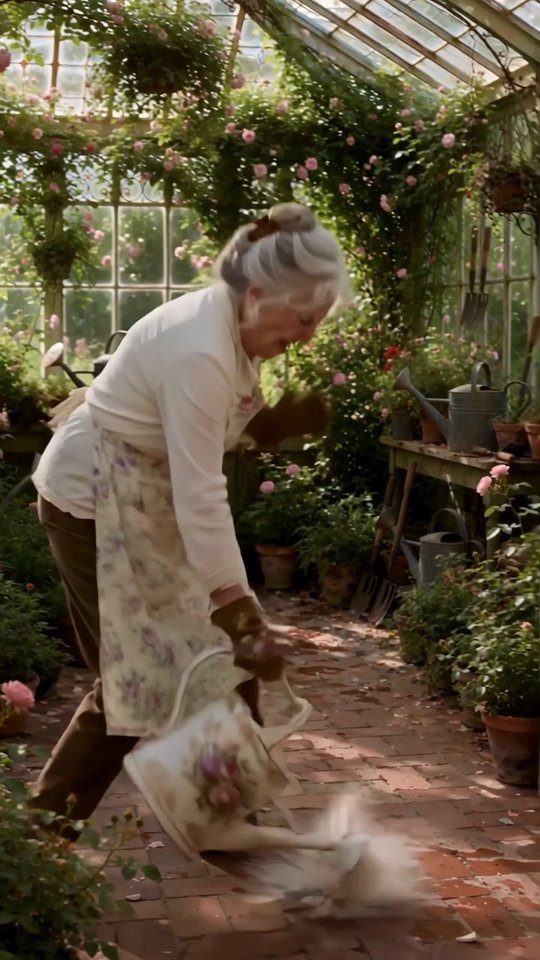
I unfolded the document and read it aloud, my voice steadier than I expected.
“Codicil to Last Will and Testament. I, Eleanor Margaret O’Malley, hereby designate that the cedar conservatory and rose collection on this property may be transferred to the volunteer stewards who have maintained it without compensation, should my daughter Kathleen Mary O’Malley choose such transfer during her lifetime.”
Claire’s face went white.
“That’s not legally binding. It was never filed.”
I folded the page carefully and slipped it back into my apron pocket.
“Vermont recognizes holographic codicils if they’re signed and witnessed. My mother had two neighbors sign this. Both are named. One still lives three houses down.”
Claire stepped into the greenhouse, her heels clicking on the wet brick.
“You’re bluffing. That paper has been sitting in a watering can for forty years. No judge will accept it.”
I walked to the potting bench and pulled out my mother’s leather address book from the drawer.
The spine was cracked, the pages yellowed, but the names were still legible.
“Margaret Holloway witnessed this codicil. She’s eighty-nine now, lives on Elm Street, still sharp as a tack. I had tea with her two weeks ago.”
Claire’s jaw tightened.
“Even if that’s true, you gave me power of attorney. I already signed the contingency contract.”
I met her eyes.
“That power of attorney was limited to medical decisions during my kidney stone procedure. I have the original document in my safe deposit box. My lawyer reviewed it last year when I updated my living will.”
She didn’t respond.
I heard gravel crunching outside—a truck pulling into the driveway.
Claire glanced toward the sound, then back at me.
“The developer’s here early. If you try to block this sale, I’ll have you declared incompetent. I’ll tell the court you’re living in unsafe conditions, that you’re a fall risk, that you’re not managing your finances properly.”
I picked up a trowel from the bench and turned over the soil in a terracotta pot.
My hands didn’t shake.
“You could try that. But seven volunteers have worked here every week for the past decade. They’d testify that I teach propagation classes, maintain detailed records, and manage this conservatory better than most commercial nurseries.”
A car door slammed outside.
Footsteps approached the porch.
Claire’s voice dropped to a whisper.
“Why are you doing this? I’m trying to help you. You can’t keep living here alone. What happens when you fall and no one finds you for days?”
I set down the trowel.
“I’m not alone. Sixteen people have learned horticulture in this greenhouse. Seven of them come twice a week. They bring soil amendments, help repair glass panels, prune the climbers. This place isn’t just mine—it never was.”
The doorbell rang.
Claire turned toward the house, then looked back at me.
“If you fight this sale, you’ll lose everything. Legal fees will drain your savings. The developer will walk away, and you’ll be stuck with a property you can’t afford to maintain.”
I pulled the codicil from my apron pocket and held it up.
“Or I transfer the conservatory to the volunteers, just like my mother intended. They form a nonprofit stewardship. The house stays in the family, the greenhouse stays open, and the roses stay rooted.”
Claire’s expression hardened.
“You’re making a mistake.”
She walked past me toward the house.
I heard her heels on the porch steps, then muffled voices in the driveway.
I stood in the greenhouse for a long moment, looking at the shattered porcelain scattered across the brick floor.
Then I pulled out my phone and called Margaret Holloway.
She answered on the second ring.
“Kathleen? Everything all right?”
I explained what I’d found inside the watering can.
She was quiet for a moment.
“I remember signing that paper. Your mother was worried you’d feel obligated to keep the greenhouse even if it became too much. She wanted you to have an option—a way to pass it to people who loved it as much as you did.”
I asked if she’d be willing to testify that she’d witnessed the codicil.
“Of course. I’ll call my grandson—he’s a notary. We can get a sworn statement drafted this afternoon.”
I thanked her and ended the call.
Then I walked to the house.
Claire stood in the driveway talking to a man in a polo shirt and khakis—the developer.
He held a clipboard and kept glancing at the greenhouse.
I stepped onto the porch.
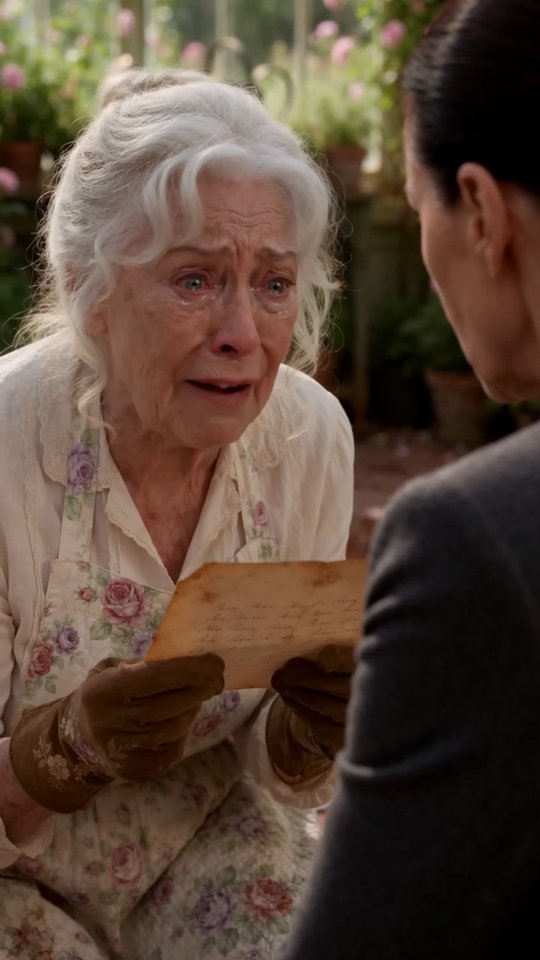
“There’s been a change of plans.”
The developer looked up.
“Ma’am, I’m Todd Brennan. Your niece explained that you’re ready to move forward with the sale.”
I descended the steps carefully, gripping the railing.
“My niece doesn’t have authority to sell this property. The contingency contract she signed is void.”
His smile faded.
Claire’s face flushed.
“Aunt Kathleen, don’t do this.”
I ignored her and addressed Todd directly.
“I’m transferring the conservatory to a nonprofit stewardship under the terms of a codicil written by my mother in 1986. The house and land will remain in family trust. The greenhouse will continue operating as a community education center.”
Todd glanced at Claire, then back at me.
“If there’s a legal dispute, I can’t proceed with the inspection. I’ll need to consult with my attorney.”
He walked to his truck, phone already at his ear.
Claire stepped close, her voice low and furious.
“You just cost yourself $62,400. I was trying to secure your future.”
I met her gaze.
“My future is already secure. It’s been growing here for forty-three years.”
She turned and walked to her sedan without another word.
The engine started, gravel sprayed, and she was gone.
I stood in the driveway until the dust settled.
Then I called the seven volunteers and asked them to meet me at the greenhouse that evening.
They arrived at six o’clock—Rita, Samuel, Joanne, Paul, Denise, Franklin, and young Lily, who’d just graduated from the agricultural college.
I showed them the codicil.
Rita, who’d been volunteering since 1998, read it twice and wiped her eyes.
“Your mother was a wise woman.”
We spent three hours that night drafting the nonprofit charter.
Samuel, a retired accountant, handled the financial structure.
Joanne, a former paralegal, reviewed the legal language.
By nine o’clock, we had a framework.
Margaret Holloway’s grandson notarized her witness statement the next morning.
I filed the codicil with the county clerk that afternoon, along with the nonprofit incorporation papers.
The conservatory officially became the Eleanor O’Malley Memorial Rose Stewardship on a cold Tuesday in November.
I remained the resident caretaker, living in the Victorian cottage.
The volunteers took turns managing weekend workshops, grant applications, and maintenance schedules.
Claire never called.
I sent her a letter three months later, explaining that the nonprofit had received a state horticulture grant and that the greenhouse foundation had been repaired with donated materials and volunteer labor.
She didn’t respond.
Last week, Lily led her first propagation class—twelve people packed into the conservatory, learning to graft antique tea roses onto hardy rootstock.
I stood in the back, watching her demonstrate the angled cut, the careful binding, the patient explanation of cambium layer alignment.
She was a natural teacher.
After the class ended, I walked to the potting bench and picked up the pieces of the shattered porcelain watering can.
I’d saved them in a wooden box.
Rita saw me holding the fragments.
“Are you going to repair it?”
I shook my head.
“Some things break so better things can grow.”
She smiled and handed me a new watering can—copper, with a hand-hammered spout.
“The volunteers pitched in. We had it engraved.”
I turned it over.
The inscription read: “For Kathleen—who taught us that roots run deeper than blood.”
I set it on the bench and hugged her.
Outside, the November light slanted through the glass walls, and four hundred heirloom roses waited for spring.